


The golden arches were never supposed to be an architectural challenge. They were supposed to tell you where to get fries, a Coke, and a Happy Meal before your parents started threatening to leave you at the next rest stop. And yet, throughout McDonald’s history, somebody has looked at a perfectly ordinary restaurant and thought: you know what this needs? A riverboat or an airplane or a highway running underneath it or possibly a mountaintop.
For the Xennial generation, McDonald’s was already a destination. The PlayPlace was a small, unsupervised kingdom. The Happy Meal toy was currency. And the McDLT had a packaging system that made keeping lettuce cool feel like a NASA engineering project. But some locations took the experience much further.
These are the McDonald’s that made the journey as memorable as the quarter-pounder, and proved that the only thing more American than fast food is building it somewhere that makes absolutely no practical sense.
The St. Louis Floating McDonald’s: Supersize Me, Captain
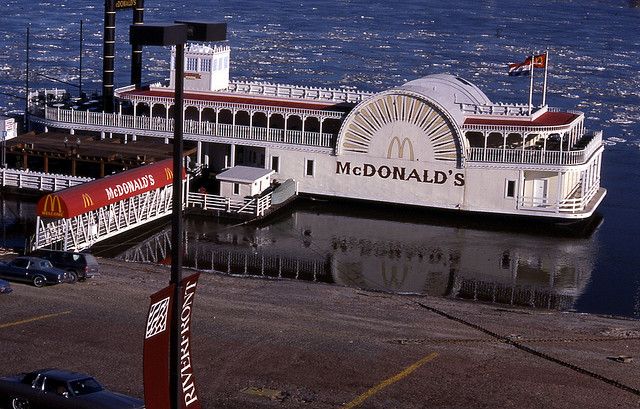
There are two ways to get a Big Mac:
- pull into a parking lot or
- board a vessel that looks like it should be carrying Mark Twain and a suspiciously large shipment of cotton.
In 1980, St. Louis got the second option.
The city’s floating McDonald’s opened on the Mississippi River aboard a 185-foot concrete barge designed to resemble an old-fashioned paddle-wheel riverboat. It had room for more than 130 diners, which meant you could enjoy your fries while experiencing the unique sensation of eating fast food on a vessel that looked ready to take you upriver to negotiate a land deal with the Duke brothers.
For a while, this was peak American ingenuity. Somebody looked at one of the country’s great rivers and thought, “Beautiful. Historic. Important to commerce. You know what would really finish this off? A Quarter Pounder.”
The floating restaurant closed in November 2000 after renovation was deemed financially impractical. Its disappearance left behind an important lesson: even a floating monument to American capitalism eventually has to deal with maintenance costs.
Fan Stop Nation’s Nautical Nugget Ratio: 11 out of 10 sailors agree that fries taste better when the restaurant has a captain’s quarters … even if the only thing navigating the ship is a manager trying to find the missing receipt printer.
“I came for the Big Mac. I stayed because I wasn’t entirely sure which side of the boat had the parking lot.”
Mississippi River dining enthusiast
The I-44 Overpass McDonald’s: The Drive-Thru That Took the Highway Literally
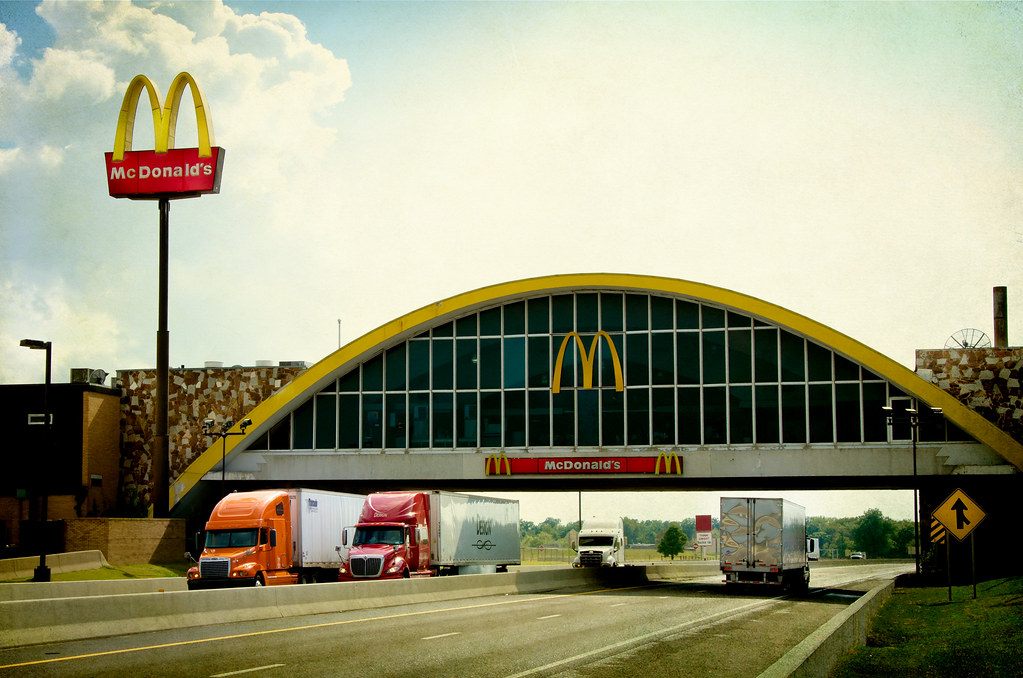
Most McDonald’s locations sit beside the road. The one near Vinita, Oklahoma, went with a more ambitious approach … put the restaurant over the road and let traffic pass underneath it and play catch-the-Happy-Meal at 75mph!
The building known as the Glass House opened in 1957 as a roadside service plaza over the Will Rogers Turnpike. It later became famous as a McDonald’s, at one point claiming the title of the world’s largest restaurant in the chain. The facility was renovated and reopened in 2014 as the Will Rogers Archway, with McDonald’s among the businesses operating there.
Think about the commitment here. You aren’t simply stopping for fries. You’re pulling off the interstate, entering a building that bridges the highway, and eating above the very road you were just driving on.
It’s like somebody looked at a regular rest stop and decided it needed the architectural ambition of a Bond villain’s headquarters.
For generations of travelers, the place became a roadside attraction in its own right. The food was familiar; the building was the story. That’s the perfect formula for an American road trip: give people something they can photograph, then sell them a cheeseburger while they’re there.
Fan Stop Nation’s Highway-to-Hamburger Conversion Rate: 87.4% of motorists would happily interrupt a perfectly good road trip to eat lunch inside a building that technically qualifies as a bridge.
“We built a restaurant over an interstate because apparently the only thing Americans love more than fast food is making civil engineers nervous.”
Oklahoma turnpike planning engineer
McSki in Sweden: Yes, You Can Ski Up for a Big Mac
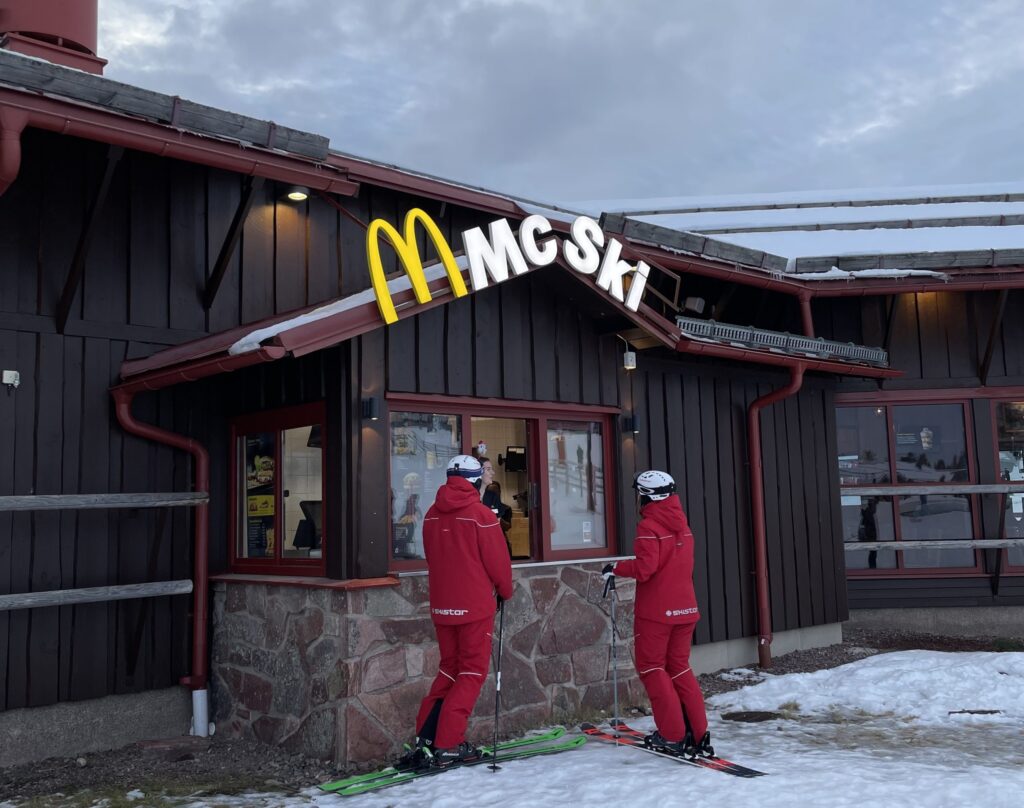
Some people spend thousands of dollars on ski vacations to experience nature, fresh powder and the majesty of the mountains. Others apparently spend thousands of dollars to put on expensive equipment and immediately search for a McDonald’s.
At the Lindvallen ski resort in Sälen, Sweden, McSki has been serving hungry skiers since 1996. Its special outdoor ordering window lets customers ski up, place an order and head back toward the slopes without removing their skis. There’s indoor seating, too, for people who prefer to eat without risking veering into the trees.
This is what happens when the concept of a drive-thru becomes a lifestyle.
You don’t need a car. You don’t need to walk in from the parking lot. You just glide up to the window in your ski gear and order a burger like a person who has decided that gravity is an acceptable form of transportation.
It’s also a remarkable triumph of brand consistency. Somewhere in Sweden, a skier can be surrounded by snow-covered trees, alpine scenery and pristine mountain air, and still know exactly where to get a familiar order of fries.
Fan Stop Nation’s Slope-to-Sauce Ratio: 8.3 seconds between reaching the window and realizing your ski gloves are not designed for handling a hot drink.
“I came down the mountain for the thrill of skiing. I went back up because they forgot my Sweet n Sour sauce for the nuggets.”
Alpine fast-food strategist

The Airplane McDonald’s: Fast Food With Actual Wings
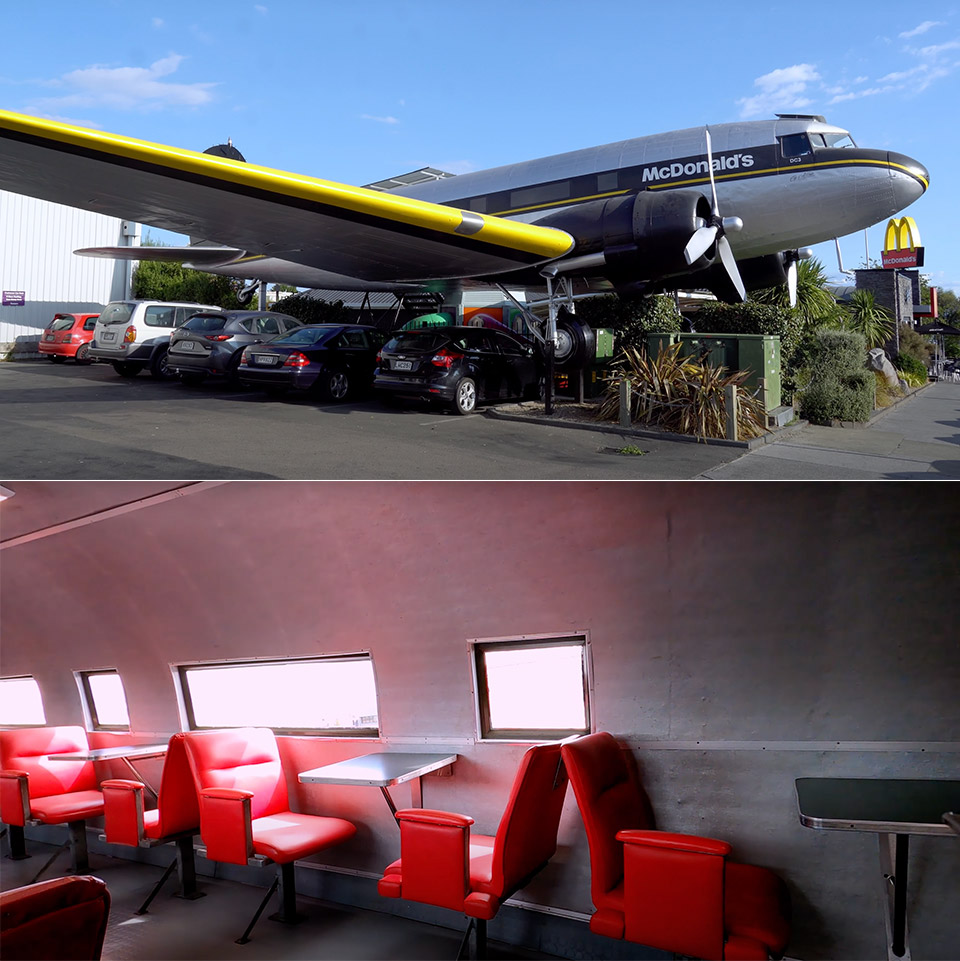
Airline food has spent decades trying to convince passengers that a small tray of reheated chicken is an experience. McDonald’s in Taupō, New Zealand, solved the problem by putting the dining room inside an actual airplane.
This location incorporates a decommissioned Douglas DC-3 aircraft into the restaurant. Customers can sit inside the plane and even look into the cockpit. It is a genuine McDonald’s experience with an aviation twist … not a flight simulator, not an airport lounge, and definitely not a way to earn frequent-flyer miles by ordering a McFlurry.
The concept is gloriously ridiculous. You’re eating a burger inside an airplane that isn’t going anywhere, which is also how most of us feel when we’re stuck in an airport during a three-hour delay.
At least here, nobody is announcing that your departure gate has changed. Nobody is asking you to put your seat upright. And the person in the cockpit isn’t about to tell you that your connecting flight to Auckland is now a distant memory.
It’s an aircraft experience without the turbulence, baggage fees or the guy in 14B who thinks the armrest is a property right.
Fan Stop Nation’s Flightless Fries Coefficient: 94.1% probability that at least one diner will pretend to pilot the aircraft while somebody else takes a picture.
“Ladies and gentlemen, we’ve reached our cruising altitude of zero feet. Please keep your tray tables down and your expectations appropriately seasoned.”
DC-3 cabin-service consultant
The Glass McDonald’s in Batumi, Georgia: Architecture Gets a Happy Meal
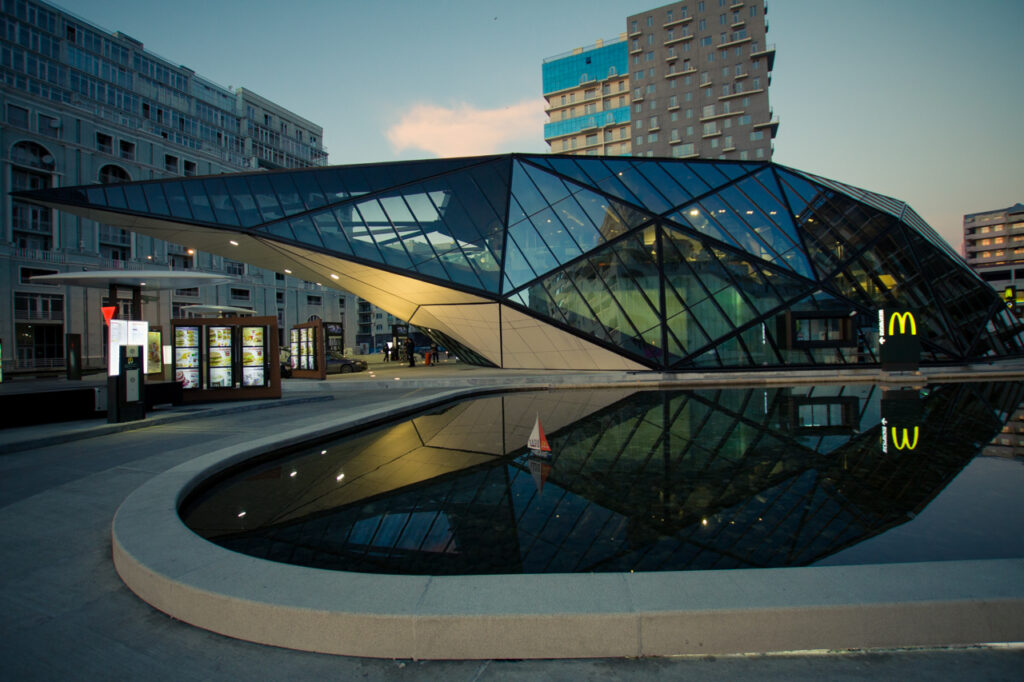
Most fast-food restaurants are designed to get you inside, get you fed and get you back out before you start asking why the ice cream machine is down again. Batumi, Georgia (as in the country – not the country) took a different route: make the building itself something worth visiting.
The McDonald’s in Batumi is known for its striking glass-and-steel design, with a sculptural form that looks more like a contemporary art museum than a place where somebody is deciding whether to upgrade to a large fry. Its architecture has drawn international attention, making it one of the chain’s more visually distinctive locations.
It’s the sort of building that makes you wonder whether the architect was told to design a restaurant or whether somebody simply handed over a giant box of fries and said, “Make this into a landmark.”
And that’s the magic of unusual McDonald’s locations. They take a business built around consistency and put it in a place where consistency is the last thing you notice.
The menu can be familiar. The architecture doesn’t have to be.
Fan Stop Nation’s Glass-to-Grease Ratio: 12 square feet of architectural ambition for every customer who walks in, orders a cheeseburger and never looks up from the phone.
“We wanted to challenge the boundaries of contemporary design, spatial experience and the human relationship with fast food. Then the lunch rush started.”
International restaurant design consultant
The Turquoise-Arched McDonald’s in Sedona, Arizona: When the Golden Arches Aren’t Golden

In most places, the golden arches are supposed to stand out. In Sedona, Arizona, the local landscape apparently got a vote.
Sedona’s famous red-rock scenery inspired a distinctive McDonald’s exterior featuring turquoise arches rather than the familiar bright yellow. The unusual color choice helps the restaurant fit into the area’s visual character while still being unmistakably McDonald’s.
It’s a small change with a big effect. You can be driving through a landscape that looks like the cover of an Eagles or Refreshments album, surrounded by dramatic sandstone formations, and then spot a turquoise M.
It’s proof that even a global fast-food chain occasionally recognizes that the environment might deserve more consideration than a corporate color guide.
Somewhere, a brand manager probably had to sit through a meeting about this. There were probably slides. There may have been a debate about whether the arches were still sufficiently iconic. And yet, somehow, civilization survived.
Fan Stop Nation’s Color Palette-to-Pickle Ratio: 4.2 turquoise arches per tourist who says, “Wait, that’s actually a McDonald’s?”
“We were going to use the standard yellow, but the desert said it had already booked that color.”
Southwestern branding consultant
The Mansion McDonald’s in Freeport, Maine: Fine Dining, If You Squint
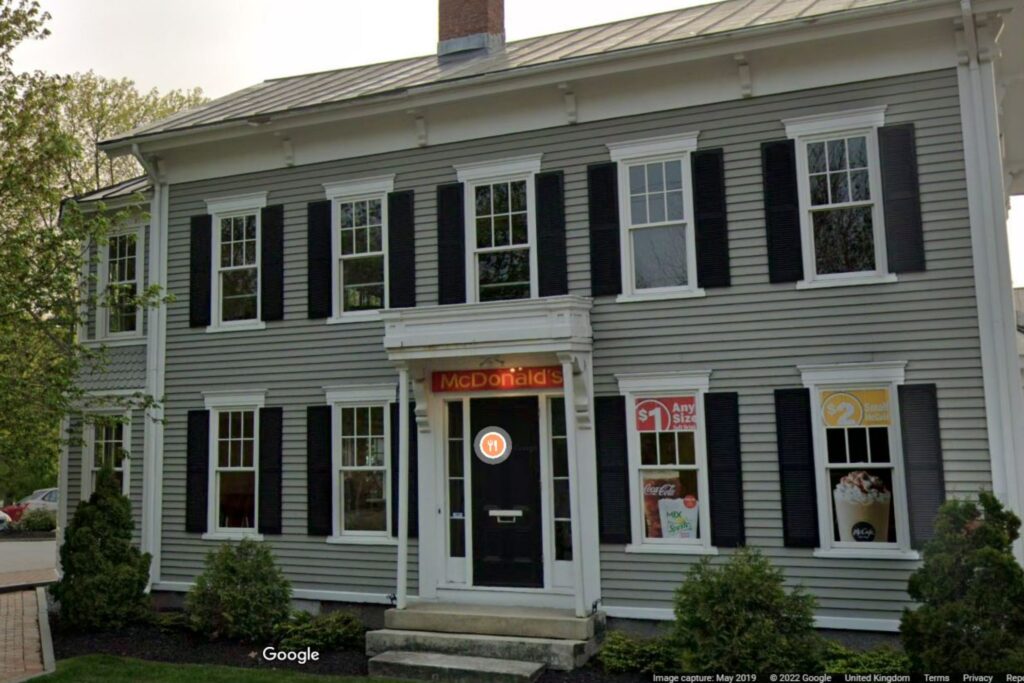
Nothing says “welcome to the neighborhood” quite like a fast-food restaurant housed in a historic mansion.
One of the unusual locations highlighted in collections of distinctive McDonald’s restaurants is a former colonial-style mansion in Freeport, Maine. Rather than looking like a standard suburban box with a drive-thru, the building brings a historic New England appearance to the familiar fast-food experience.
Imagine pulling up to what looks like the home of a sea captain who made a fortune in the 1800s, only to discover that the kitchen is turning out cheeseburgers at industrial speed.
You half expect Jeeves to open the door and announce, “Your Big Mac is served, sir. The fries are in the conservatory.”
The contrast is what makes it work. McDonald’s has always been a mass-market operation, but the building suggests that your meal might come with a family crest and a complicated inheritance dispute.
Fan Stop Nation’s Colonial-to-Combo Ratio: 6.5 decorative shutters for every customer who instinctively lowers their voice upon entering.
“I ordered a Quarter Pounder and briefly worried that I’d violated the terms of the estate.”
Maine historical dining enthusiast
The World’s Largest Entertainment McDonald’s in Orlando: The Theme Park Before the Theme Park
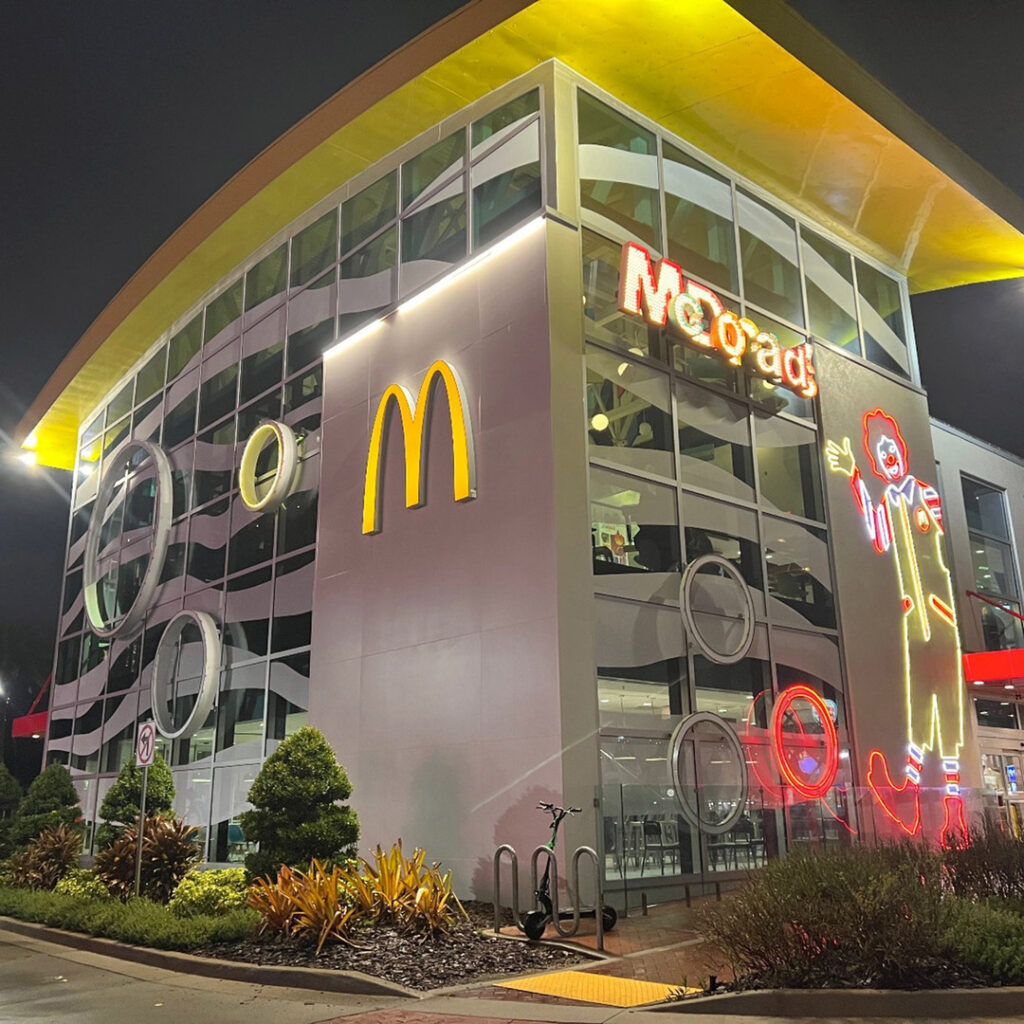
Orlando is a city where a simple family outing can become a logistical operation involving parking trams, reservation windows, strollers and a budget that requires congressional approval. Naturally, it also has a McDonald’s that decided a normal restaurant wasn’t enough.
The large entertainment-focused McDonald’s in Orlando became known for its expansive footprint and attractions beyond the standard counter-service setup. It represents the supersized end of the McDonald’s experience: more room, more entertainment and more reasons for children to ask if they can stay just five more minutes. The location is also part of the story of how the chain’s biggest restaurants have competed for attention over the years.
For Xennials, the idea lands somewhere between nostalgia and mild disbelief. We grew up with PlayPlaces, ball pits and plastic climbing structures that seemed designed by a committee that had never met a disinfectant. We didn’t need a digital immersive experience. We needed a tube, a slide and the freedom to disappear from parental view until somebody shouted our full name.
The Orlando entertainment location takes that old family-restaurant formula and turns the volume up. It’s not just a place to eat. It’s a destination where the kids can burn off energy while the adults question whether a second order of fries counts as dinner.
Fan Stop Nation’s Parent Sanity Preservation Index: 72.4% likelihood that a parent will agree to one more activity in exchange for ten consecutive minutes of peace.
“We came for lunch. Three hours later, our child had a new best friend, we had lost track of the time, and I was considering renting a room.”
Orlando family-vacation coordinator
Why These McDonald’s Locations Matter
The weirdest McDonald’s locations aren’t just architectural oddities or Instagram bait. They’re reminders that a global brand can become part of a place’s identity when it does something unexpected.
A floating restaurant becomes a piece of riverfront history. A restaurant over an interstate becomes a road-trip landmark. A ski-through window becomes a story people tell long after the vacation. An airplane dining room becomes a destination in its own right.
The food is familiar. The setting is the surprise. And that’s a powerful combination. People remember experiences that break the pattern, especially when those experiences are tied to family trips, childhood memories or the thrill of seeing something that makes absolutely no sense until you’re standing in front of it.
For Xennials, there’s an extra layer of nostalgia. McDonald’s was one of the places that made a road trip feel like a road trip. You knew the menu. You knew the fries. You knew the possibility of a toy in the Happy Meal. The unusual locations take that familiarity and turn it into something worth remembering.
It’s also a reminder that the world doesn’t need every restaurant to be a minimalist rectangle with a digital kiosk and a parking lot. Sometimes the building can be part of the fun.
The Fan Stop Nation Hall of Fame of Unnecessary McDonald’s Ambition
Let’s be clear: nobody needs a burger restaurant on a riverboat, over an interstate, inside an airplane or beside a ski slope.
And yet, now we want to visit all of them.
That’s the genius of these places. They take something ordinary and make it memorable by putting it somewhere extraordinary. They turn a meal into a story, a pit stop into a destination and a familiar fast-food logo into a landmark.
So here’s to the architects, franchise owners and assorted visionaries who looked at a perfectly good McDonald’s and decided it needed to be a little more complicated.
May your arches be distinctive, your fries be hot, and your ice cream machines experience a rare and historic period of uninterrupted operation.
Because if there’s one thing we’ve learned from the strangest McDonald’s locations in history, it’s this:
You can put the golden arches almost anywhere. Just don’t ask us to eat a Big Mac while wearing ski boots unless the fries are worth it.