


There is a special category in television history reserved for cop shows that deserved better.
Not the obvious ones. We don’t need another article explaining why The Wire, NYPD Blue, Hill Street Blues, Law & Order or Miami Vice mattered. Those shows already have monuments, documentaries, think pieces and approximately 14,000 Reddit threads explaining why their finales were misunderstood.
I’m talking about the other guys … the shows that arrived on Tuesday nights, Friday nights or some horrifying 10:00 p.m. time slot opposite something that drew 30 million viewers. The shows with great casts that somehow never found an audience. The shows that lasted one season and disappeared. The shows that lasted several seasons but still feel like they were somehow overlooked.
And then there are the cult shows … the ones where somebody mentions the title and a fellow Xennial immediately responds: “Oh my God. I LOVED that show.”
That is the television equivalent of finding someone else who remembers the same obscure band from 1997, so let’s give these shows their flowers.
Some were genuinely short-lived. Some were canceled before they had a chance to develop. Some developed devoted followings after the networks moved on. And one of them ran for six seasons and 122 episodes but still feels like it spent its entire existence being treated as the kid sitting at the grown-up table.
Here are the underrated, cult-favorite and criminally underappreciated cop and detective shows that deserve another look.
Nash Bridges: The Six-Season Underdog Nobody Wanted to Admit They Loved
Let’s start with the controversial one: Nash Bridges.
It wasn’t short-lived. It ran for six seasons on CBS from 1996 through 2001 and produced 122 episodes. Don Johnson played San Francisco Inspector Nash Bridges, with Cheech Marin as Joe Dominguez, his partner in the Special Investigations Unit.
That’s a legitimate television run. But somehow Nash Bridges has always felt like an underdog.
It existed during an absurdly crowded era of television cop dramas. You had NYPD Blue. ER. The X-Files. Law & Order. Walker, Texas Ranger. JAG. Homicide. The Practice. Profiler. CSI would eventually arrive and turn forensic evidence into a television religion.
And then there was Nash.
Driving a screaming yellow Plymouth ‘Cuda around San Francisco, wearing suits that looked like they had their own production budget, solving crimes while simultaneously managing two ex-wives, a teenage daughter and a father with Alzheimer’s … because apparently homicide detective wasn’t enough responsibility.
Nash Bridges was slick, funny, occasionally ridiculous and unapologetically 1990s. It didn’t try to be The Wire. It wasn’t trying to give us a dissertation on institutional policing. It wanted Don Johnson to look cool.
Mission accomplished.
And this is why the show deserves more respect. It was fun. Sometimes television needs that.
Fan Stop Nation’s Don Johnson Sunglasses Index: 11.7 shades darker than the average television detective, regardless of weather conditions.
“Nash could identify a suspect from three blocks away, but he couldn’t identify a shirt that didn’t cost $600.”
Fictional San Francisco homicide detective
New York Undercover: Before Every Cop Show Had to Be CSI
Before television discovered that every murder could be solved by a 400x microscope and a computer animation of a bullet traveling through a human torso, there was New York Undercover.
The Fox series ran from 1994 through 1998, producing four seasons and 89 episodes. Malik Yoba played Detective J.C. Williams, while Michael DeLorenzo played Eddie Torres during the show’s first three seasons.
But here’s what made New York Undercover different. The music.
The show regularly incorporated musical performances into its nightclub setting, with artists appearing throughout the series. This wasn’t simply “here’s a murder, here’s a detective, here’s 43 minutes of questioning people.”
It had culture. It had style. It felt New York. And for a generation raised on MTV, BET, radio countdowns and staying up way too late watching television, that mattered.
New York Undercover also understood something modern procedural television occasionally forgets: detectives are people. They have families. Relationships. Problems. Bad days. Complicated histories.
And sometimes they need to solve a homicide while looking extremely cool doing it. That’s a full night’s entertainment.
Fan Stop Nation’s 1990s Television Coolness Index: 94 percent leather jackets, 87 percent saxophone, and approximately 400 percent more atmosphere than required by network television.
“The crime was serious. The soundtrack was somehow even more serious.”
Fictional New York television critic who still owns a CD wallet

Battle Creek: Vince Gilligan Made a Cop Show Before Everyone Realized They Wanted More Vince Gilligan
Here’s one for the “oh yeah … THAT show!” category.
Battle Creek arrived on CBS in 2015 with a ridiculous pedigree: Vince Gilligan, the guy who created Breaking Bad, and David Shore, creator of House.
Josh Duhamel and Dean Winters (yeah, him … Mayhem. Allstate. The Vulture [IYKYK]) played an odd-couple detective pairing in Battle Creek, Michigan. Duhamel’s FBI agent Milton Chamberlain was polished and optimistic; Winters’ Detective Russ Agnew was cynical, underfunded and generally operating like the police department had last received a technology upgrade during the Clinton administration.
The entire premise was basically: What if one cop believes in rules and the other believes rules are suggestions?
CBS ordered 13 episodes … then CBS canceled it after 9 had aired.
The remaining episodes were still completed and aired, meaning Battle Creek got exactly one season and 13 episodes.
Think about that for a second. Vince Gilligan had just finished Breaking Bad. Television history was about to become extremely interested in everything Vince Gilligan did … and this one slipped through the cracks!
That’s the kind of television tragedy that causes a Xennial to stare into the middle distance while remembering where they were when they first heard the news.
Fan Stop Nation’s “Wait, Vince Gilligan Made That?” Index: 83 percent of people who discover Battle Creek today immediately ask why nobody told them.
“We made 13 episodes. People liked them. Then television did what television does and pretended we never existed.”
Fictional Battle Creek detective
Detroit 1-8-7: Michael Imperioli Deserved More Than 18 Episodes
Michael Imperioli had already been Christopher Moltisanti on The Sopranos. Then he went to Detroit.
That’s already a pretty good résumé for a cop show.
Detroit 1-8-7 premiered on ABC in September 2010 and followed the city’s homicide unit, with Imperioli playing Detective Louis Fitch and James McDaniel playing Sergeant Jesse Longford. The series lasted one season and 18 episodes, and it was legitimately well cast:
- Aisha Hinds
- Jon Michael Hill
- Natalie Martinez
- James McDaniel
- Michael Imperioli
This wasn’t exactly the “we’ll see if anybody notices” roster. The show also had something many procedural dramas lacked: Detroit itself was part of the story.
It wasn’t simply a generic police precinct with a different skyline inserted during establishing shots. The city’s history, neighborhoods and struggles were part of the show’s DNA. And critics weren’t exactly throwing tomatoes. Rotten Tomatoes lists the first season at 81 percent from critics.
Then television did its favorite trick: One season. Goodbye.
Fan Stop Nation’s Motor City Detective Index: Every episode contained approximately 1.4 more Detroit-specific atmospheric shots than network television legally required.
“We solved 18 episodes’ worth of murders and still couldn’t solve the mystery of why ABC canceled us.”
Fictional Detroit homicide detective
Lethal Weapon: The TV Adaptation That Had No Business Working, Except It Did
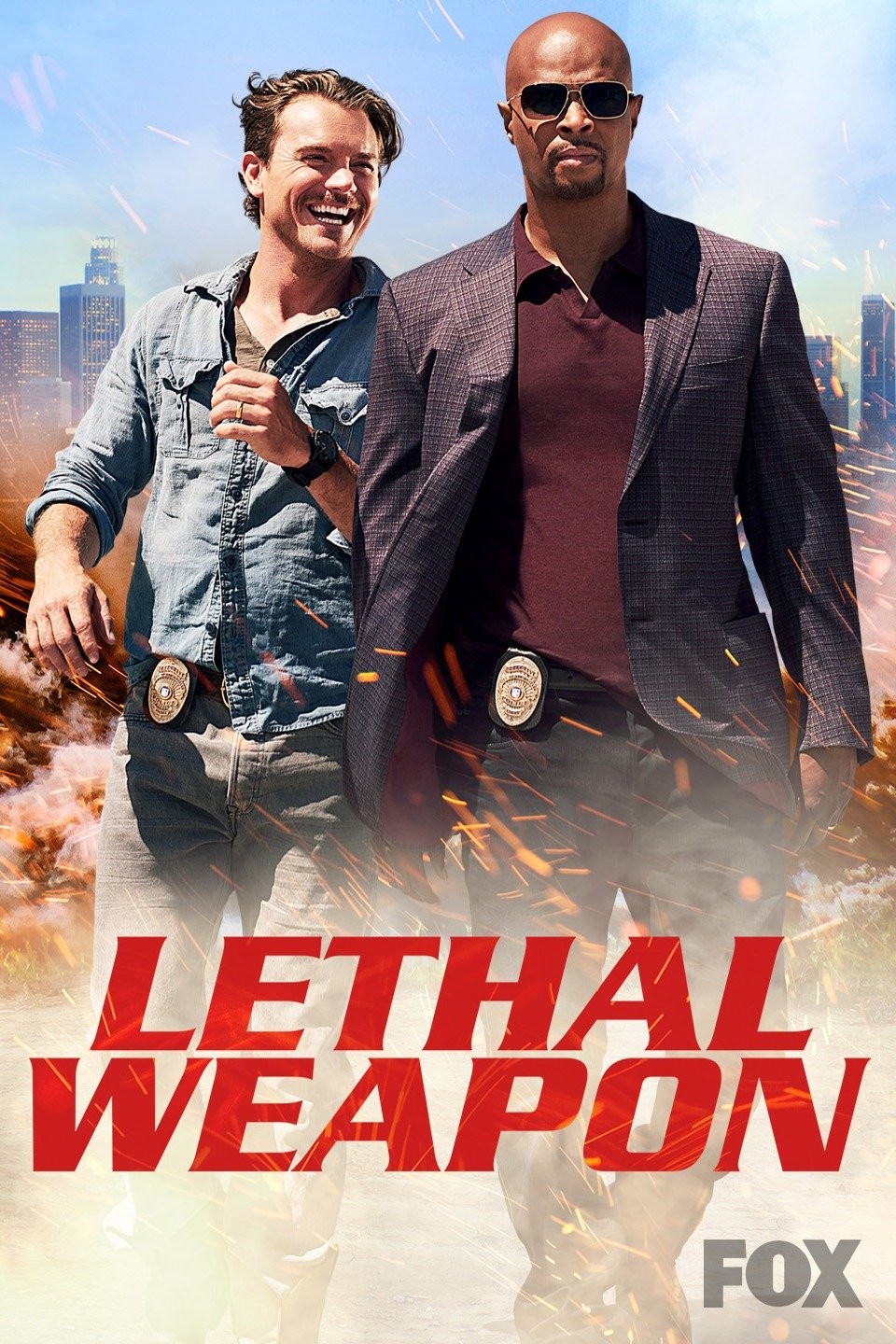
Let’s be honest, when Fox announced a Lethal Weapon television series, the natural response was:
No. Not “maybe.” Not “interesting.” Just: No.
The movies already existed. Mel Gibson and Danny Glover had established Riggs and Murtaugh. The chemistry was iconic. The explosions were iconic. The catchphrases were iconic.
And yet somehow the television version worked!
The Fox series ran for three seasons from 2016 through 2019, producing 55 episodes. Damon Wayans played Roger Murtaugh, while Clayne Crawford initially played Martin Riggs before Seann William Scott joined the cast as Wesley Cole.
It wasn’t trying to replace the movies … it was trying to create a weekly buddy-cop action series using the basic DNA of the franchise. And for a while, it worked remarkably well.
The secret was the same thing that made the original movies work:
Chemistry.
You can have explosions, car chases, helicopters, and throw an entire Los Angeles freeway into a CGI rendering … but if the two leads don’t work together, you’ve got an expensive traffic accident.
The television version had enough personality, humor and ridiculous action to build a legitimate audience. It just couldn’t survive the behind-the-scenes turmoil surrounding the cast.
And now it’s mostly remembered as that surprisingly good show nobody admits they watched.
Fan Stop Nation’s Buddy Cop Compatibility Index: 97 percent banter, 84 percent property damage and 100 percent inability to retire peacefully.
“The LAPD has determined that the safest place for Murtaugh is approximately six feet away from Riggs. Unfortunately, Riggs disagrees.”
Fictional Los Angeles police psychologist
Stumptown: Cobie Smulders Should Have Had Another Three Seasons
There are shows that get canceled. Then there are shows that get canceled and immediately cause people to say: “Wait, what?! Why?!”
Stumptown was one of those.
Cobie Smulders played Dex Parios, a sharp-witted private investigator in Portland, Oregon. The series premiered in 2019 and produced 18 episodes during its single season. Jake Johnson, Michael Ealy and Tantoo Cardinal rounded out a terrific cast.
The character was exactly the kind of protagonist television was getting better at creating: messy, funny, damaged, capable and deeply human.
Dex wasn’t some perfect crime-solving machine, she made bad decisions. She had gambling problems. She had complicated relationships. She was trying to take care of her brother.
And then, occasionally, she solved a murder. That’s a character.
ABC initially gave the show a full-season order, calling it inventive, fun and driven by a distinctive female lead.
Then COVID happened. The second season was ordered and later reversed as production plans were disrupted during the pandemic.
And just like that: Dex was gone.
Fan Stop Nation’s Private Investigator Chaos Index: 87 percent detective work, 13 percent “this is probably going to end badly.”
“Dex doesn’t walk into trouble. Trouble sees Dex coming and crosses the street.”
Fictional Portland bartender who has seen entirely too much
The Good Guys: Bradley Whitford Was Basically Playing a Human Looney Tune
This show should be studied!
Bradley Whitford played Dan Stark, an old-school Dallas detective with a giant mustache, a giant personality and absolutely no interest in adapting to modern policing.
Colin Hanks played Jack Bailey, his younger, more by-the-book partner.
The result was The Good Guys, a Fox action-comedy that premiered in 2010 and lasted 20 episodes.
Dan Stark was the kind of television cop who would hear the phrase “protocol” and respond by driving through a wall.
Jack Bailey was the guy who had to fill out the paperwork afterward.
This was buddy-cop television stripped down to its most ridiculous components. It wasn’t trying to be gritty. It wasn’t trying to make you question the nature of institutional power. It was trying to make Bradley Whitford do something insane while Colin Hanks stared at him like a man reconsidering every decision that led him to this precinct.
And honestly? That’s a television formula.
Fan Stop Nation’s Mustache-to-Destruction Ratio: One Bradley Whitford mustache generated enough chaos to require three insurance adjusters and a city council meeting.
“Dan Stark doesn’t break procedure. He simply creates new procedures while breaking the old ones.”
Fictional Dallas Police Department training manual
Why These Shows Matter & The Xennial Curse Raised on Shows That Could Disappear
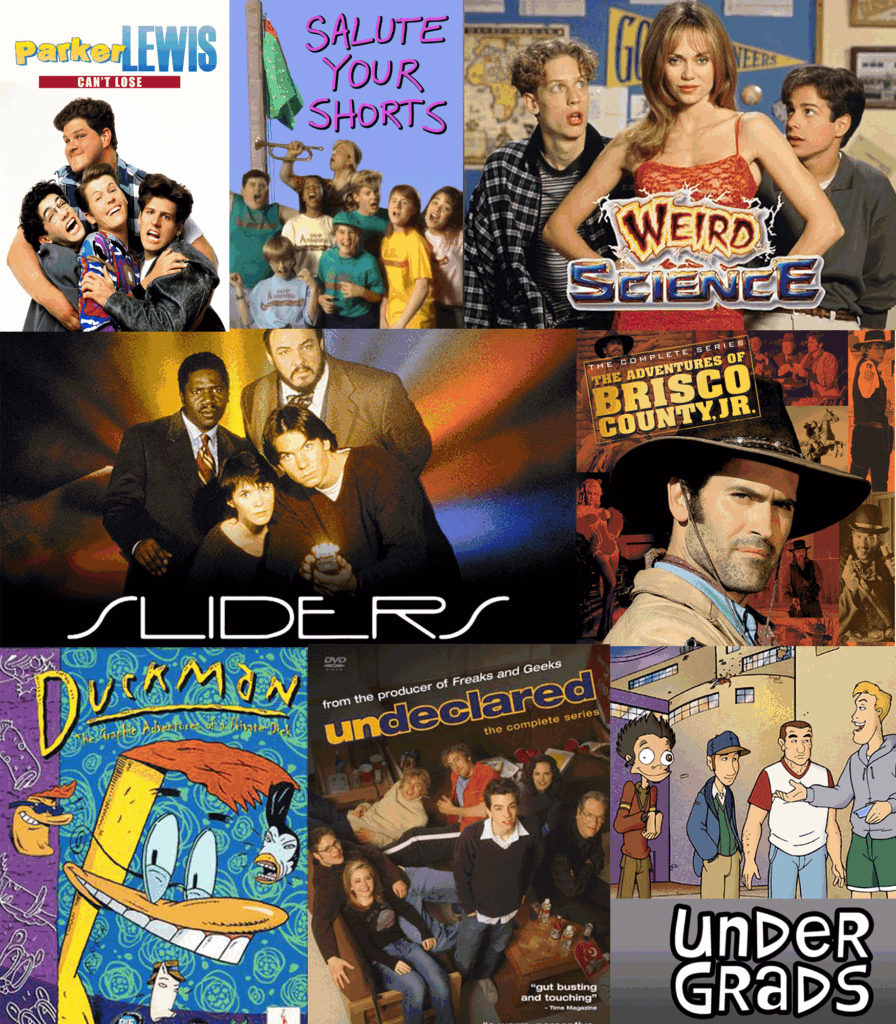
Here’s the thing about cult television — it doesn’t always mean a show was some forgotten masterpiece. Sometimes it means the show had something.
- A great lead
- A unique setting
- A weird tone
- An excellent partnership
- A killer soundtrack
- A ridiculous car
- A memorable supporting character
Or simply the ability to make you look at the clock at 10:45 p.m. and think: “Well, I guess I’m watching another one.”
That’s how television fandom actually works. Not every show becomes The Sopranos. Not every cop drama becomes The Wire.
Some shows simply become part of your personal television history.
You remember where you watched them; the opening credits; the car; the theme song, and telling your friends, “Dude, you have to watch this.” … and then the network cancels it.
This is something younger viewers don’t always understand.
For those of us who grew up with network television, you couldn’t immediately binge an entire series after cancellation. There wasn’t necessarily a streaming service waiting to resurrect it. There wasn’t a YouTube channel explaining every obscure episode.
There wasn’t Reddit. There wasn’t TikTok. There wasn’t some algorithm saying, “Based on your interest in Nash Bridges, you may enjoy The Good Guys.”
You watched it when it aired. If you missed it? Tough luck, chief.
Maybe somebody taped it on VHS? Maybe your friend had a recording? If not, it was gone.
That’s why these shows developed cult followings. People who remember them tend to remember them hard.
The Bottom Line: Television Has Always Had Great Shows That Got Away
- Nash Bridges got six seasons and still somehow feels underrated.
- New York Undercover brought music, culture and New York attitude into the police procedural.
- Battle Creek gave us Vince Gilligan and David Shore working together before the concept had time to fully develop.
- Detroit 1-8-7 assembled an excellent cast and barely got the chance to breathe.
- Lethal Weapon proved a seemingly impossible movie-to-TV translation could actually work.
- Stumptown gave Cobie Smulders one of the most interesting roles of her career and disappeared after 18 episodes.
- And The Good Guys gave Bradley Whitford a mustache and apparently decided that was enough of a reason to destroy Dallas.
It was. That’s the charm of the underrated cop show. They weren’t always perfect. They didn’t always get the ratings. They didn’t always get the awards. Sometimes they didn’t even get a second season.
But, they gave us characters we remember, partnerships we still talk about and episodes that somehow survived in the mental DVR of a generation raised on cable television, VHS tapes and whatever happened to be on after Seinfeld.
And maybe that’s the real definition of a cult classic.
Not how long it lasted, how many awards it won, or how many people watched it the first time. It’s whether, 10 or 20 years later, somebody mentions the title and you immediately say: “Oh, hell yes. That show was awesome!”
Then you spend the next 45 minutes explaining it to someone who has absolutely no idea what you’re talking about.
Which, frankly, is how you know you’ve found the good stuff.