First, an important ruling from the Fan Stop Nation Supreme Court: THIS IS TV ONLY.
No DeLorean. No Ecto-1. No Batmobile from the movies. No Bullitt Mustang. No Smokey and the Bandit Trans Am. That’s all for another day.
Take your cinematic automobiles and park them somewhere else … we’re talking television … because television gave us something movies couldn’t: the opportunity to see the same ridiculous automobile week after week until it stopped being a car and became a member of the cast.
Some were muscle cars. Some were vans. Some were talking computers disguised as Pontiacs. One was literally a spaceship, and one was a Flintstones-era vehicle powered by a man’s feet.
The best TV cars didn’t simply transport characters from one scene to another. They became characters themselves. You could hear the engine, see the paint job, and know exactly what show was coming on.
So buckle up, buttercup — we’re taking a road trip through the greatest automotive characters ever to roll across the small screen.
The General Lee: The Duke Boys’ Orange Rocket
Let’s get the obvious one out of the garage first.
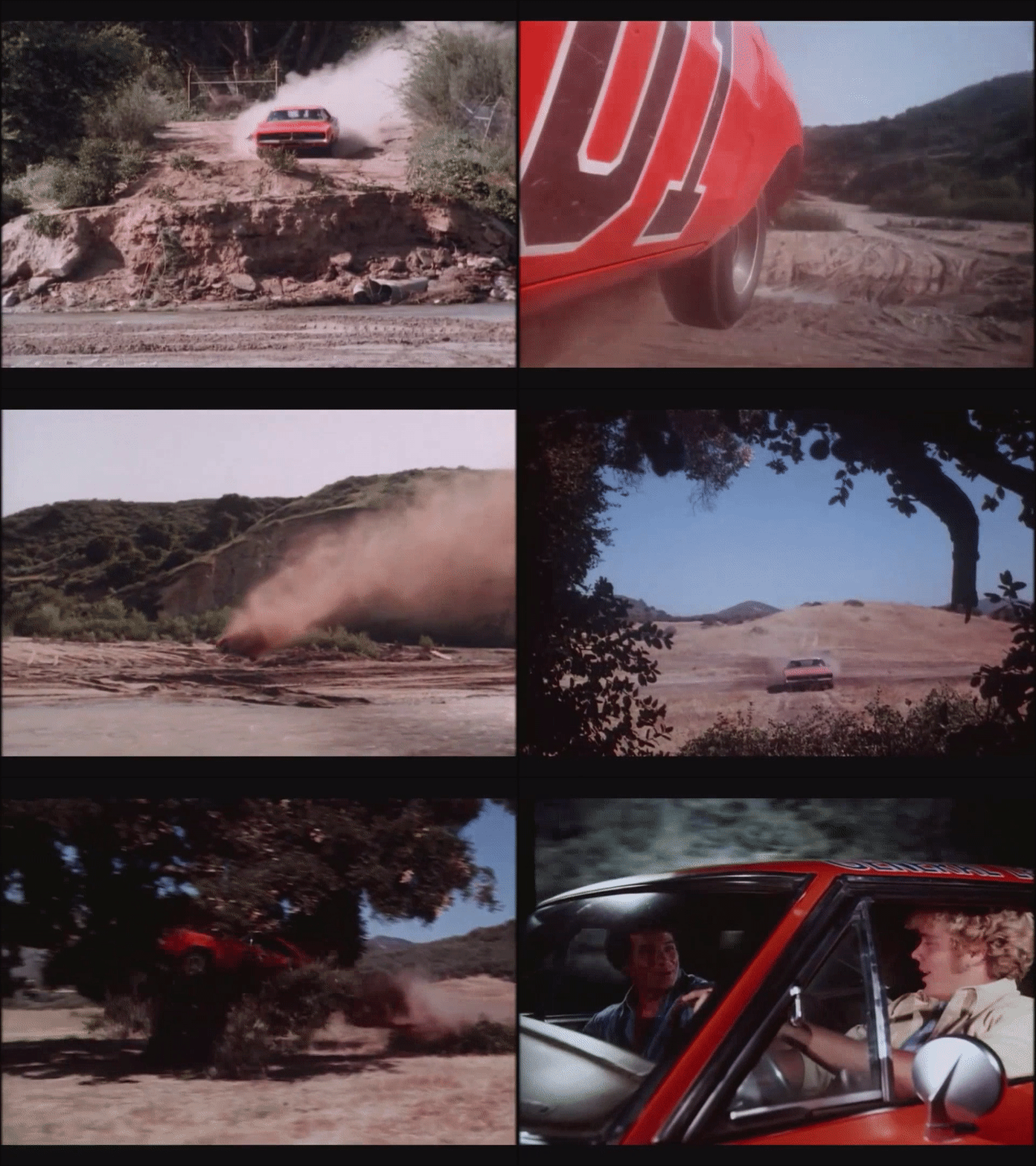
The General Lee wasn’t simply a 1969 Dodge Charger … it was the 1969 Dodge Charger.
Orange paint. “01” on the doors. Confederate battle flag on the roof. Welded-shut doors. CB radio. Horn that played “Dixie.” And, most importantly, an apparent ability to jump approximately any obstacle in Hazzard County, Georgia or the greater South East.
The Dukes of Hazzard turned a muscle car into a cultural phenomenon.
According to History, more than 300 Chargers were reportedly used as General Lee stand-ins over the show’s seven seasons, while the famous opening-credits jump covered roughly 82 feet.
That’s not a TV car — that’s an automotive genocide.
Whatever you think of the show’s Confederate imagery (which we are not getting into) the General Lee’s place in television history is undeniable. It became one of the most recognizable vehicles ever put on a television screen.
Fan Stop Nation’s Jump Distance Index: The General Lee completed approximately 14,000 more successful jumps than any production Dodge Charger had any business attempting.
“If the road goes over a hill, the General goes over the hill. If the road doesn’t go over a hill, Cooter will build one.”
Hazzard County mechanic who definitely needed better insurance
Starsky and Hutch: The Striped Tomato
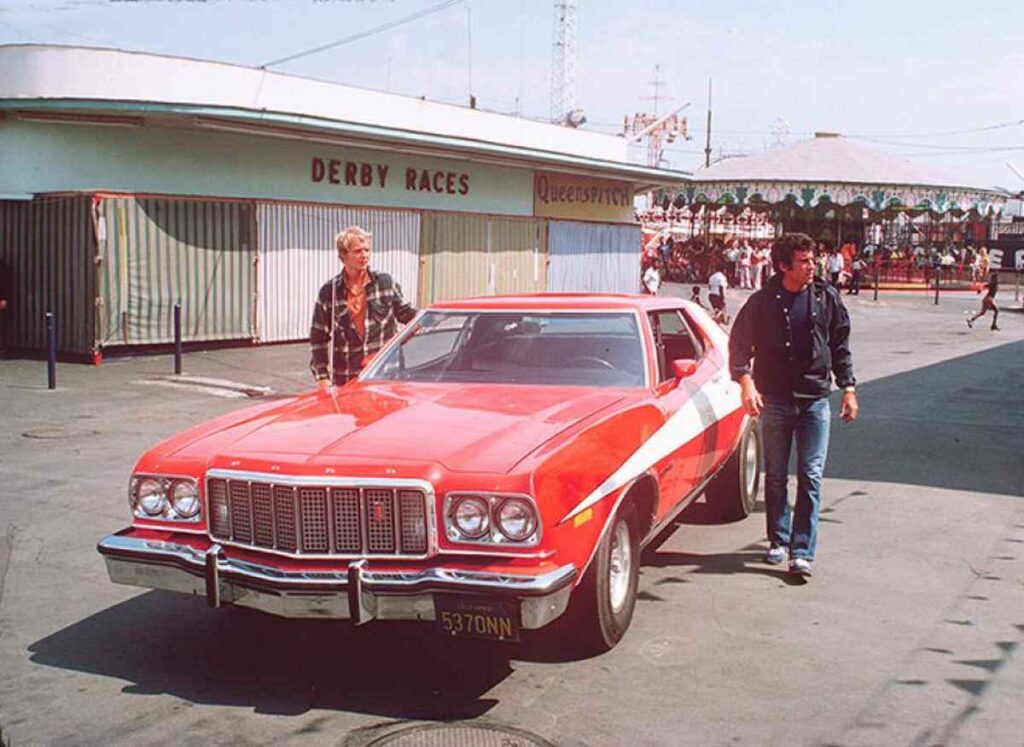
Before every kid wanted a black Trans Am or a DeLorean, there was the 1975 Ford Gran Torino from Starsky & Hutch.
Red. White stripe. V8. Suspension apparently tuned by people who had no intention of preserving the tires.
The car was officially nicknamed the “Striped Tomato,” which is one of those perfect pieces of 1970s television nonsense that somehow makes the car even cooler.
Starsky’s Torino became inseparable from the show. It wasn’t just transportation. It was part of the partnership.
Hutch had the blond hair. Starsky had the attitude. The Torino had approximately 400 pounds of personality.
Fan Stop Nation’s Striped Tomato Horsepower-to-Subtlety Ratio: 0% subtlety, 100% swagger and enough tire smoke to make a Firestone executive nervous.
“You can identify a Starsky and Hutch chase scene by the sound of the tires filing a formal complaint.”
70s stunt coordinator

The ‘Cuda: Nash Bridges’ Yellow Piece of California Cool
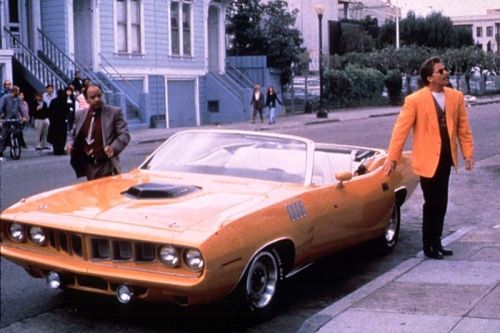
Don Johnson could have driven almost anything in Nash Bridges. He got a yellow Plymouth ‘Cuda. Excellent decision.
The car became one of the defining images of the late-’90s series, cruising through San Francisco with Johnson behind the wheel and Cheech Marin riding shotgun.
The interesting part? The television “Hemi ‘Cuda” wasn’t actually a genuine 1971 Hemi ‘Cuda convertible. Producers used other Barracuda/’Cuda cars and modified them to resemble the exceptionally rare 1971 model … because Hollywood can.
Why locate an impossibly rare muscle car when you can simply make one look like it?
The car became so associated with the show that its television identity eventually became valuable in its own right.
Fan Stop Nation’s Mopar Authenticity Index: Approximately 73% of people who saw the Nash Bridges ‘Cuda immediately wanted one, while approximately 72% had no idea what one actually cost.
“Hollywood’s first rule of classic cars: If you can’t find one, paint another one yellow and act confident.”
Fictional Mopar restoration expert
The Mystery Machine: Groovy, Functional and Terrible at Being Mysterious
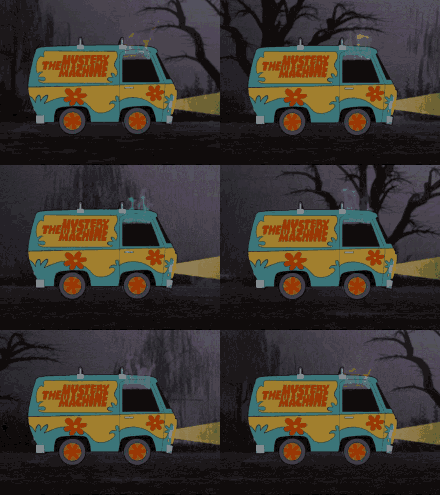
The Mystery Machine may be the most recognizable cartoon vehicle ever created. Which is saying something when your competition includes talking cars, Batmobiles and a vehicle literally powered by Fred Flintstone’s feet.
The van was essentially a rolling psychedelic mural, carrying Scooby-Doo and the gang toward haunted amusement parks, abandoned mines, creepy mansions and whatever location had the word “mystery” written in the script.
It also had a questionable business model.
If you owned a brightly painted van that screamed “five teenagers and a Great Dane,” perhaps don’t park it outside an abandoned cemetery at midnight.
Then again, apparently the van was excellent at lead generation.
Fan Stop Nation’s Mystery-to-Van Ratio: The Mystery Machine has transported its occupants into approximately 97% more suspicious situations than any responsible insurance company would tolerate.
“Nothing says covert investigation like a van that can be identified from three counties away.”
Fictional FBI surveillance specialist
The A-Team Van: If a GMC Vandura Could Punch You
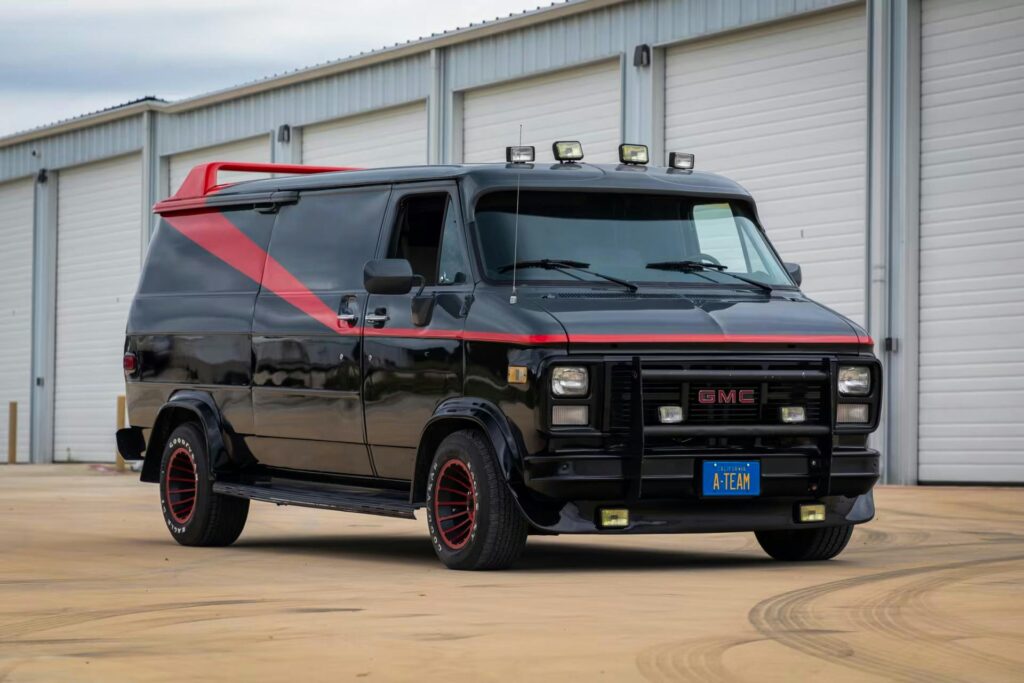
The A-Team van didn’t need a license plate … it needed a warning label.
The black-and-gray 1983 GMC Vandura, complete with red stripe, spoiler and aggressive wheels, was the rolling headquarters for Hannibal, Face, Murdock and B.A. Baracus.
It wasn’t simply a vehicle; it was a mobile workshop, armory, surveillance station and occasional battering ram.
The production reportedly used multiple vans, and the vehicle appeared throughout the show’s 97 episodes. And somehow, despite being driven through approximately every wall, ditch and parking lot in California, it never seemed to need a trip to the transmission shop.
Fan Stop Nation’s Vandura Durability Index: The A-Team van survived approximately 14,000 more catastrophic driving incidents than the average GMC service manual recommends.
“It’s not a van. It’s a tactical facility with cup holders.”
Fictional A-Team mechanic
KITT: The Car That Made Everyone Want a Talking Pontiac
Before Siri. Before Alexa. Before your refrigerator started asking whether you wanted more eggs.
There was KITT.
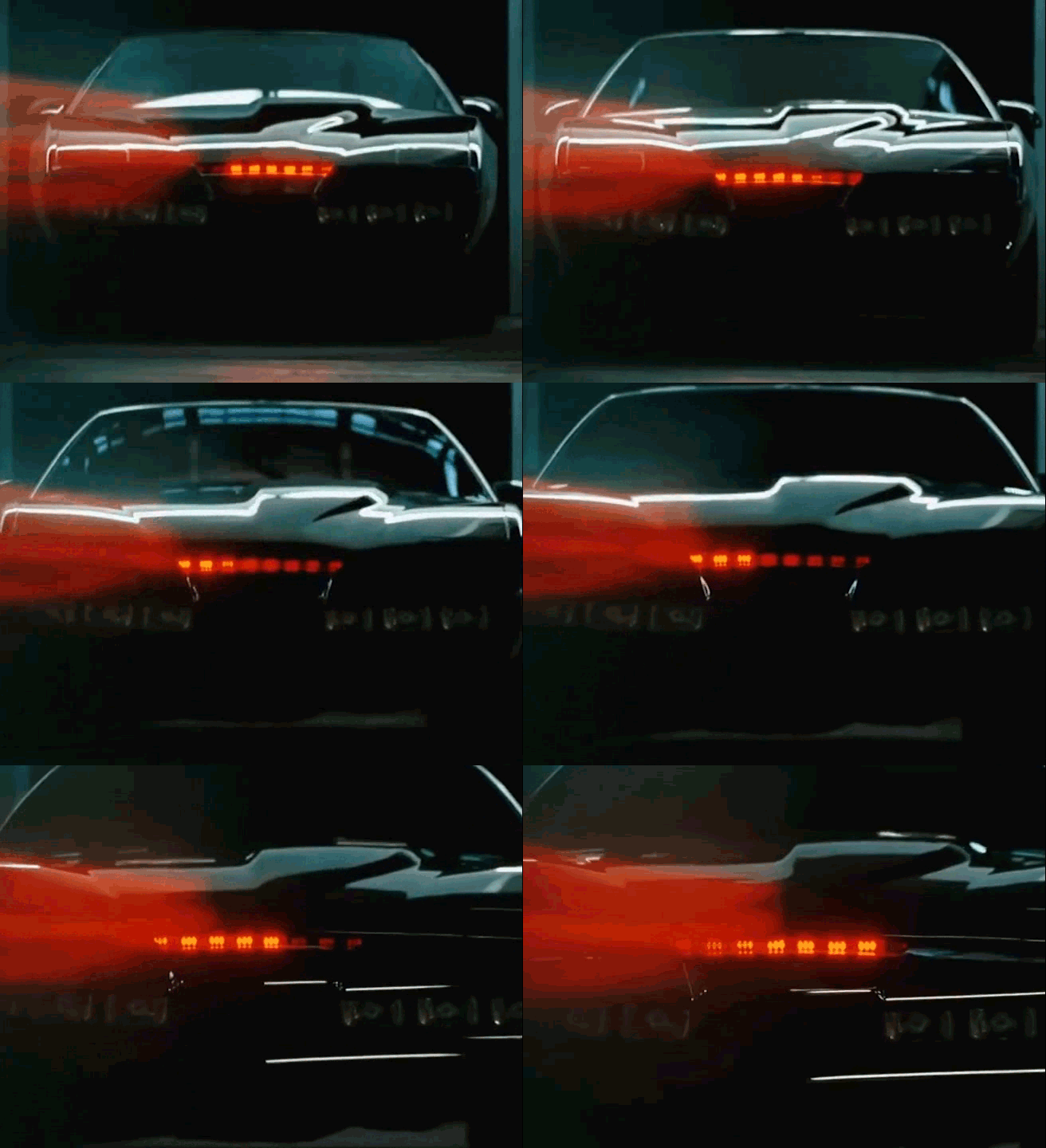
The 1982 Pontiac Trans Am from Knight Rider was the ultimate Gen-X/Xennial fantasy machine. It could talk, drive itself, scan objects, communicate with Michael Knight and perform enough technological wizardry to make your dad’s 1982 Oldsmobile look like a horse-drawn carriage.
KITT wasn’t merely a car. KITT was your best friend; your navigation system; your security system; your emotional support Pontiac.
And that red scanner light? Come on. That’s childhood.
Fan Stop Nation’s KITT Technology Index: KITT possessed approximately 46 features that modern luxury cars now advertise as groundbreaking innovations.
“KITT could drive itself in 1982. Forty years later my car still yells at me because I changed lanes without asking permission.”
Xennial driver staring angrily at a dashboard
Magnum P.I.: The Ferrari 308 GTS That Made Hawaii Look Even Hotter
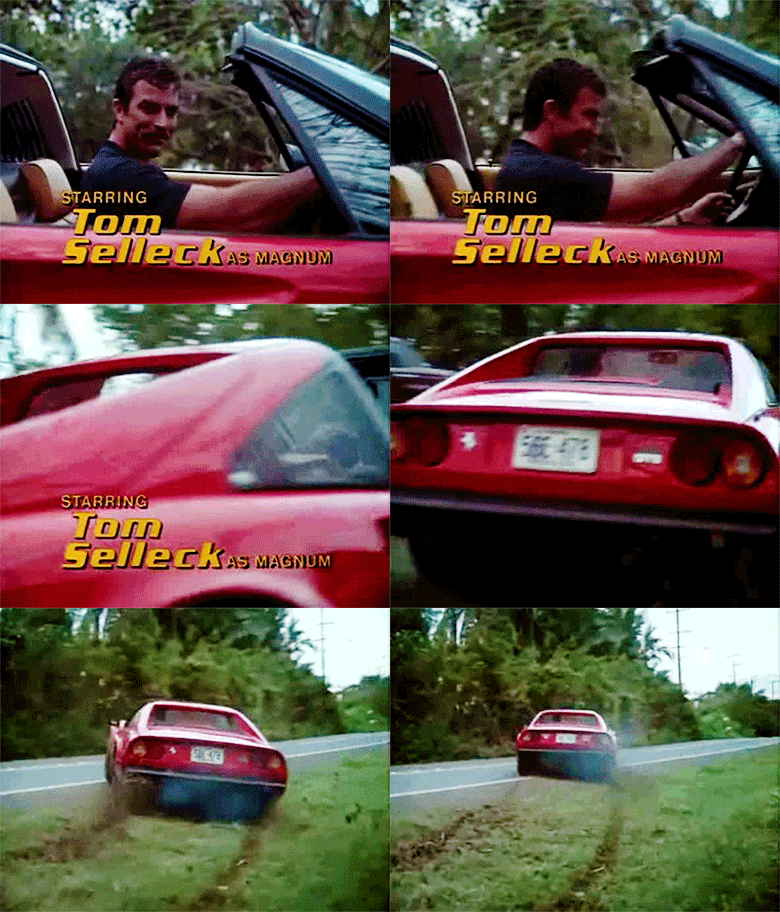
Thomas Magnum had a mustache, a Hawaiian shirt, a private-investigator gig … and a Ferrari.
The Ferrari 308 GTS from Magnum P.I. became one of television’s definitive exotic cars, largely because it fit the fantasy perfectly.
You weren’t just watching a Ferrari. You were watching a Ferrari cruise around Hawaii with Tom Selleck behind the wheel while your teenage brain quietly decided this was probably the correct way adulthood worked.
Spoiler alert: it wasn’t.
Fan Stop Nation’s Hawaiian Shirt Horsepower Index: The Ferrari increased perceived coolness of Hawaiian shirts by approximately 840% between 1980 and 1988.
“The Ferrari had more horsepower than Magnum had actual cases, and somehow both always got the job done.”
Fictional Oahu valet
The Rockford Files: The Pontiac Firebird That Always Took the Abuse
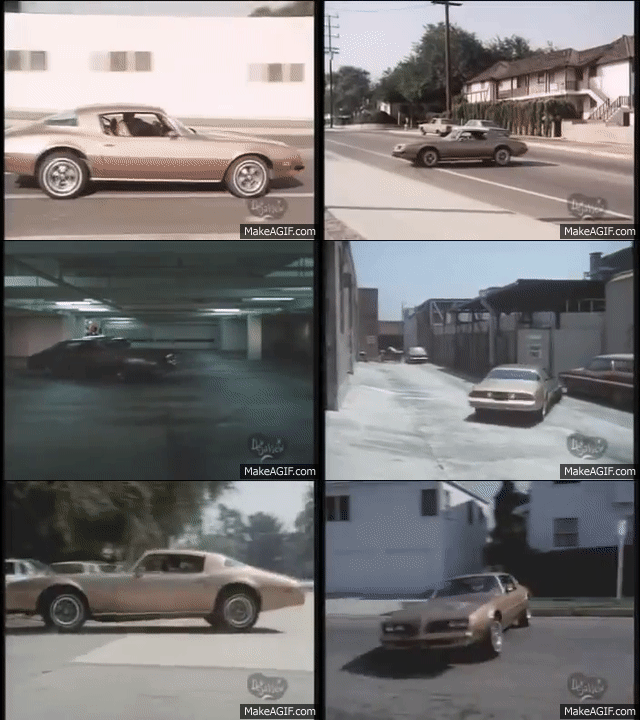
Jim Rockford’s car wasn’t supposed to look like a superhero vehicle. That’s precisely why it worked.
The gold Pontiac Firebird Esprit was an ordinary-looking car that became extraordinary because Rockford drove it like he had recently offended the laws of physics.
Then came the J-turn. Rockford would reverse, whip the car around, and launch forward while every television stunt coordinator in America quietly whispered, “This seems safe.”
The car fit the character perfectly. Not flashy. Not pristine. Just capable.
And constantly one bad decision away from a repair bill.
Fan Stop Nation’s J-Turn Survival Index: Rockford performed enough reverse-to-forward maneuvers to make approximately 87 transmission mechanics retire early.
“Jim Rockford’s greatest superpower was having a mechanic who never asked follow-up questions.”
Fictional California auto-shop owner
Miami Vice: The Ferrari That Wasn’t Really a Ferrari
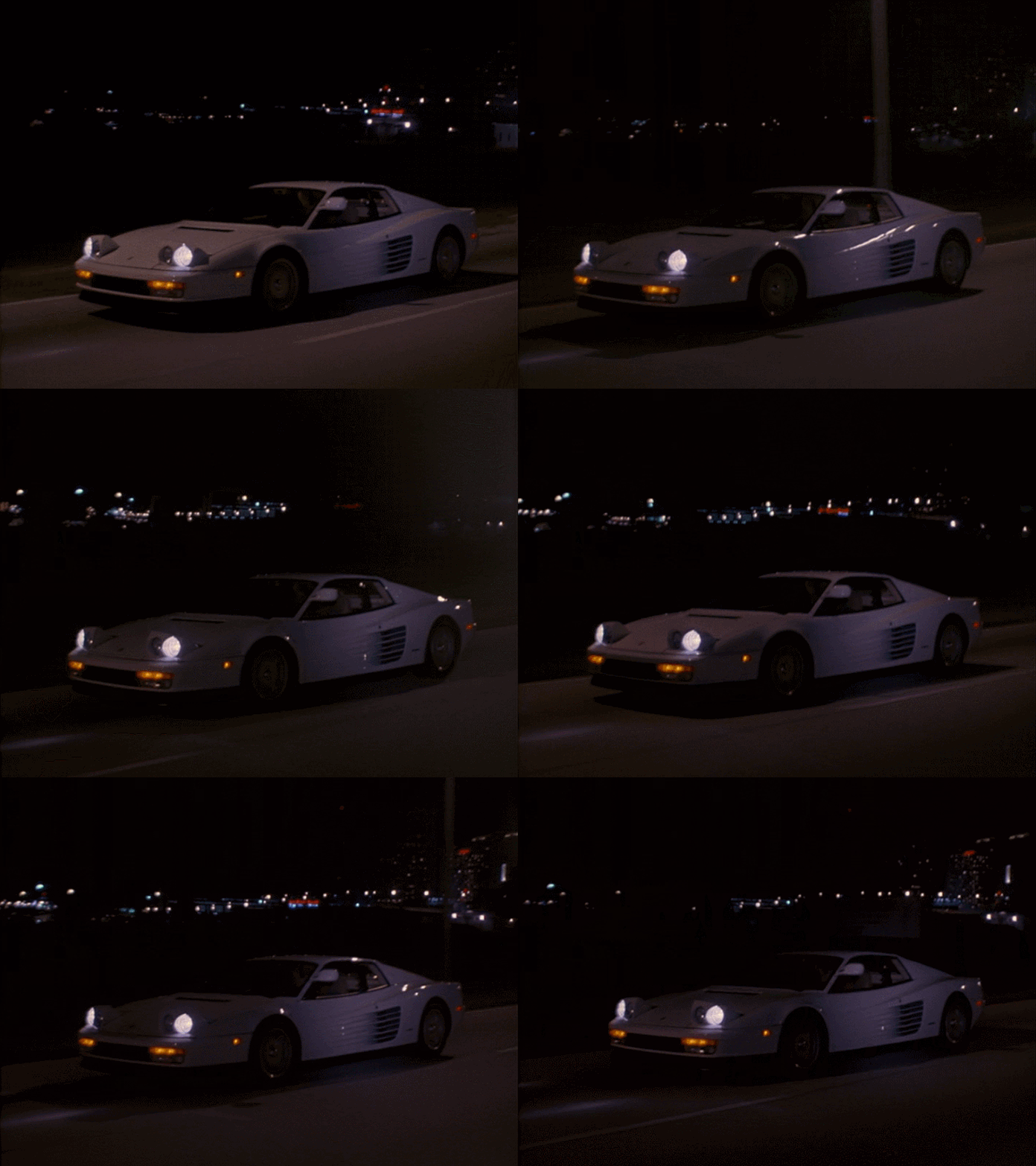
Now we’re entering dangerous Xennial territory.
Miami Vice gave us Crockett and Tubbs; pastel suits; synth-heavy music; slow-motion sunsets, and a Ferrari Testarossa.
Except television production has never been particularly interested in allowing reality to interfere with looking cool.
The early seasons famously used a black Ferrari Daytona replica before the Testarossa arrived, while the production ultimately used kit-based cars for some of the Ferrari action.
Which somehow makes the whole thing even more Miami Vice: Fake Ferrari. Real attitude. No notes.
Fan Stop Nation’s Pastel-to-Horsepower Ratio: Every Ferrari appearing on Miami Vice generated approximately 14 gallons of hair gel and one extremely aggressive sunglasses purchase.
“The car isn’t real, but the sunglasses absolutely are.”
Fictional 80s nightclub owner
Simon & Simon: Rick Simon’s Dodge Power Wagon
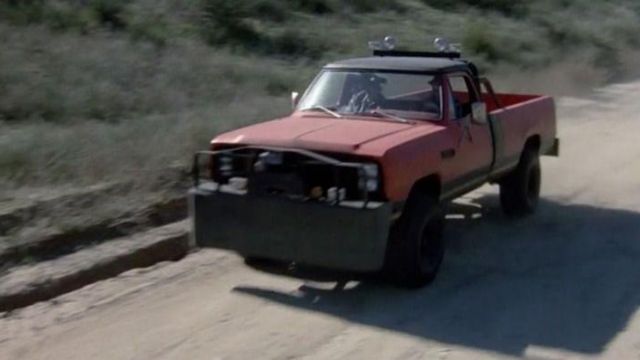
The A-Team gave us the van every kid wanted to jump out of, Simon & Simon gave us the pickup every kid wanted to absolutely abuse in the nearest vacant lot.
Rick Simon’s 1979 Dodge Power Wagon was big, red, loud and about as subtle as a brick through a plate-glass window. It looked less like a private investigator’s company vehicle and more like something you’d buy after telling the salesman, “I need something that can survive a small war.”
Rick, played by Gerald McRaney, drove a long-bed Dodge W-150/W-250-era Power Wagon with the Macho package, oversized tires, roll bar, auxiliary lights and a massive front bumper. The brothers’ cars were part of the joke. A.J. had his polished classic cars and Camaros. Rick had a truck that looked like it had recently escaped from a construction site.
And unlike some TV cars that merely appeared in the background, Rick’s truck was part of the show’s personality. It showed up in the opening credits, went off-road, got thrown into detective work and generally looked like it could tow the entire Simon & Simon production truck without asking permission.
Fan Stop Nation’s Power Wagon Principle: If your private investigator drives a truck with a roll bar, giant tires and enough front-end metal to rearrange a Buick, you probably aren’t spending much time doing paperwork.
“Rick didn’t need a business card. He just parked the truck outside and waited for people to become nervous.”
Fictional San Diego private investigator
The Jetsons’ Flying Car: The Original Traffic Solution
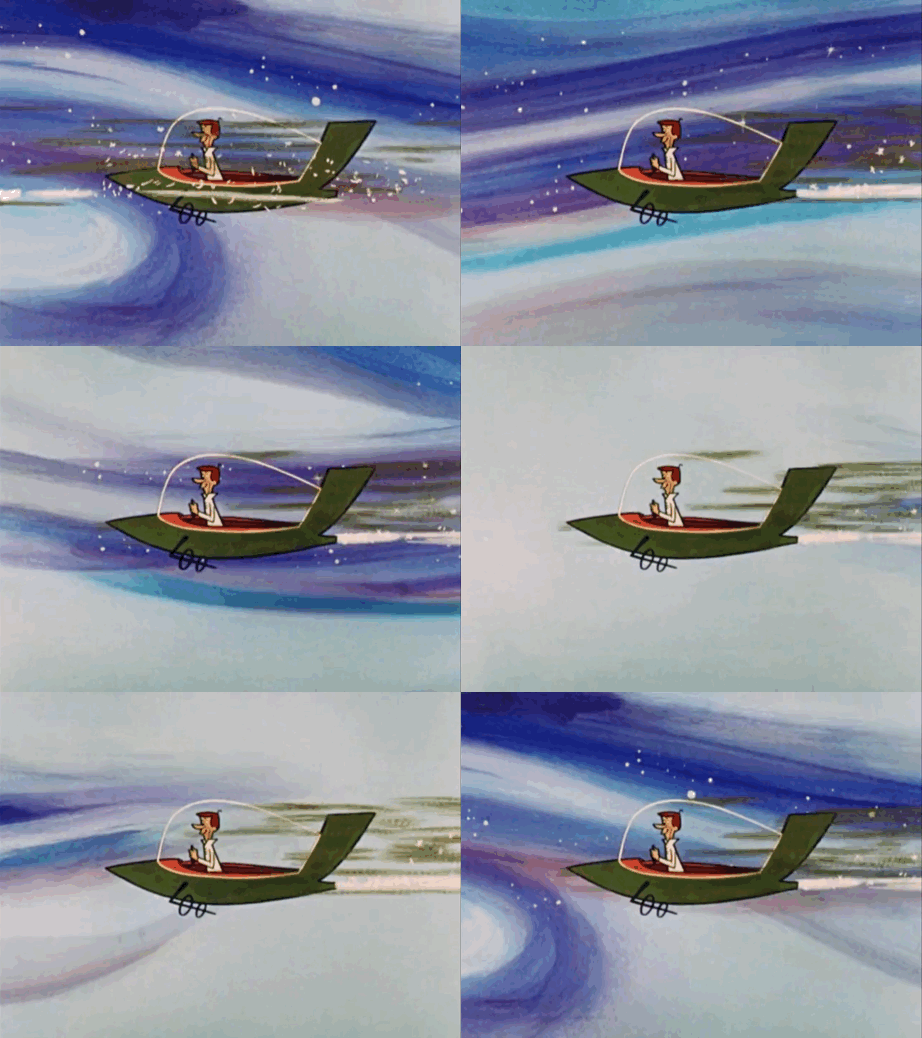
Let’s go animated again.
George Jetson’s flying car may be the most optimistic transportation prediction television ever made.
The premise was simple:
- Cars would eventually fly.
- No traffic.
- No potholes.
- No road rage.
- No guy in a lifted pickup riding your bumper while you’re already doing seven over.
Instead, humanity would simply move traffic vertically. Obviously, this has not happened … yet … but the Jetsons gave generations of viewers the idea that the future would involve flying automobiles, robot maids and offices where your boss could apparently communicate with you via enormous television screens.
Only one of those predictions turned out to be particularly accurate.
Fan Stop Nation’s Future Transportation Failure Rate: The Jetsons predicted flying cars approximately 63 years before we managed to make a minivan with a television remote that nobody can find.
“We were promised flying cars. Instead, I have a 72-month loan on a crossover.”
Xennial futurist, visibly disappointed
The Batmobile: TV’s Original Superhero Ride
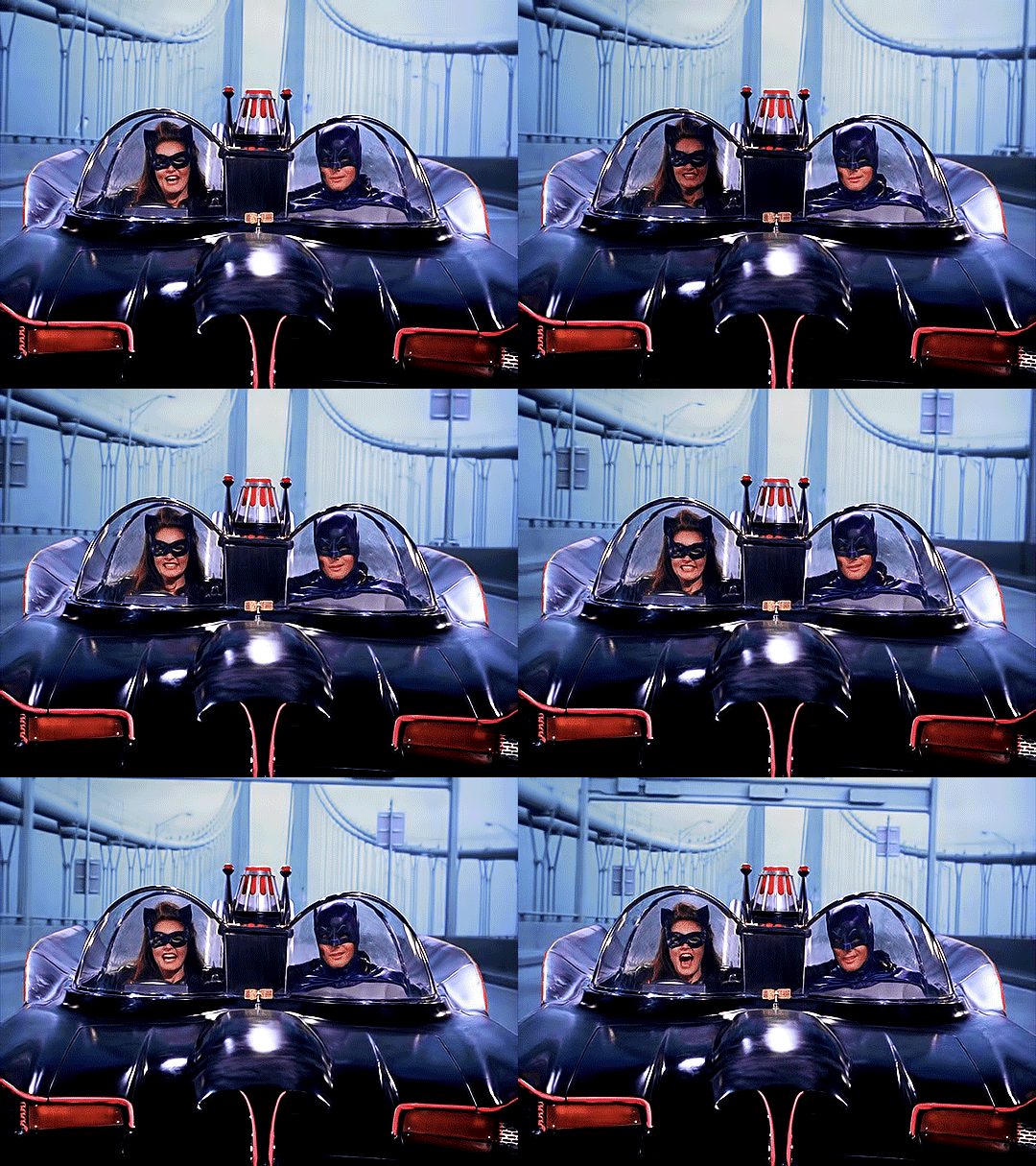
Yes, the movies have had their Batmobiles, but we’re talking television, and the 1966 Batman version deserves its own garage bay.
The sleek black-and-red machine designed by George Barris became one of the most recognizable cars in pop culture almost overnight.
It looked futuristic. It looked dangerous. It had gadgets. It had fins. It had enough buttons to make an airplane jealous.
And Adam West somehow made driving it while delivering deadpan dialogue seem like the most normal thing in the world.
Fan Stop Nation’s Bat-Gadget Button Count: 100% of children who watched the show wanted a Batmobile; approximately 0% had a practical way to explain that request to their parents.
“My parents said I couldn’t have a Batmobile because it was impractical. This is why I no longer trust adults.”
Eight-year-old Bruce Wayne
The Fall Guy: Colt Seavers’ GMC Pickup
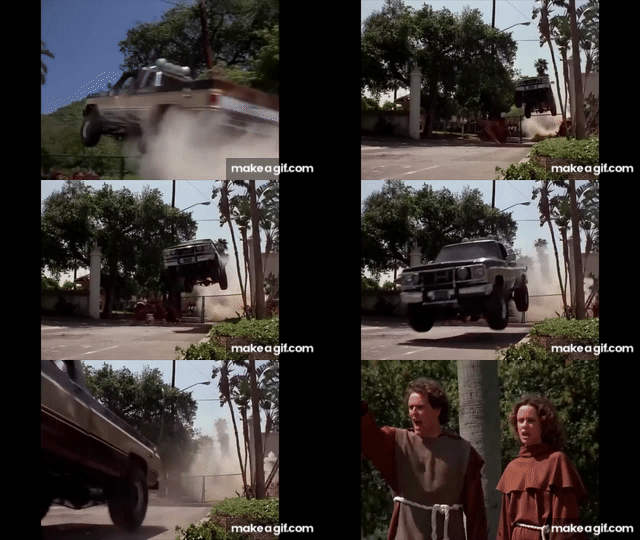
Before Ryan Gosling made stuntmen cool again, Lee Majors was doing the job every week in The Fall Guy.
The GMC pickup was rugged, enormous and perfectly suited to a guy whose professional life involved getting punched, chased and launched through the air for money.
The show also understood something television often forgets: if your protagonist is a stuntman, the vehicle should occasionally be allowed to do something stupid — very stupid.
Fan Stop Nation’s Stuntman Insurance Index: Colt Seavers performed approximately 9,400 activities that would cause a modern insurance company to immediately change its phone number.
“The truck doesn’t have airbags. It has Lee Majors.”
Fictional stunt coordinator
The Mystery of the Car That Became the Star
What makes these vehicles so memorable isn’t necessarily horsepower. Some were objectively ridiculous. Some weren’t even the exact cars the shows claimed they were. Some were cartoon vehicles. One was a talking computer. One was basically a haunted hot rod. But they all did something important — they gave the audience another way into the story.
You didn’t just watch Knight Rider: you wanted KITT.
You didn’t just watch The Dukes of Hazzard: you wanted to jump a Charger.
You didn’t just watch The A-Team: you wanted a black GMC van.
You didn’t just watch Nash Bridges: you wanted that yellow ‘Cuda, even after discovering Hollywood had performed automotive plastic surgery on it.
That’s the magic.
Why TV Cars Matter
Movies have two hours to make you remember a car. Television had years. That’s the difference.
Week after week, the same vehicle appeared in the driveway, outside the police station, racing through the city or jumping over something that absolutely did not need to be jumped.
Eventually, the vehicle became part of the family.
That’s why:
- a certain generation can hear a V8 revving and immediately picture an orange Charger.
- a red scanner light still makes Xennials think of KITT.
- a black GMC van makes somebody instinctively say, “I love it when a plan comes together.”
- a yellow Plymouth ‘Cuda still looks cooler than approximately 98% of the cars built today.
The Final Lap
Television’s greatest cars weren’t necessarily the fastest. They weren’t always the most expensive. They weren’t even always real.
They were memorable; had personalities; made entrances; escaped bad guys; jumped things; occasionally exploded; and sometimes, if you were very lucky, they had a talking computer living inside them.
The automobile has always represented freedom. On television, it became something more … it became identity.
- The General Lee was the Dukes.
- KITT was Michael Knight.
- The Torino was Starsky.
- The ‘Cuda was Nash.
- The Mystery Machine was Scooby and the gang.
- The A-Team van was the A-Team.
And the rest?
They were four-wheeled reminders that, for a few hours every week, television could make absolutely anything seem possible.
Even flying cars … we’re still waiting on those.