


There are movie cars … and then there are movie stars that happen to have four wheels.
You know the difference.
You can remember the plot of Back to the Future without thinking too hard, but say DeLorean and your brain immediately hears that electric guitar riff.
- Say Ecto-1 and you’re already yelling, “Who you gonna call?”
- Say Eleanor and somewhere inside your Xennial brain, Nicolas Cage is screaming about stealing 50 cars.
- Say Bluesmobile and you can smell stale coffee, hear a harmonica and picture a Dodge Monaco launching itself down a staircase.
That’s the thing about the greatest movie cars. They don’t just transport the characters … they become characters.
Hollywood figured this out a long time ago. The right car can establish a character before the actor says a word. It can tell you whether somebody is cool, broke, rich, dangerous, weird, irresponsible or about to make an extremely poor decision involving a police helicopter.
And for the generation that grew up on VHS tapes, cable movie marathons and the automotive insanity of the 1980s and ’90s, these cars weren’t props.
They were dreams with license plates.
Some were genuinely exotic. Some were mass-produced. Some were ugly. Some were completely impractical. Some were built specifically for the movie.
And one was basically a station wagon that looked like somebody had lost a bet.
Let’s take a ride through the most iconic cars in movie history.
The DeLorean: Back to the Future’s Stainless-Steel Time Machine
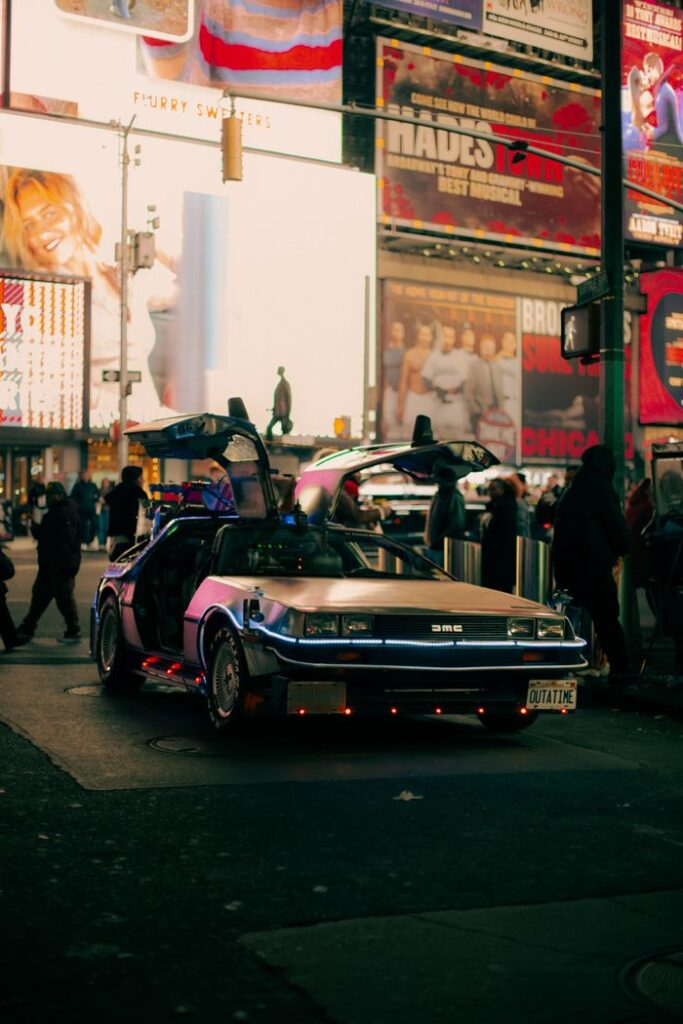
Let’s start with the obvious. The DeLorean DMC-12 was not exactly the automobile industry’s greatest success story.
The actual DeLorean Motor Company produced the DMC-12 for only a short period in the early 1980s, and the car’s gull-wing doors and stainless-steel body became far more famous after Back to the Future turned one into a time machine. (caranddriver.com)
Doc Brown didn’t care. He had a flux capacitor. That’s a significantly better selling point than fuel economy.
The genius of the DeLorean as the time machine is that it already looked like something from another planet. Even sitting in a parking lot, it seemed like somebody had asked an engineer to design a car for a teenager who listened to too much synth-pop.
Then Doc bolted a bunch of tubes and wires onto it, and suddenly the weird car became the most recognizable time machine in popular culture.
And, because Back to the Future gave us the magical date of October 21, 2015, Xennials spent years waiting for that day to arrive and deliver hoverboards, flying cars and self-lacing shoes.
The DeLorean showed up. The flying cars did not.
Fan Stop Nation’s Flux Capacitor Horsepower Index: 1.21 gigawatts of plot relevance, regardless of actual engine output.
“The DeLorean had terrible acceleration, but fortunately Marty only needed it to reach 88 miles per hour exactly when the universe was feeling cooperative.”
Fictional automotive engineer
Ecto-1: Ghostbusters’ Hearse-Ambulance-Cadillac of Questionable Mechanical Decisions
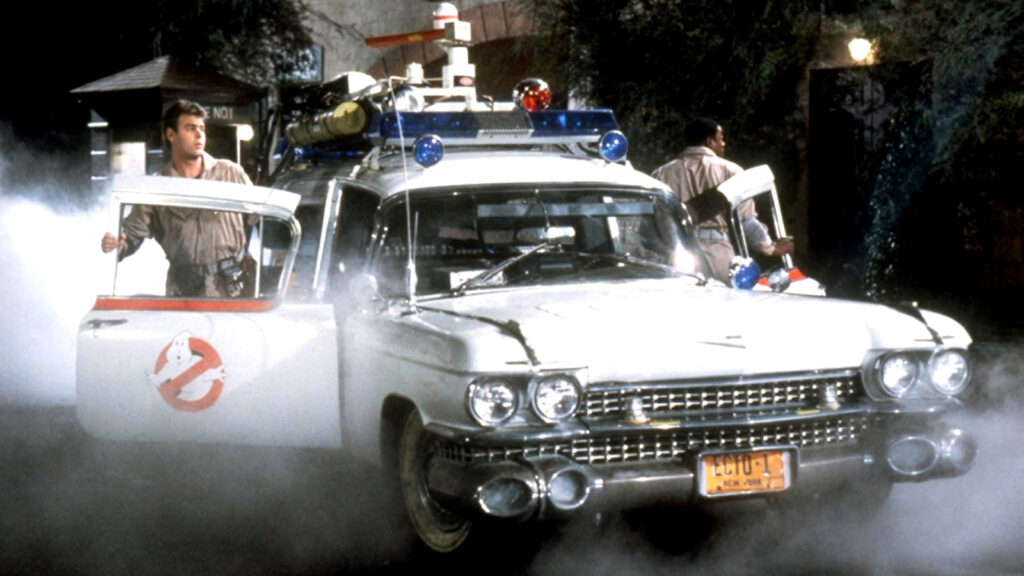
If there was ever a vehicle that looked like it had already had a long day before the movie even started, it was Ecto-1.
The Ghostbusters’ iconic ride was based on a 1959 Cadillac Miller-Meteor ambulance/hearse combination. The filmmakers reportedly used two of the vehicles during production. (caranddriver.com)
Ray Stantz buys the thing for the Ghostbusters because it’s cheap. Then immediately discovers that it needs:
- suspension work
- shocks
- brakes
- steering work
- transmission work
- electrical work
- approximately every other mechanical component known to mankind
In other words: Ray bought a 1959 Cadillac from Craigslist before Craigslist existed.
But once Ecto-1 gets the white paint, red fins, emergency lights and Ghostbusters branding, the transformation is complete. It’s no longer an old ambulance … it’s the world’s most recognizable paranormal extermination vehicle.
And let’s be honest: if you were eight years old in 1984, there was no cooler job than Ghostbuster. And there was no cooler company car.
Ecto-1 is proof that sometimes the perfect movie car isn’t the fastest. It just needs personality and a siren.
Fan Stop Nation’s Paranormal Roadworthiness Index: 17 warning lights, 4 ghosts, 2 proton packs and absolutely no chance of passing a modern vehicle inspection.
“The good news is the car can transport four Ghostbusters. The bad news is the car may not survive the trip to the next ghost.”
Ghostbusters fleet manager

Eleanor: The Mustang That Made Stealing Cars Look Like a Career Path
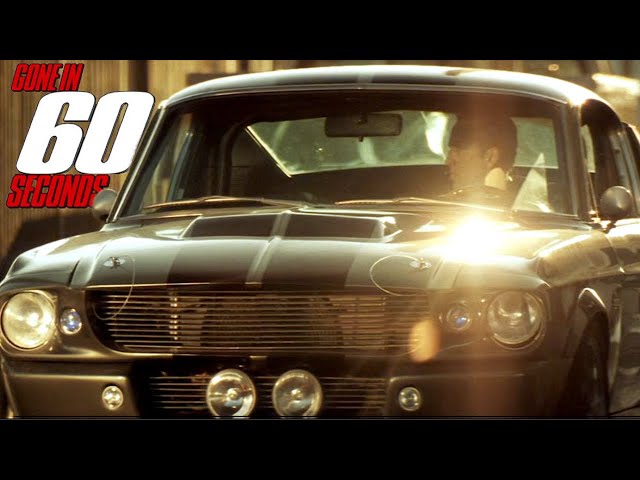
Nicolas Cage, Angelina Jolie, Robert Duvall, and a 1969 Ford Mustang that the movie decided should be called Eleanor.
The 2000 remake of Gone in 60 Seconds turned Eleanor into automotive royalty. The movie’s Mustang was based on a customized version of the 1967-68 Mustang fastback design, while the earlier 1974 film featured a different Mustang. The 2000 Eleanor became so culturally recognizable that replicas became an entire cottage industry. (rottentomatoes.com)
And the premise is entirely stupid:
Randall “Memphis” Raines has to steal 50 cars. One of them is Eleanor. Naturally, Eleanor becomes the car, because Hollywood understands that if you name a car, audiences will immediately become emotionally attached to it.
The chase sequence turns the Mustang into an automotive superhero. And then there is Cage doing what Cage does.
He screams. He drives. He looks concerned. He screams again.
The car survives things that would turn a normal Mustang into a collection of expensive Ford-branded scrap metal.
The best part? Nobody remembers the other 49 cars nearly as well. That’s the power of a star.
Fan Stop Nation’s Horsepower-to-Grand-Theft-Auto Index: 50 cars stolen, 1 car emotionally adopted by an entire generation.
“Technically, we were supposed to steal the cars. Emotionally, we were supposed to rescue Eleanor.”
Car-theft consultant
The Bullitt Mustang: Steve McQueen Turns San Francisco Into a Roller Coaster
20180110193718)
The 1968 Ford Mustang GT from Bullitt doesn’t need a flux capacitor. It doesn’t need rocket boosters or machine guns. It just needs Steve McQueen.
The movie’s famous chase through San Francisco became one of the defining car sequences in film history, with McQueen driving the Mustang against a Dodge Charger. The production used two Mustangs for the chase, and the surviving hero car eventually became one of the most famous movie cars in existence. (rottentomatoes.com)
No neon. No giant decals. No ridiculous modifications. Just a dark green Mustang, a black Charger and a city apparently designed by somebody who hated suspension systems.
No CGI spectacle necessary. The hills do the work. McQueen does the work. The cars do the work.
And every time the Mustang launches over a hill, some Xennial somewhere immediately thinks: “Yep. Still cool.”
Fan Stop Nation’s San Francisco Suspension Survival Index: 12 airborne moments per chase, 0 remaining vertebrae.
“The route was simple: follow the Charger, ignore the hills, and pretend the suspension isn’t filing a workers’ compensation claim.”
— Aspiring stunt coordinator
Herbie: The Love Bug Proved a Volkswagen Could Have More Personality Than Most Actors
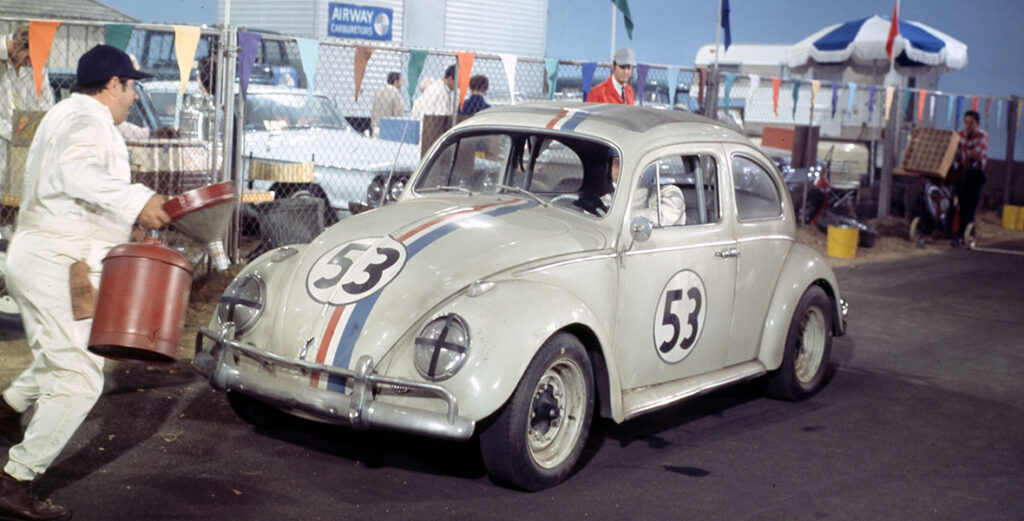
Before Pixar made cars into people, Disney gave us Herbie.
The little white Volkswagen Beetle with racing number 53 was the star of The Love Bug and its sequels, and the character became one of the most recognizable movie cars ever created. The original Herbie was a 1963 Volkswagen Beetle. (edmunds.com)
Herbie had a personality, attitude, and apparently had opinions about who should be driving … and, Herbie could race!
The car was the character. You didn’t need CGI eyes or a face on the windshield. You just needed the steering wheel to move by itself and a Volkswagen engine making angry noises.
Herbie was proof that a car could become emotionally important without having a single line of dialogue. And honestly, that’s probably why the little Beetle remains so beloved.
Herbie didn’t look powerful. He looked like a car your grandmother might drive to the grocery store.
Then he smoked a race car.
Fan Stop Nation’s Beetle Attitude Index: 53 on the hood, 97 in the personality department.
“Herbie never needed a horn. He simply judged you silently from behind the wheel.”
Unnamed Disney test driver
Wayne’s 1976 AMC Pacer: The Mirthmobile and America’s Most Lovable Automotive Punchline
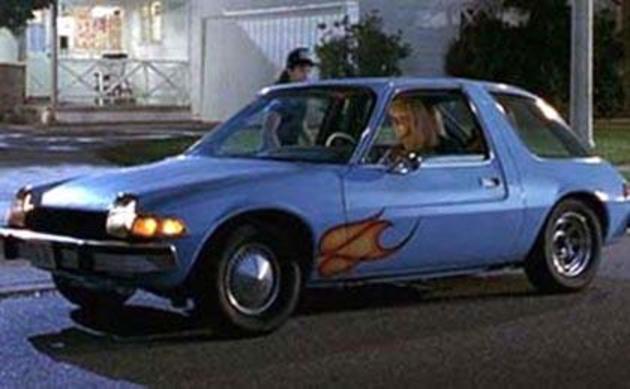
Let’s pause for a moment and appreciate the courage required to make an AMC Pacer cool.
The car was originally marketed as an innovative, futuristic compact with its distinctive wide body and enormous glass area. Over time, its unusual design became a punchline.
Then Wayne’s World happened, and suddenly the Pacer was the Mirthmobile. Wayne and Garth transformed an automotive punchline into a symbol of 1990s slacker culture.
Flames. Blue interior. Bohemian Rhapsody. Headbanging. Garbage Can-dumping.
It became impossible to see an AMC Pacer without hearing: “Bohemian Rhapsody.”
The Pacer’s unusual shape had already made it culturally distinctive, but Wayne’s World gave it an entirely new identity. (en.wikipedia.org)
And this is where Xennial nostalgia becomes dangerous; because the Mirthmobile wasn’t cool in the traditional sense … it was cool because Wayne and Garth thought it was cool.
Party time.
Excellent.
Fan Stop Nation’s Hair-Metal-to-Pacer Conversion Index: 1 automotive punchline + 2 metalheads + 1 Queen song = instant cultural rehabilitation.
“We didn’t buy the Pacer because it was cool. We bought it because eventually everyone else would understand that it was cool.”
Wayne’s World automotive historian
Ferris Bueller’s Ferrari: The Car Everybody Wanted and Almost Nobody Could Afford
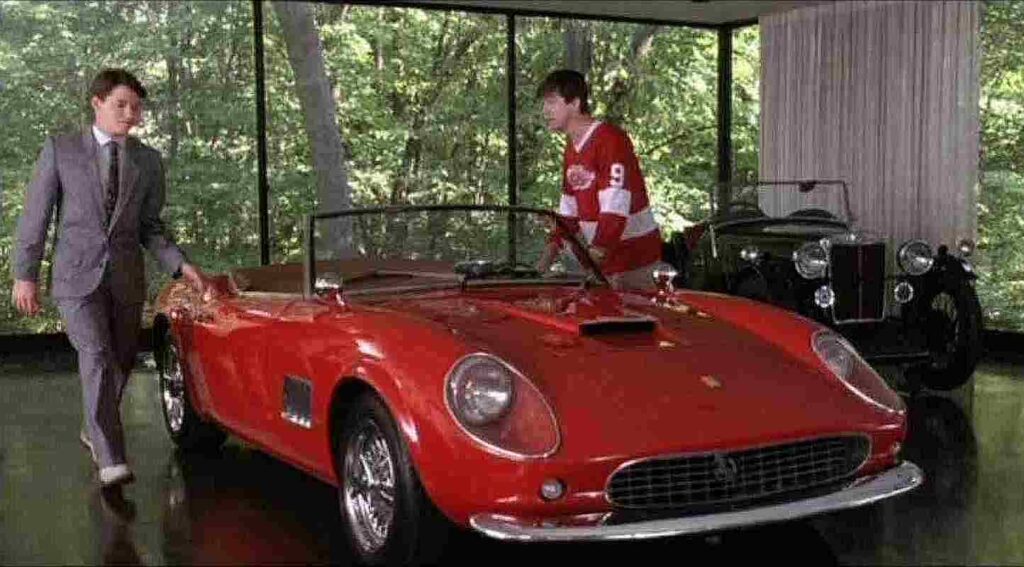
There may be no better automotive symbol of teenage rebellion than Ferris Bueller taking his best friend’s father’s Ferrari out for the day.
The car in Ferris Bueller’s Day Off was a replica of a 1961 Ferrari 250 GT California Spyder, rather than an original. The production used replicas because, understandably, nobody wanted to hand Matthew Broderick a multi-million-dollar Ferrari and say, “Try not to put it through a wall.” (caranddriver.com)
The Ferrari represents everything Ferris is pretending to be:
- Successful.
- Confident.
- Carefree.
- Rich.
Meanwhile, Cameron is having a complete psychological breakdown because his father loves the car more than him. Which isn’t exactly a glowing advertisement for Ferrari ownership.
Then comes the scene. The garage; the glass; the acceleration. Then the moment when the car becomes one of the most memorable casualties in teenage-movie history.
Fan Stop Nation’s “Ferrari Dad Will Notice” Index: 100 percent.
“Ferris said we’d be back before dinner. Cameron’s father has now aged 14 years waiting for the garage door to explain itself.”
Fictional Chicago parking attendant
The Batmobile: Because Apparently Batman Needed a Car That Looked Like It Had a Vendetta

There have been many Batmobiles.
- The 1966 Lincoln Futura-based machine.
- The 1989 Tim Burton Batmobile.
- The Tumbler.
- Various comic-book versions.
Different generations have different favorites, but the point remains: Batman does not drive a normal car.
The 1960s Batmobile was built from the 1955 Lincoln Futura concept car and transformed by George Barris into the ultimate piece of campy automotive theater. (rottentomatoes.com)
Then Tim Burton came along and made the Batmobile look like a Gothic muscle car designed by somebody who had just discovered the word “intimidation.”
The car became darker, longer, meaner, more ridiculous … perfect. Because Batman doesn’t need a minivan. He needs a vehicle that makes criminals reconsider their career choices before he even exits it.
Fan Stop Nation’s “Reasonable Vehicle for a Billionaire Vigilante” Index: 0 percent reasonable, 100 percent Batman.
“Bruce Wayne could have bought a Ferrari. Instead he built a car that looks like it has unpaid parking tickets in three dimensions.”
Wayne Enterprises accountant
Mad Max’s Interceptor: The Australian Answer to “What If Gasoline Became a Personality?”
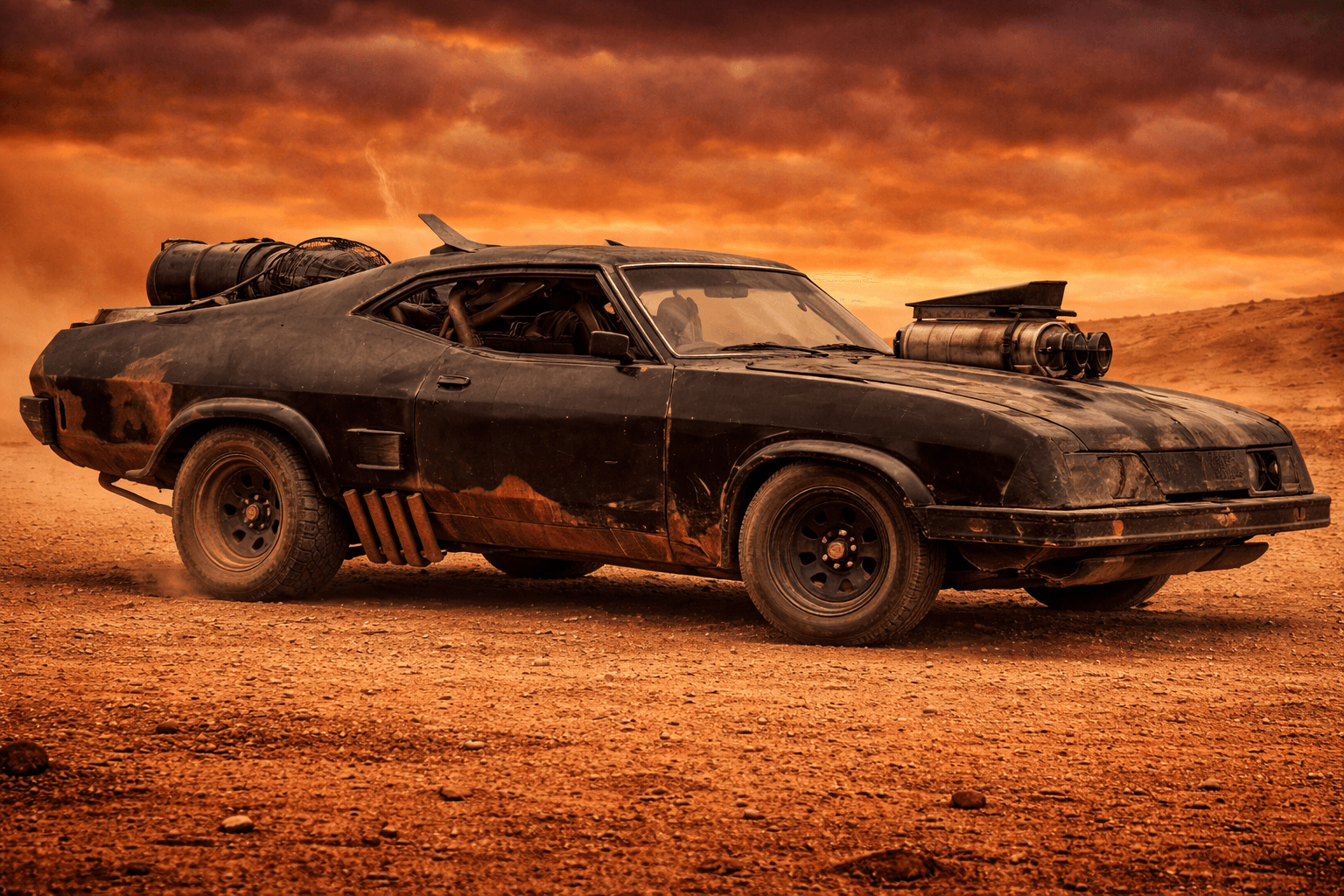
Mad Max’s black 1973 Ford Falcon XB GT-based Interceptor is what happens when somebody looks at a muscle car and says: “Hmm … needs more apocalypse.”
The car became an icon of Australian cinema and one of the defining vehicles of the Mad Max universe. (edmunds.com)
It has the blower. It has the black paint. It has the menacing stance. It looks like it hasn’t smiled since 1978. And unlike the DeLorean, it doesn’t need to travel through time.
It simply travels through desert wastelands while civilization collapses around it.
The Interceptor became one of those cars where the visual design tells you everything.
This is not a family vehicle; not a commuter. This is the car you build when you believe civilization has approximately 72 hours remaining.
Fast. Isolated. Angry. And absolutely not interested in carpooling.
The car became a character because it represented Max himself.
Fan Stop Nation’s Apocalyptic Horsepower Index: 100 percent menace, 0 percent interest in fuel economy.
“The owner’s manual has one page: check oil, check tires, check civilization.”
— Apocolyptic Australian mechanic
Smokey and the Bandit Trans Am: The Car That Sold the Dream of the Open Road

The 1977 Pontiac Trans Am from Smokey and the Bandit might be the ultimate “I want that car” movie car.
Black paint. Gold graphics. T-tops. Big hood. The screaming chicken. A CB radio.
Throw in Burt Reynolds, Sally Field and a mission involving 400 cases of Coors beer, and cool factor instantly skyrockets.
The movie turned the Trans Am into a cultural phenomenon. Pontiac Trans Am sales nearly doubled within two years of the film’s release, and the car became one of the defining automotive symbols of late-1970s America. (en.wikipedia.org)
The Trans Am didn’t just become famous because it was in the movie. The movie made people want to buy one. That’s the difference between a prop and a cultural icon.
The Bandit’s Trans Am represented freedom. Speed. Rebellion. The open highway. And probably the least efficient possible method of transporting beer across state lines.
The Bandit didn’t just drive a Trans Am … Hhe made it look like America’s official sports car.
Fan Stop Nation’s Coors-to-Freedom Ratio: 400 cases of beer, one Trans Am, approximately 9,000 law-enforcement-related complications.
“The plan was simple: drive fast, don’t get caught, and never under any circumstances explain the CB radio to your parents.”
1977 Pontiac salesman
The Cannonball Run Cars: Because Apparently a Cross-Country Race Needed More Rich People in Exotic Cars
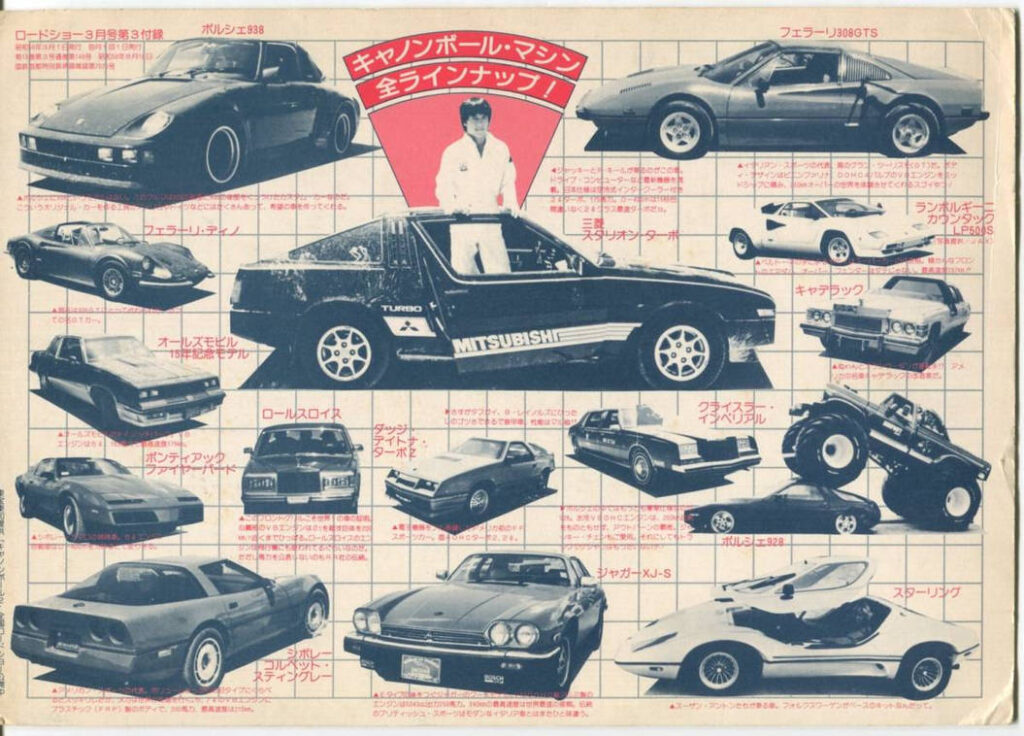
If you’re going to make a movie about illegally racing across the country, The Cannonball Run understood something important: put as many ridiculous cars in it as possible.
The 1981 film featured an absurd collection of automobiles, including a Lamborghini Countach, Aston Martin, Porsche and other exotic machines. The movie was inspired by the real-life Cannonball Baker Sea-to-Shining-Sea Memorial Trophy Dash. (edmunds.com)
The cars aren’t just transportation. They’re the cast.
Every vehicle has a personality. Every driver has a gimmick. Every highway patrol officer has a terrible afternoon. And the entire concept is essentially:
What if we turned I-40 into Mario Kart before Mario Kart existed? This was peak 1980s excess.
That’s the spirit.
Fan Stop Nation’s Interstate Shenanigans Index: 1 cross-country race, 400 questionable decisions and 0 forms signed by the insurance companies.
“We didn’t break the speed limit. We simply created a new interpretation of it.”
Cannonball Run navigator
The Mutt Cutts Van: Dumb and Dumber’s Most Important Automotive Achievement
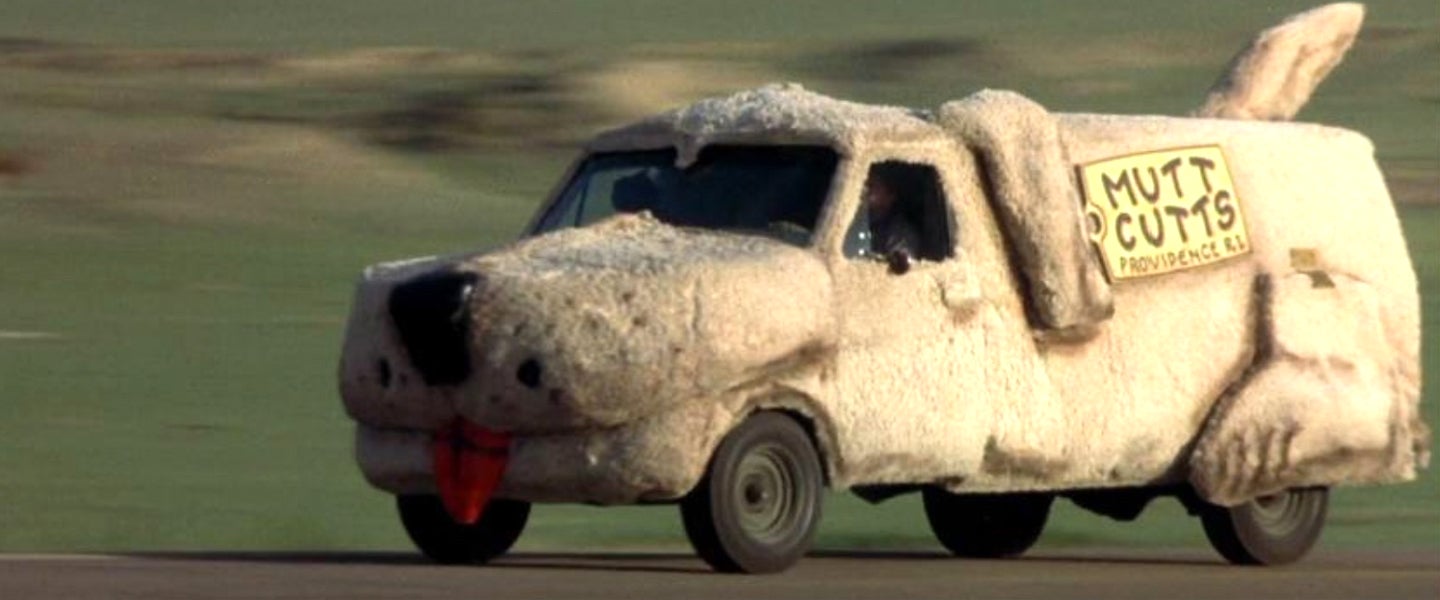
Somewhere between the DeLorean and the Batmobile sits a vehicle that should not be mentioned in the same paragraph as either one.
The Mutt Cutts van.
A 1984 Ford Econoline. Covered. In. Dog. Hair.
Dumb and Dumber turned a questionable panel van into one of the most recognizable comedy vehicles in movie history. It’s officially called the “Shaggin’ Wagon” in some references, but the Mutt Cutts identity is the thing burned into our collective brains. (topgear.com.ph)
The van has a giant tongue, floppy ears, four legs. It has enough fake fur to make a PETA investigator reconsider the career choice.
And inside are Lloyd Christmas and Harry Dunne. Naturally.
The Mutt Cutts van isn’t cool. That’s precisely why it’s cool.
That car that perfectly matches the people driving it.
A sophisticated sports car would have ruined the joke. A normal van would have been forgettable.
A giant dog van? Perfect.
And if they put those two in a Ferrari and they’d still find a way to get lost. But the van makes the journey infinitely funnier.
Fan Stop Nation’s Aerodynamic Canine Index: 0.3 miles per gallon lost to fur drag, 100 percent gain in social embarrassment.
“The van was originally designed for pet transportation. Lloyd and Harry were simply the most aggressive pets available.”
Mutt Cutts apholstry advisor
The Family Truckster: The Worst Car Ever Built and the Greatest Family Vacation Vehicle in Movie History

If the Mutt Cutts van is the automotive equivalent of two guys losing a bet, the Family Truckster is what happens when a suburban family loses a bet with America.
The 1983 National Lampoon’s Vacation gave us Clark Griswold, the Griswold family and a station wagon that looked like it had been designed during a power outage.
The original car was intentionally ridiculous. The fake wood paneling. The enormous body. The questionable color. The roof rack. The luggage. The deadpan suburban misery.
And then there is the famous dealership scene.
Clark wants an Antarctic Blue Super Sports Wagon with the CB and the optional Rally Fun Pack.
Instead, he gets something resembling a metallic pea-based industrial accident … The Family Truckster.
It isn’t aspirational. It’s the opposite. It’s the car your dad buys because the salesman says: “This one has a great warranty.”
And that’s why it became iconic.
The Truckster is one of the greatest comedy cars ever created because it doesn’t need to be fast. It just needs to break down at the worst possible time.
The Family Truckster became every family vacation where Dad insisted everything was going according to plan while everybody in the back seat knew it absolutely was not.
Fan Stop Nation’s Family Road-Trip Survival Index: 2 parents, 2 kids, 1 dog, 4,000 miles of resentment and exactly one chance to avoid stopping at South of the Border.
“You think you hate it now. Wait until you drive it!”
Every dad who has ever bought a car from a salesman
Honorable Mention: The Movie Cars That Were One Paragraph Away From Making the Main List
There are simply too many. So let’s give a few more their due:
- James Bond’s Aston Martin DB5 (Goldfinger) The standard by which gadget-equipped movie cars are still judged.
- Greased Lightning (Grease) A hot rod built through pure teenage optimism.
- The Italian Job Mini Coopers Tiny cars, enormous criminal confidence.
- The Dude’s Gran Torino (The Big Lebowski) A car that perfectly represented one man’s refusal to care about almost anything.
- The Bluesmobile (Blues Brothers) Jake and Elwood’s gas-guzzling, demolition machine requiring approximately 47 municipal repairs per 100 miles driven.
- The Fast and the Furious Supra The moment a Toyota became a legitimate object of teenage bedroom-poster obsession.
- Thelma & Louise’s Thunderbird A car that became inseparable from the movie’s final, unforgettable image.
- The Tumbler (Batman Begins) The Batmobile after Bruce Wayne decided subtlety was for poor people.
- The EM-50 (Stripes) Because apparently an RV wasn’t enough.
The list could go on until the next oil change. And that’s exactly the problem. There are too many great ones.