


Baseball didn’t suddenly become Latino.
Major League Baseball just eventually got better at admitting how much Latino players had already contributed to the game.
Today, Hispanic and Latino players make up roughly 30% of MLB rosters, and the pipeline from Latin America to the majors has become one of the most important talent engines in professional sports. But that reality was built by generations of players who had to navigate language barriers, discrimination, cultural expectations, unfamiliar cities and, occasionally, an America that wasn’t particularly interested in making room for them.
They didn’t just hit home runs; they changed neighborhoods; they changed baseball culture.
They made kids in Puerto Rico, the Dominican Republic, Venezuela, Cuba, Mexico, Panama and throughout Latin America believe that the kid with a glove and a dream could eventually end up under the bright lights of Yankee Stadium, Dodger Stadium, Busch Stadium or Fenway Park.
And some of them were pretty freaking good at baseball, too.
Roberto Clemente: The Standard Was Never Just Baseball
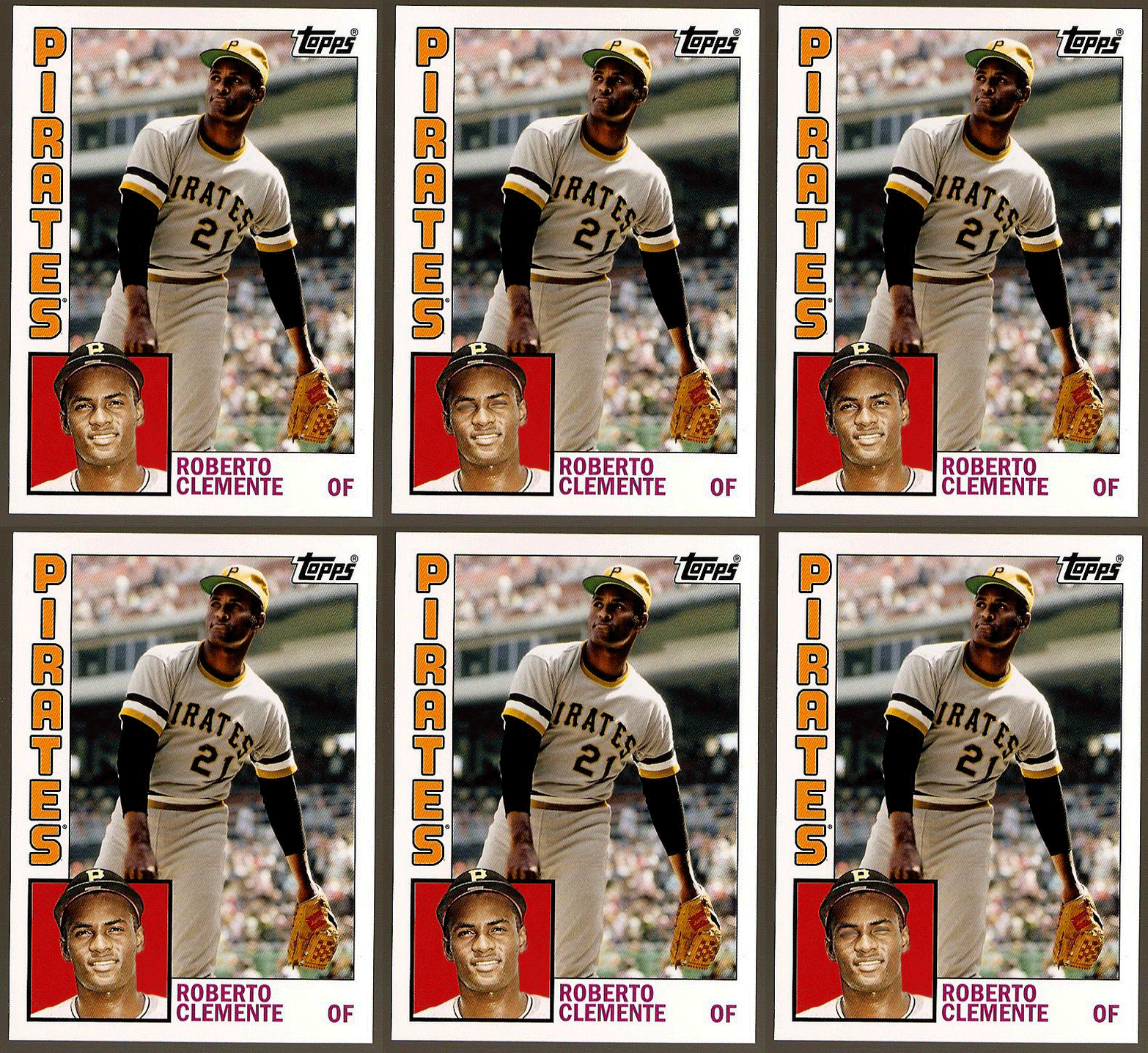
If you’re talking about Latino baseball legends, we have to start with Roberto Clemente.
The Puerto Rican icon became the first Latino player inducted into the Baseball Hall of Fame when he was posthumously elected in 1973. He was a superstar on the field, a 12-time All-Star, a four-time batting champion and the first Latin American player to reach 3,000 hits. But his legacy became much larger than a stat line.
Clemente understood his platform.
He spoke openly about discrimination; cared deeply about Latin American players being treated with dignity; and, his humanitarian work ultimately became inseparable from his baseball legacy after he died in a plane crash while delivering relief supplies to earthquake victims in Nicaragua in 1972.
That’s why Clemente remains different. He wasn’t simply a player Latino baseball fans admired … he became an example.
Fan Stop Nation’s Right Field Cannon Index: Clemente’s throwing arm was so legendary that 94% of ghost-runners would have simply stayed on first rather than risk being turned into a cautionary tale.
“Roberto Clemente didn’t just change baseball. He changed what people thought a baseball player could represent.”
Imaginary Baseball Historian
Orlando Cepeda: The Baby Bull Helped Open the Door
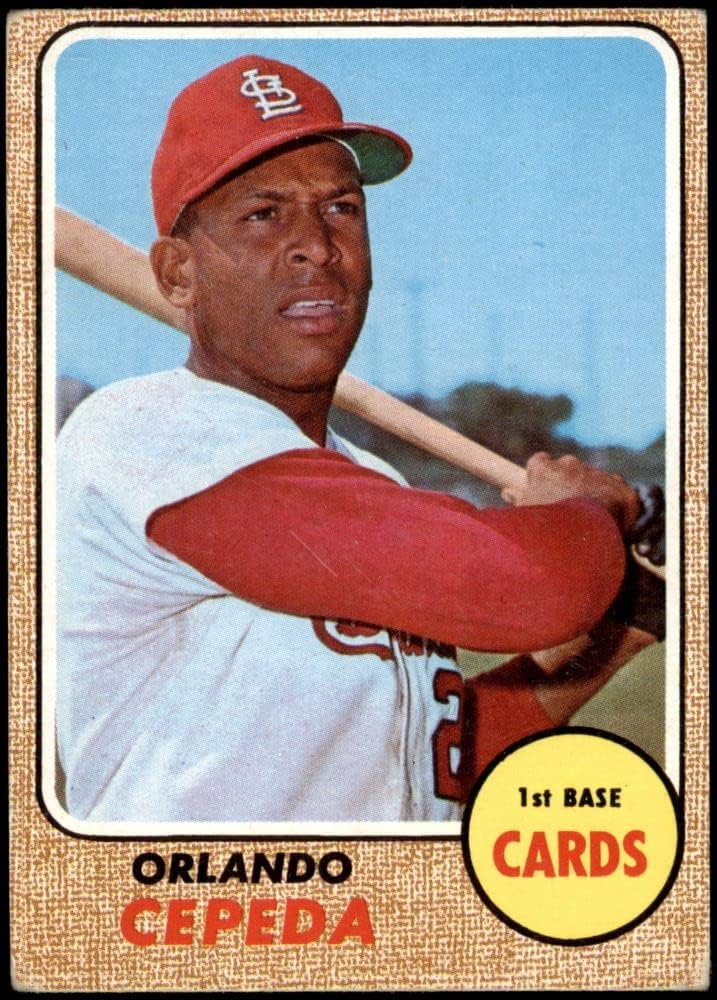
Long before Albert Pujols was terrorizing National League pitchers, Orlando Cepeda was doing essentially the same thing while dealing with a baseball culture that wasn’t nearly as welcoming.
The Puerto Rican slugger debuted with the San Francisco Giants in 1958, immediately winning National League Rookie of the Year. He eventually became an 11-time All-Star, won the 1967 NL MVP unanimously and helped lead the Cardinals to a World Series championship. He finished his career with 379 home runs, 1,365 RBI and a .297 batting average.
But the numbers only tell part of the story.
Cepeda arrived in the United States without speaking English and encountered racism and discrimination in the minor leagues. He also pushed back against expectations that Latino players should simply keep their heads down and be grateful for an opportunity.
The “Baby Bull” wasn’t just hitting baseballs over fences. He was helping establish that Latino stars belonged at the center of Major League Baseball.
Fan Stop Nation’s Baby Bull Power Index: A scientifically impossible 87% of opposing pitchers reportedly reconsidered their career choice whenever Cepeda stepped into the batter’s box.
“Cepeda didn’t knock on the door of baseball. He hit it over the center-field wall.”
Puerto Rican Baseball Professor

Juan Marichal: The Dominican Republic’s First Cooperstown Star
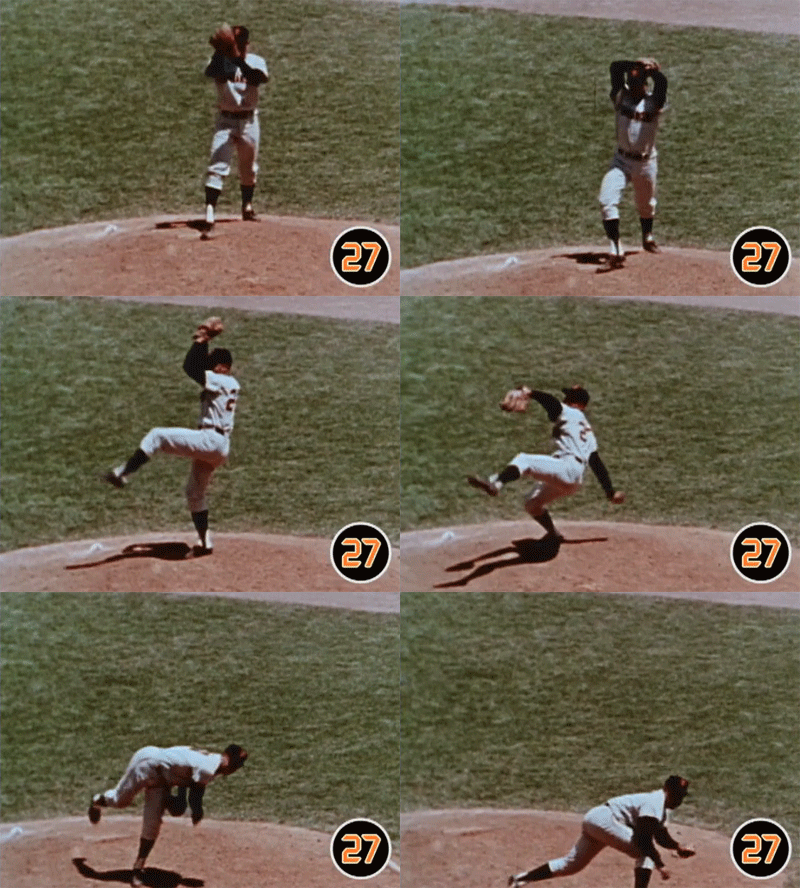
Juan Marichal pitched like somebody had offended his entire family.
The high leg kick. The fastball. The swagger. The absolutely ridiculous delivery.
The Dominican right-hander became the first Dominican-born player inducted into the Baseball Hall of Fame in 1983, establishing a standard that generations of Dominican stars would chase. MLB notes that Marichal was the country’s first Cooperstown representative and, for decades, its undisputed baseball icon.
For casual fans, here’s the important part: Marichal wasn’t merely the first big Dominican name. He became proof that the Dominican Republic could produce elite Major League talent.
And eventually, it produced a lot of it.
Fan Stop Nation’s Leg Kick Altitude Calculator: Marichal’s famous delivery reached an estimated 11.7 feet above sea level, mostly because we have absolutely no idea how physics allowed him to pitch that way.
“Juan Marichal’s leg kick had its own zip code.”
Fictional 1960s Baseball Scout
Fernando Valenzuela: Fernandomania Changed Everything
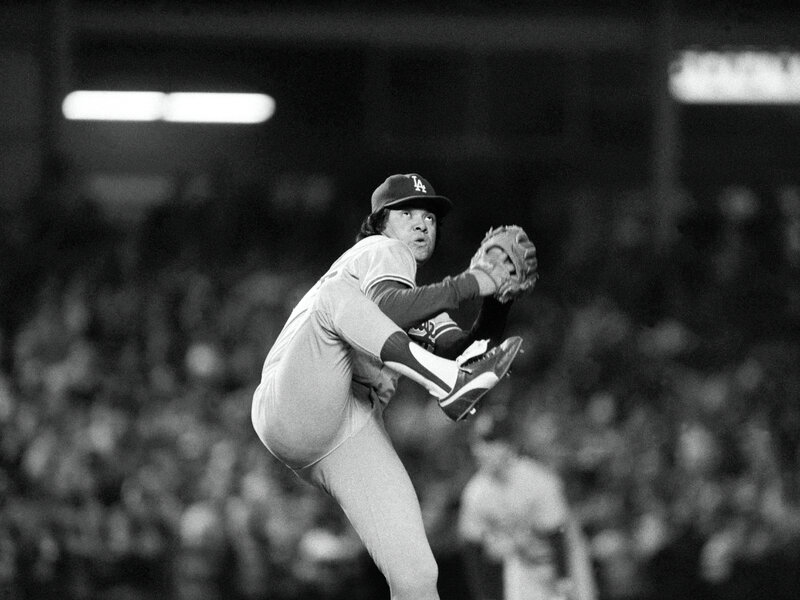
Then came Fernando.
In 1981, a pudgy young left-hander from Etchohuaquila, Mexico, showed up in Los Angeles and immediately broke baseball’s brain.
Valenzuela won both the Rookie of the Year and Cy Young Awards in the same season, became a national sensation, and helped turn Dodgers games into cultural events throughout Southern California and Mexico. The phenomenon became known as Fernandomania.
But calling it merely a baseball craze doesn’t do it justice. Valenzuela became a bridge between two countries.
For Mexican Americans and Mexican baseball fans, he wasn’t just another Dodger. He was theirs. His success helped expand the Dodgers’ Latino fan base and strengthened MLB’s connection with Mexico. His cultural impact remains a major part of the argument for his historical significance, even though his statistical résumé fell short of traditional Hall of Fame standards.
And somewhere, Nuke LaLoosh is still trying to figure out how to breathe through his eyelids!
Fan Stop Nation’s Fernandomania Thermometer: Southern California experienced a 312% increase in mustaches, screwballs and people suddenly claiming they had “always been Dodgers fans.”
“Fernando didn’t throw a pitch. He threw a cultural lightning bolt.”
Imaginary Los Angeles Sportswriter
Joaquín Andújar: Baseball’s Most Quotable Wild Card
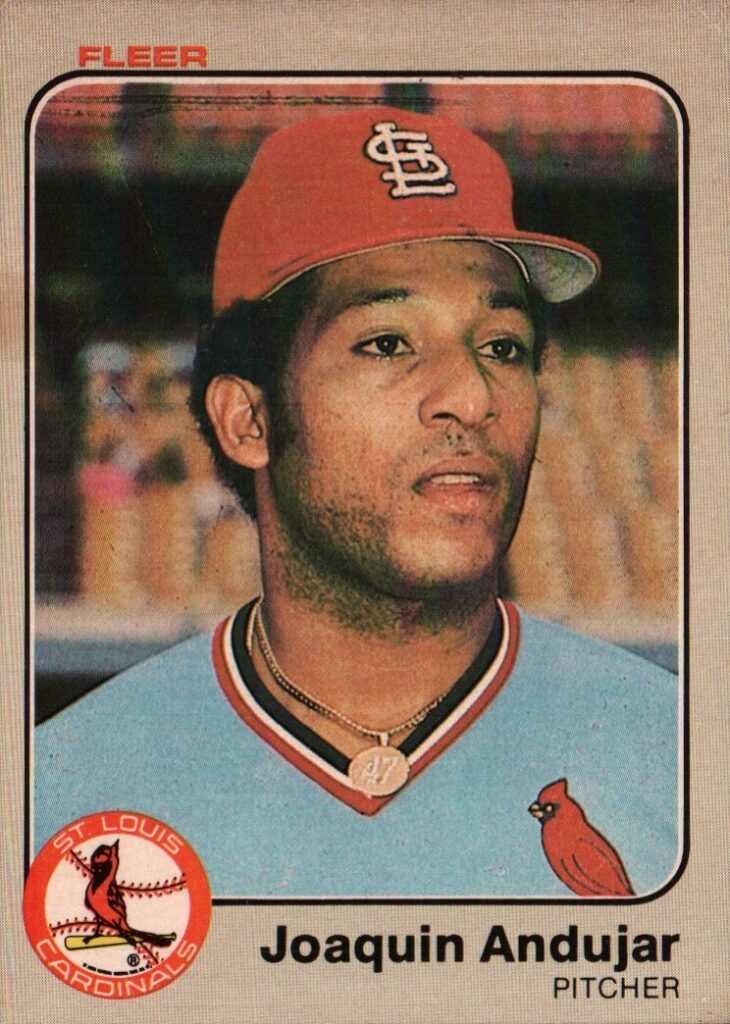
Joaquín Andújar deserves a place here partly because of what he accomplished on the mound and partly because baseball has never produced another personality quite like him.
The Dominican pitcher won 127 games during his career, made two All-Star teams and helped the St. Louis Cardinals reach the World Series in 1982 and 1985.
But let’s be honest … the quotes are why we remember him.
Andújar was responsible for one of baseball’s greatest accidental philosophical statements:
“There are 199 ways to be a winner, but only one way to be a loser.“
That’s not a quote. That’s a refrigerator magnet with a slider.
Andújar represented another important piece of Latino baseball history: personality. He wasn’t interested in fitting neatly into anybody’s idea of what a professional athlete was supposed to sound like.
Fan Stop Nation’s Quotability Index: His quotes have generated approximately 6.8 million arguments over whether he was actually making sense.
“Joaquín Andújar could turn a postgame interview into a graduate seminar in philosophy.”
Undisclosed Cardinals beat writer
Pedro Martínez: The Dominican Ace Who Made Batters Look Silly
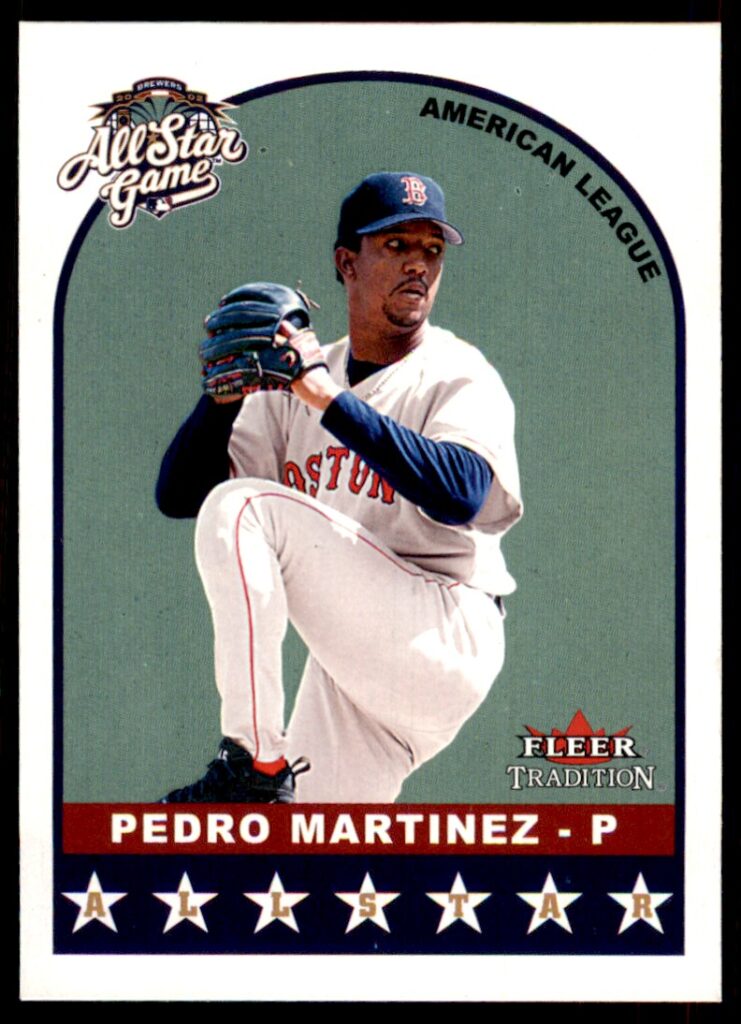
There are great pitchers. Then there was Pedro.
During his peak with Montreal and Boston, Pedro Martínez was operating at a level that made hitters look like they had accidentally wandered onto the wrong field.
- 3 Cy Young Awards.
- A 1999 season that produced a Triple Crown.
- 3,154 strikeouts.
And an era when hitting a baseball against Pedro sometimes appeared to require divine intervention.
Pedro wasn’t simply dominant. He was entertaining.
He talked. He smiled. He stared.
He threw a fastball that appeared to accelerate after leaving his hand.
And then he went out and did it again.
Fan Stop Nation’s Pedro Panic Index: 91% of opposing hitters reportedly experienced a brief existential crisis after Pedro’s changeup disappeared approximately 14 inches beneath their bat.
“Pedro made 95 look like 105, and 105 look personally insulting.”
Unidentified AL Hitter
Albert Pujols: The Machine
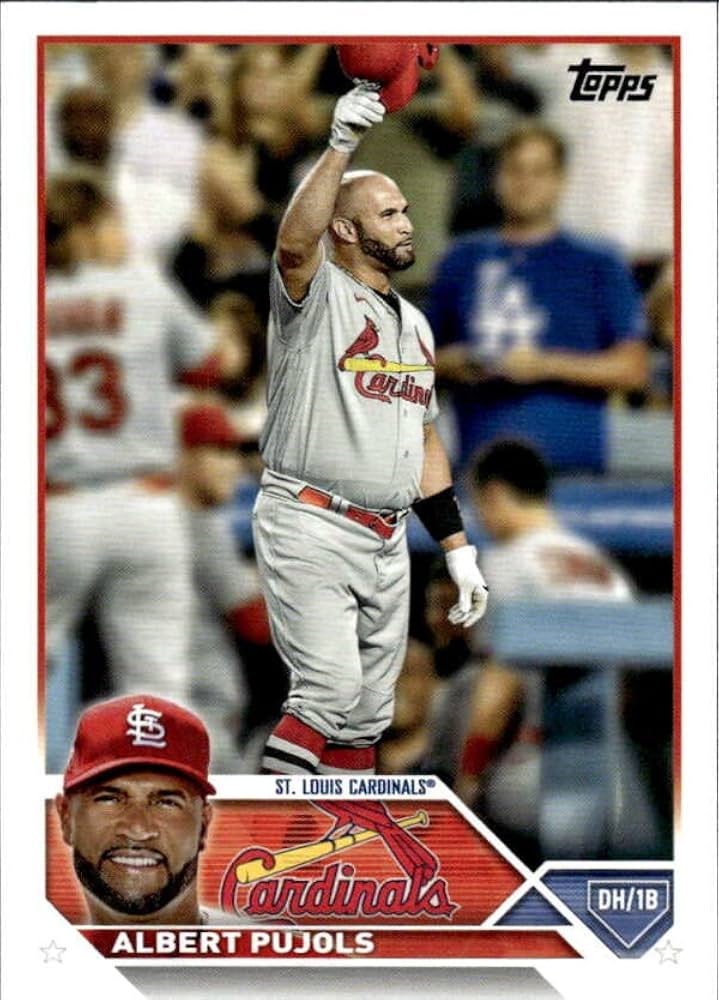
When Albert Pujols debuted in 2001, he looked like baseball’s answer to the question nobody had asked: “What if a middle infielder’s bat had been forged by Zeus?“
The Dominican superstar became one of the most accomplished foreign-born position players in MLB history. In 2022, he became the first Latino player to reach 700 home runs, joining Barry Bonds, Hank Aaron and Babe Ruth in one of baseball’s most exclusive clubs.
But Pujols wasn’t simply a home-run hitter. He was an institution.
He won three MVP Awards, two World Series titles and six Silver Sluggers, and he spent two decades providing the kind of terrifying consistency that made 30 homers and 100 RBI seem like something you could pencil into the calendar.
For young Dominican players, Pujols became another impossible standard.
Fan Stop Nation’s Machine Spreadsheet: His career statistics are so ridiculous that 73% of accountants who attempt to calculate his résumé require a lunch break.
“Pujols didn’t have a Hall of Fame career. He had several careers stacked on top of each other.”
Fictional Baseball Statistician
Yadier Molina: The Catcher Who Became an Institution
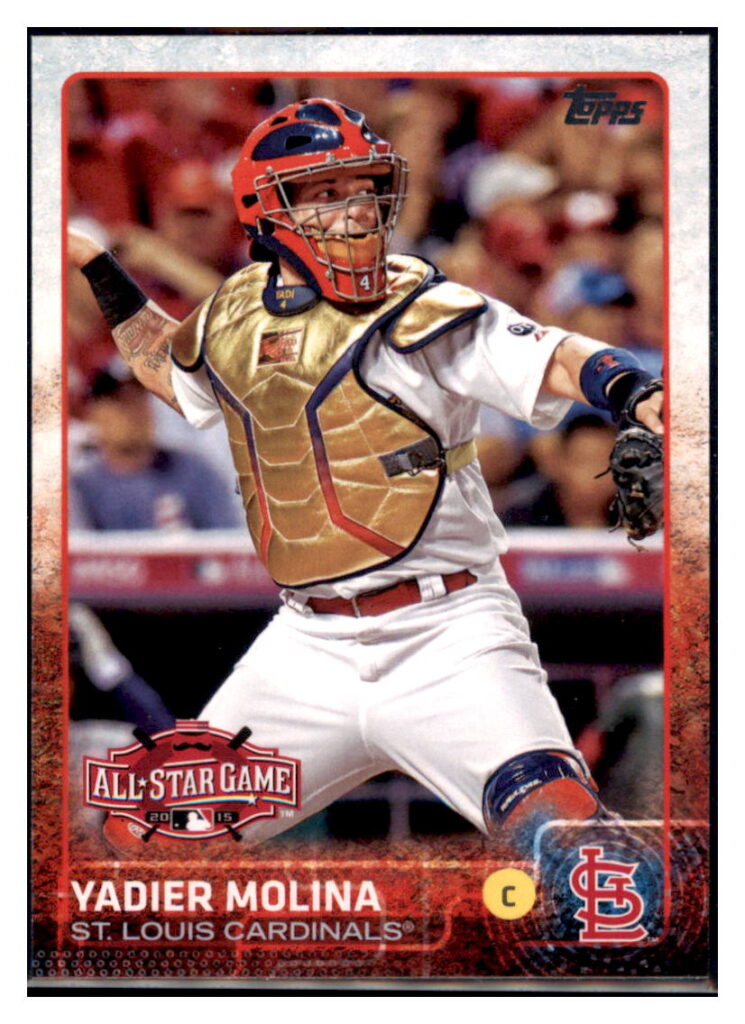
Yadier Molina never needed to hit 50 home runs to become one of the most important players of his generation.
He needed a catcher’s mitt … and about 20 years of making pitchers look better than they actually were.
The Puerto Rican catcher won nine Gold Gloves, four Platinum Gloves and two World Series titles with the Cardinals. More importantly, he became the face of an increasingly rare position where leadership, pitch framing, game planning and trust matter as much as batting average.
Molina wasn’t just catching pitches. He was running the whole operation.
MLB lists him among the major Latino Hall of Fame candidates expected to appear on the 2028 ballot, alongside Pujols.
Fan Stop Nation’s Wear-and-Tear Calculator: Molina spent enough time crouching behind home plate to qualify for a complimentary lifetime supply of Bengay.
“Yadier Molina knew what pitch was coming before the hitter did. Sometimes the pitcher did, too.”
Imaginary Cardinals Bullpen Catcher
David Ortiz: Big Papi Made Baseball Feel Like a Block Party
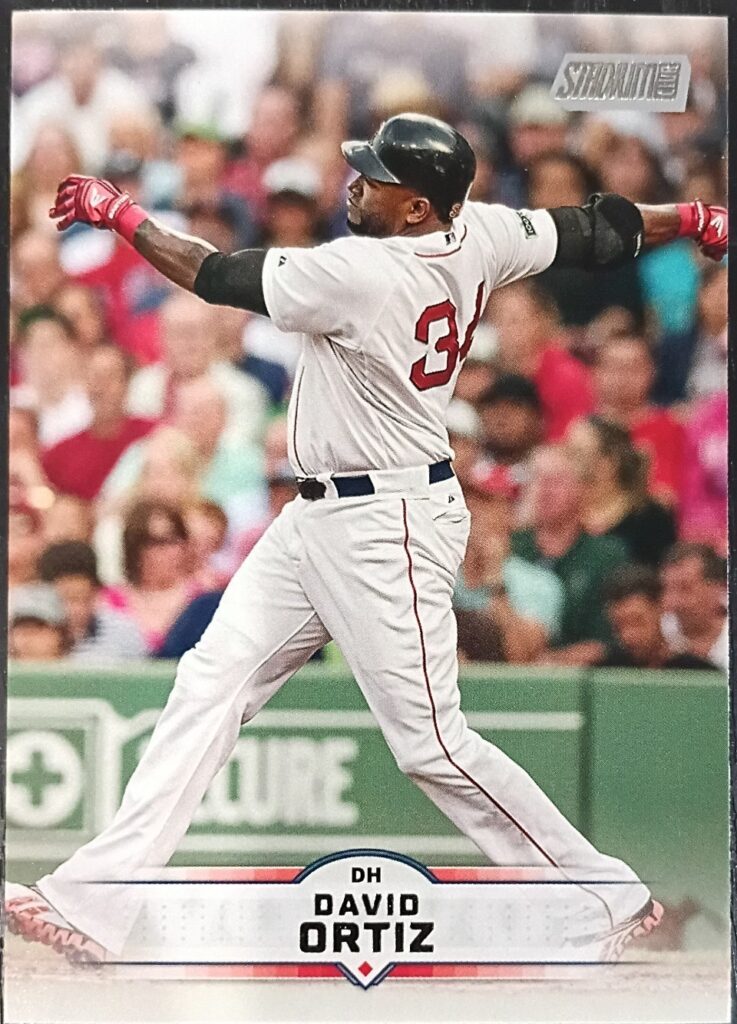
David Ortiz didn’t just become a Boston icon … he became an American sports icon.
The Dominican slugger hit 541 career home runs, won three World Series championships and became synonymous with October baseball in Boston. His 2004 postseason helped end the Red Sox’s 86-year championship drought, turning Big Papi into something considerably larger than a designated hitter.
He was joy with a bat.
When Ortiz walked to the plate, Fenway felt like a concert.
And when he spoke, every sentence sounded like it had been written specifically for a documentary trailer.
Fan Stop Nation’s Big Papi Volume Meter: Ortiz’s home-run celebrations generated enough noise to make nearby Rhode Island residents briefly believe Boston had won another championship.
“Big Papi didn’t enter a room. He arrived like the room owed him money.”
Boston Bartenders
The Next Generation: Latino Baseball Isn’t Slowing Down
The most important thing about these legends isn’t simply remembering them; it’s recognizing the pipeline they helped create.
- Roberto Clemente opened doors.
- Cepeda pushed through them.
- Marichal established the Dominican standard.
- Valenzuela connected Mexico and Los Angeles.
- Pedro redefined pitching.
- Pujols became a Dominican icon.
- Molina showed what elite catching could look like.
And now an enormous generation of Latino stars is carrying that legacy forward.
Players such as Ronald Acuña Jr., Juan Soto, José Ramírez, Fernando Tatis Jr., Vladimir Guerrero Jr. and Julio Rodríguez aren’t simply participating in MLB … they’re among its biggest stars.
MLB’s own Hall of Fame retrospective notes that the number of Latino Hall of Famers has more than doubled since the beginning of the 2010s, while the Dominican Republic, Venezuela, Puerto Rico, Cuba, Mexico and other baseball-rich nations continue producing major league talent.
Fan Stop Nation’s International Pipeline Index: Somewhere in Latin America, approximately 4,000 kids are currently swinging a broomstick at a bottle cap and telling their friends they’re the next Pujols.
“Every generation thinks they’ve found the next great Latino superstar. The terrifying part is that eventually, they’re usually right.”
International Baseball Scouts
Why This History Matters
Baseball has always called itself America’s pastime, but the modern version of America’s pastime is increasingly a global game. And that’s a good thing.
The Latino players who came before today’s stars didn’t simply add talent to Major League Baseball. They changed the culture of the sport. They expanded its audience. They brought different styles, personalities, languages and traditions into clubhouses across America.
They also made it possible for today’s young players to arrive without being treated as outsiders; and, that may be their greatest achievement.
The statistics will eventually fade, the batting averages will become trivia questions, the highlight reels will move to another generation.
But the doors they opened aren’t closing.
The Legacy Is Still Being Written
Ask a young Dominican player who his hero is, and you might hear Pujols.
Ask a Mexican fan, and you might hear Valenzuela.
Ask someone in Puerto Rico, and Clemente’s name still carries a weight that statistics can’t measure.
Ask a Cardinals fan about Molina and prepare yourself for a 20-minute speech.
That’s the beauty of baseball. Every generation inherits the game. Then it changes it. The Latino players who came before didn’t simply become part of MLB history. They helped write it.
And if the current generation is any indication, the next chapter is going to be one hell of a story.