


Let’s be clear on this … this is sports movie coaches. Coach Taylor, Coach Beard (or Lasso, depending on how you roll) are for another article.
Every sports movie has a moment. The music swells. The locker room gets quiet. The coach walks in.
Somebody is crying. Somebody is injured. Somebody’s dad is disappointed. Somebody’s girlfriend has just broken up with him. The team is down 14 points with 38 seconds left despite the fact that the clock is apparently operating on Hollywood Standard Time.
And then the coach says something cliché about believing or family or heart or leaving it all on the field, and suddenly 14-year-old you is standing in front of the television in your underwear wondering if you could also lead a team to a state championship if somebody would just give you a whistle.
That’s the magic of the sports-movie coach. They aren’t always realistic. They often weren’t even good at X’s and O’s. Some of them probably couldn’t survive a week of actual coaching without an athletic director asking them to explain the liability implications of their training methods … but they became cultural icons.
From Herb Brooks screaming at a room full of future Olympians to Norman Dale measuring basketball court dimensions with a tape measure, from Jimmy Dugan’s spectacularly questionable personnel management to Coach Klein discovering that Bobby Boucher could hit a quarterback approximately 97 yards through the Earth’s crust, these coaches became part of the language of sports.
This isn’t a ranking. There is no #1 or #10. No “greatest of all time.” This is a Fan Stop Nation coaching hall of fame, where different kinds of greatness can coexist without somebody yelling about seedings.
And yes, we’re going to celebrate some of the coaches who taught an entire generation how to deliver a locker-room speech.
Norman Dale: Hoosiers and the Art of Making Basketball Extremely Complicated
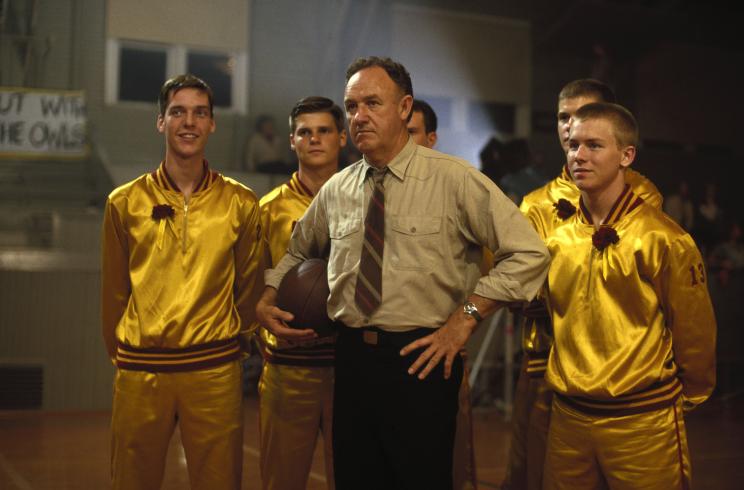
Gene Hackman’s Norman Dale might be the most gloriously stubborn coach in sports-movie history.
Tiny gym. Tiny town. Five players. Massive expectations. One coach with a complicated past and approximately zero interest in listening to anybody who thinks they know more basketball than he does.
Hoosiers is built around the Hickory Huskers’ unlikely run to the 1954 Indiana state championship, and Dale’s philosophy is simple:
- Do the fundamentals.
- Pass the ball.
- Play defense.
- Run the offense.
- Trust your teammates.
- And for the love of God, stop trying to win the game by yourself.
Dale’s methods seem almost comically basic now, but that’s part of why the movie works. The coach isn’t trying to invent basketball. He’s trying to make a group of teenagers play basketball correctly.
And then there’s the school gym. That tiny Hickory gym might be the most famous building in sports cinema despite being approximately the size of a modern high school practice facility.
Then, they get to the big city gym. Dale measures the dimensions. He makes the players imagine the same distance. Same basket. Same floor. Same game.
That scene has become one of the defining moments in sports-movie history. Modern retrospectives still identify Hoosiers and Hackman’s Dale as foundational to the coaching-movie genre.
Dale also understands something every great coach eventually learns: sometimes your best player needs to know you’re willing to trust him.
Jimmy Chitwood gets the final shot. Dale doesn’t need to be the hero … he just needs to put his players in position to become one.
That’s coaching.
Fan Stop Nation’s Hickory Tape Measure Index: 1 tape measure, 4 confused teenagers and enough motivational geometry to make Pythagoras nervous.
“The court is 84 feet long, the basket is 10 feet high, and somehow this man has made measuring it inspirational.”
Hickory assistant coach
Jimmy Dugan: A League of Their Own’s Least Appropriate Great Coach
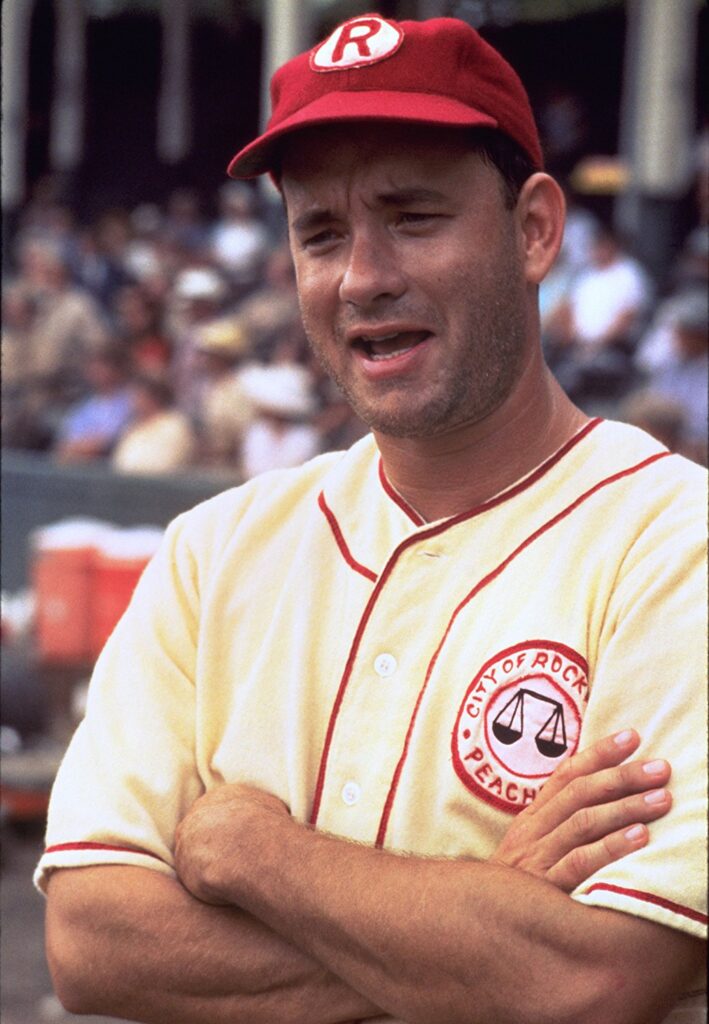
Jimmy Dugan is a fascinating case.
He’s a former baseball star. He’s washed up. He’s drinking. He’s bitter. He doesn’t particularly want to manage a women’s baseball team.
And he spends a considerable portion of the movie learning that the players he initially dismisses are actually pretty damn good.
Tom Hanks makes Jimmy hilarious, but there’s a serious baseball mind underneath the booze and sarcasm.
He understands the game. He understands players. Eventually, he figures out that his job isn’t to recreate his own career … it’s to get the most out of the people in front of him.
That’s the actual coaching lesson buried underneath all the comedy.
Also, Jimmy’s reaction to Evelyn’s crying remains one of the great pieces of aggressively inappropriate sports-movie coaching.
“There’s no crying in baseball!” line became bigger than the movie. And generations of parents, coaches and Little League managers have been abusing it ever since.
The movie isn’t really about Jimmy teaching baseball. It’s about Jimmy rediscovering why he loved baseball, and that’s why the character works.
Fan Stop Nation’s Dugout Sobriety Index: 14 percent sober, 86 percent baseball instincts and 100 percent likely to be asked to leave the postgame banquet.
“Jimmy Dugan’s coaching philosophy was simple: play hard, drink later, and under no circumstances cry near the dugout.”
Rockford Peaches equipment manager

Coach Bombay: The Mighty Ducks’ Most Unexpected Redemption Arc
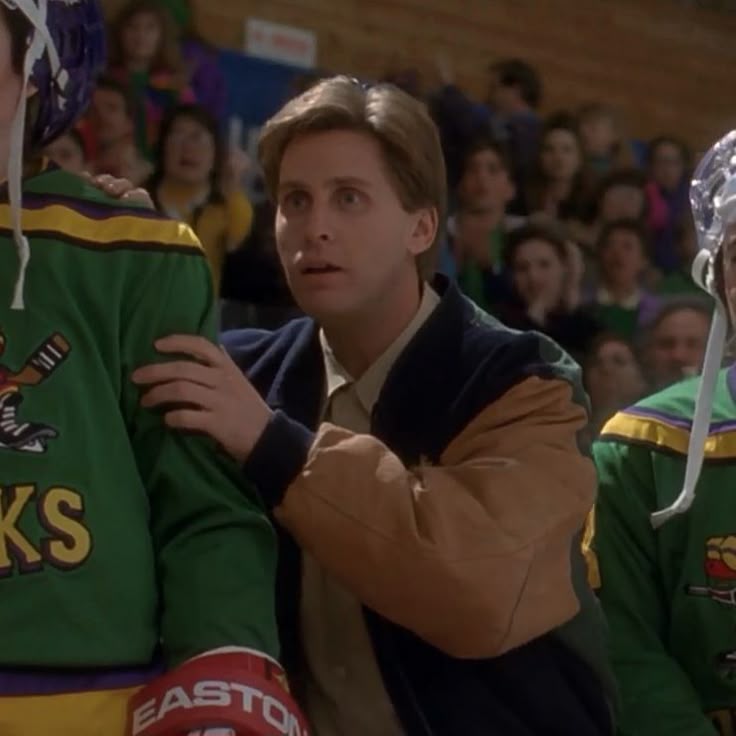
Gordon Bombay begins The Mighty Ducks as the kind of adult who would rather be anywhere else than coaching children.
He’s successful. He’s busy. He’s cynical. He has unresolved trauma from his own childhood hockey career.
Then the universe hands him District 5, and somehow, this becomes a story about redemption, friendship, teamwork and a bunch of kids learning that you don’t have to be the biggest or fastest team to be dangerous.
Bombay’s transformation is the heart of the movie. He doesn’t just teach hockey; he learns how to care again, and that’s why the Mighty Ducks eventually become the Mighty Ducks.
They need skill. They need equipment. They need structure. But mostly, they need somebody to believe that a collection of misfits can become a team.
Also: The Flying V … the most sophisticated offensive system ever invented by a group of children who apparently had never seen a hockey defense before.
That’s the genius of The Mighty Ducks. It doesn’t ask whether the Flying V would actually work. It asks whether you were 11 years old and thought it was the coolest thing you’d ever seen.
The answer was yes.
Fan Stop Nation’s Flying V Success Rate: 100 percent when performed by the Ducks, 0 percent when attempted by your local beer-league team.
“The Flying V is scientifically impossible, tactically questionable and emotionally unstoppable.”
Fictional NHL assistant coach
Herman Boone: Remember the Titans and the Coach Who Demanded a Team
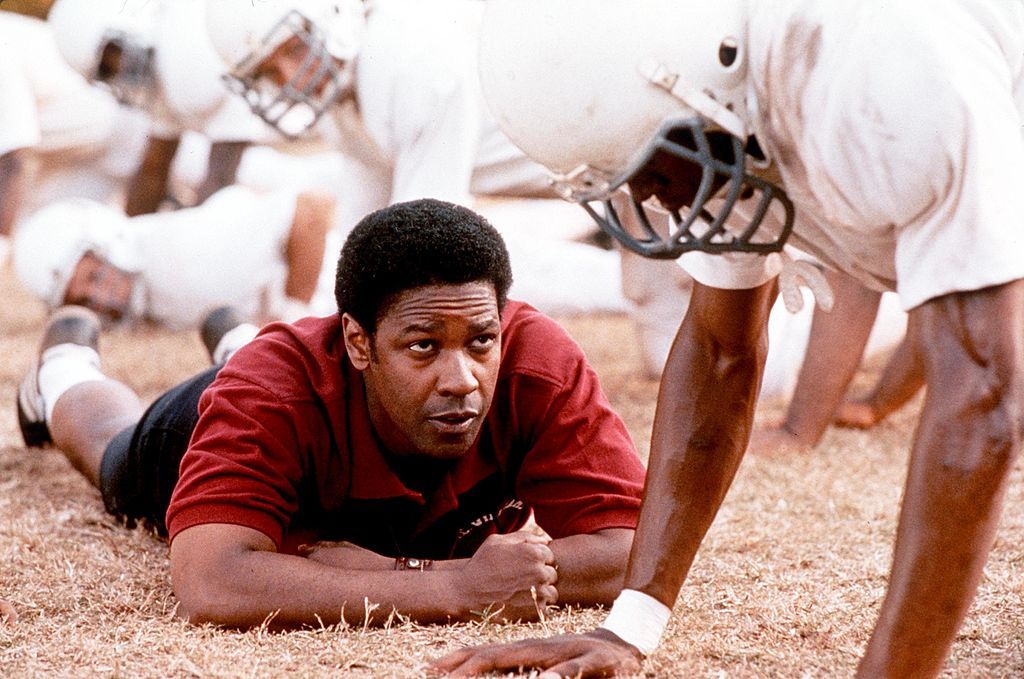
Denzel Washington’s Herman Boone is one of the most memorable coaching performances in sports-movie history … and unlike several coaches on this list, Boone was a real person.
Remember the Titans dramatizes the 1971 T.C. Williams High School football season and the integration of the school’s football program. Boone and assistant coach Bill Yoast were central figures in that story. But it’s important to remember that the movie took significant dramatic liberties. Some of Boone’s famous speeches and training-camp moments were created or heavily embellished for the film, and several character details were altered.
That doesn’t make Denzel’s performance any less memorable … it makes it a movie performance. And what a performance!
Boone walks into a divided locker room and basically says:
You’re going to become a team.
- Not Black players.
- Not white players.
- Not offense.
- Not defense.
- Not starters.
- Not backups.
A team.
The Gettysburg scene is Hollywood at full volume, but it communicates the central idea perfectly: history is bigger than the game, and the players need to understand the stakes around them.
Boone isn’t just coaching football; he’s trying to make a group of teenagers see one another differently.
The movie gets plenty of historical details wrong, but the emotional center remains powerful. Sometimes a coach’s most important job isn’t winning. It’s making people believe they belong on the same team.
Fan Stop Nation’s Gettysburg Running Index: 11 miles of running, 4,000 years of history and one coach who apparently believed geography was a conditioning tool.
“Coach Boone didn’t give inspirational speeches. He issued verbal weather events.”
Fictional T.C. Williams assistant coach
Mickey Goldmill: Rocky’s Greatest Contribution Was Getting a Fighter to Believe in Himself … and Grumpy Old Men Outtakes

Mickey Goldmill is not exactly the warm-and-fuzzy sports movie coach. He’s abrasive, old-school, insults Rock, questions Rocky’s preparation. He has opinions about everything, and he has approximately zero patience for excuses.
But Mickey sees something in Rocky that Rocky doesn’t fully see in himself.
That’s the coach’s job.
Not simply teaching technique … recognizing potential before the athlete does.
Mickey’s relationship with Rocky becomes the emotional foundation of the early Rocky films. He pushes Rocky to train harder, think differently and understand that his opportunity against Apollo Creed isn’t merely about surviving the fight.
The character’s impact goes well beyond the first movie. As CBS Sports noted in a retrospective on fictional coaches, Mickey’s influence helped transform Rocky into a legitimate championship-level fighter and ultimately shaped Rocky’s own evolution into a trainer.
Mickey is the coach who makes you want to run up a staircase in Philadelphia while wearing sweatpants you bought at Kmart.
Mickey doesn’t give Rocky everything. He gives him belief. And sometimes that’s the thing an athlete needs most.
Fan Stop Nation’s Meat Locker Training Index: 73 pounds of raw beef, 4 frozen steaks and one legal department that has asked everyone to stop punching dead animals.
“Mickey believed in two things: Rocky’s left hook and the nutritional value of whatever was hanging in the freezer.”
Philadelphia boxing commissioner
Coach Klein: The Waterboy’s Coordinator of Controlled Violence
Let’s be honest, Coach Klein may have the least conventional résumé on this list. But, we’re not here to judge résumés – we’re here to celebrate greatness, and Coach Klein saw something in Bobby Boucher that nobody else saw: a terrifyingly effective football player hiding inside a socially awkward waterboy.
Henry Winkler plays Klein with the exact amount of deadpan seriousness required to make the entire movie work.
He takes Bobby seriously. He teaches him. He protects him. He gives him an opportunity. And then, Bobby starts hitting people with the force of a small meteor.
The movie turns Bobby’s tackling ability into an increasingly ridiculous superpower, eventually transforming the South Central Louisiana State Mud Dogs into a powerhouse.
It’s absurd. It’s inspirational. Because underneath the cartoon violence is a familiar sports-movie idea:
Sometimes the person everybody overlooks is the one who changes everything.
And then there is Mama. Every great coach knows the hardest part of the job isn’t the opponent … it’s the player’s mother.
Fan Stop Nation’s Waterboy Collision Index: 14.7 Gatorade coolers destroyed per defensive possession.
“Coach Klein didn’t recruit Bobby Boucher. He accidentally discovered a human linebacker-shaped natural disaster.”
Local Aligator-on-a-Stick vendor
Lou Brown: Major League’s Master of “Maybe This Wasn’t Such a Terrible Idea”
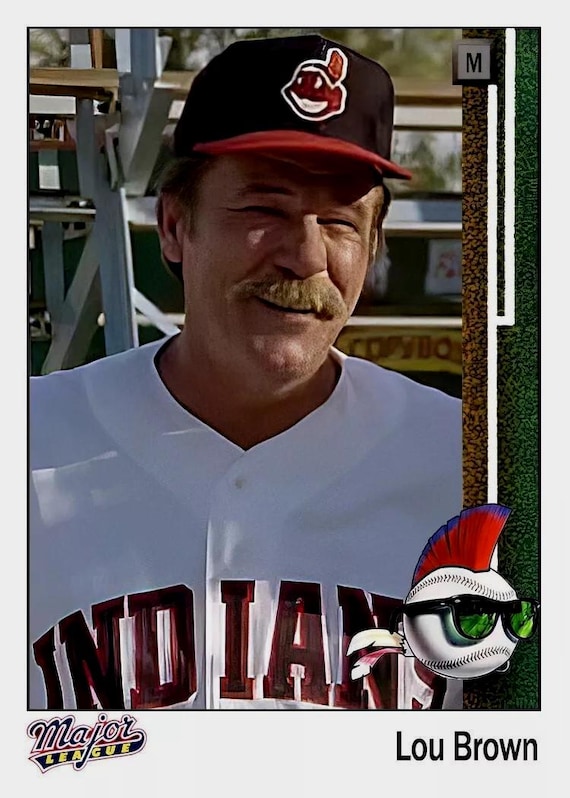
Lou Brown isn’t supposed to win. His team has been deliberately assembled to lose.
The owner wants the franchise to move. The roster is full of has-beens, misfits and guys who probably should be working at an auto-parts store.
So Lou does what great coaches do … he gets them to believe.
Brown doesn’t need a giant speech every 11 minutes; he needs to understand personalities, know when to push Ricky Vaughn, know when to leave Jake Taylor alone, and he understands that sometimes the best way to motivate a baseball player is simply to tell him: “You’re playing.”
No analytics department. No biometric monitoring. No iPad. Just Lou Brown and a lineup card.
The best thing about Lou? He doesn’t try to turn his players into somebody else. He figures out what they are good at. Then he uses it.
Fan Stop Nation’s “Job Security by Winning” Index: 97 percent of management problems disappear when the team starts winning.
“The roster was terrible, the owner was insane, and Lou Brown somehow decided this was a career opportunity.”
Cleveland construction worker
Jimmy McGinty: The Replacements’ Master of Finding Football Players Where Nobody Else Saw Them
Gene Hackman appears on this list twice because apparently Hollywood figured out that if you need a sports coach, you should just call Gene.
In The Replacements, Hackman plays Jimmy McGinty, a veteran coach tasked with assembling a replacement football team during a professional players’ strike.
The roster is absurd:
- A former Ohio State quarterback.
- A Welsh soccer player.
- A convict.
- A sumo wrestler.
- A washed-up quarterback.
- A deaf Tight End.
- A collection of guys who have absolutely no business sharing a professional football field.
Naturally, they become a team.
This is one of the oldest sports-movie formulas: take people nobody wants and give them a coach who believes in them.
It works every time because we’re suckers.
McGinty isn’t really coaching plays … he’s coaching belief. And Hackman is perfect for it.
Fan Stop Nation’s Replacement Player Reality Index: 0 percent chance this roster survives a modern NFL medical exam, 100 percent chance we still want to watch the movie.
“Our scouting department had two criteria: can you play football, and can you legally enter the stadium?”
Washington Sentinels personnel director
Irv Blitzer: The Art of Coaching People Who Have No Business Doing This
John Candy’s Irv Blitzer is one of the great “just go with it” sports-movie coaches.
The Jamaican bobsled team has no traditional bobsled history. They don’t have the climate. They don’t have the infrastructure. They barely have the experience. They do, however, have ambition … and Irv has experience. He also has a past he’s trying to outrun.
The real Jamaican bobsled story inspired the film, but Irv Blitzer is a fictional character created for the movie — John Candy turns him into exactly what the movie needs.
A coach who understands that sometimes the first step toward becoming legitimate is simply convincing everybody to show up.
And the final lesson? You don’t have to win gold to win the audience. Sometimes finishing the race is enough.
Fan Stop Nation’s Tropical-to-Ice Ratio: 1 Caribbean team, 0 frozen lakes in Jamaica, approximately 4,000 layers of winter clothing.
“The biggest coaching challenge wasn’t teaching them to bobsled. It was explaining why they had willingly moved somewhere where their faces hurt.”
Jamaican team brake man
Herb Brooks: Miracle’s Architect of Controlled Insanity
If you have ever watched Miracle and thought, “I could run through a brick wall right now,” Herb Brooks would probably be pleased.
Kurt Russell’s portrayal of Brooks in the 2004 film captures the coach’s defining characteristic: he wasn’t interested in making the 1980 U.S. Olympic hockey team comfortable.
The movie depicts Brooks assembling a collection of talented college players and relentlessly pushing them toward becoming something greater than a collection of individuals. The real Brooks did lead the United States to the 1980 Olympic gold medal, defeating the Soviet Union in the famous semifinal game before beating Finland for the gold.
And then there is the conditioning scene. Again. And again. And again.
The players are exhausted … Brooks is not. Brooks is essentially the human embodiment of: “we’re doing one more drill.”
Except the drill has been going on for three hours and somebody has already thrown up.
That’s also how you end up with an entire generation of people screaming “Again!” at recreational softball players who have absolutely no idea why.
The real Brooks was a demanding, unconventional coach. The movie heightens some moments for drama, but the basic philosophy is unmistakable.
Build the team. Push the team. Make the team believe. Then let the Soviet Union discover that America has apparently lost its mind.
Fan Stop Nation’s Miracle Conditioning Index: 47 consecutive minutes of skating, 13 motivational insults and exactly zero interest in anybody’s complaints about fatigue.
“If you can still feel your legs, Herb Brooks has determined that you are not done.”
1980 U.S. Olympic team equipment manager
Coach Carter: When the Coach Benches the Entire Team for the Right Reasons
Samuel L. Jackson’s Coach Ken Carter brought something different to the sports-movie coach genre.
He wasn’t simply demanding better basketball. He was demanding better lives.
In Coach Carter, Carter locks out his undefeated high school basketball team over academic performance, putting education ahead of winning.
The film is based on the real Carter and his 1999 decision involving Richmond High School’s basketball team.
The premise creates the central tension: what happens when the coach decides that winning isn’t the most important thing?
It’s a different kind of sports movie, and that’s exactly why it works.
Fan Stop Nation’s GPA-to-Points Ratio: 4.0 academic expectations, 100 percent basketball intensity and approximately 47 angry parents at the next school-board meeting.
“Coach Carter’s offensive system had three plays: study, graduate and then, if there’s time, run a pick-and-roll.”
Richmond assistant principal
The Honorable Mention Bench: Because Hollywood Has Too Many Great Coaches
The movie coaching staff is deep! These guys deserve a spot on the bench:
- Tony D’Amato (Any Given Sunday) Al Pacino could make a two-minute speech about yard lines sound like the Gettysburg Address.
- Morris Buttermaker (The Bad News Bears) an objectively terrible adult who somehow became a functional youth baseball coach.
- Coach Jack Lengyel (We Are Marshall) taking over a football program after unimaginable tragedy.
- Crash Davis (Bull Durham) not technically the manager, but every minor-league player should have one Crash Davis in his life.
- Chubbs Peterson (Happy Gilmore) taught a hockey player to golf, which is basically a miracle.
And somewhere in Hollywood, there’s still a screenplay waiting for Coach From the Most Ridiculous Sport Ever Invented. Competitive underwater basket weaving. Competitive axe throwing. Professional lawn bowling.
Whatever it is, somebody will eventually lose a championship by one point and learn an important lesson about friendship.
Because that’s the law.
The Final Whistle
The reason these characters stick with us isn’t really because of their winning percentages; it’s because they teach us something.
Sometimes it’s discipline. Sometimes it’s resilience. Sometimes it’s teamwork. Sometimes it’s redemption. Sometimes it’s simply: don’t give up.
And that’s why the sports movie is such a durable piece of American pop culture.
The game is only the vehicle. The real story is usually about people.
- The kid who doesn’t believe in himself.
- The veteran who thinks his career is over.
- The team that can’t stand each other.
- The coach who needs redemption.
- The town that needs something to believe in.
- The athlete who needs somebody to say: “I believe you can do this.”
We remember the speeches because we remember how they made us feel, and that’s why people who watched
- Hoosiers in 1986 still know the “five players on the floor” speech.
- Miracle still get chills at “Again.”
- Remember the Titans still get fired up before a high school football game.
- Mighty Ducks can yell “Flying V!” at a hockey rink and immediately transport a 40-year-old back to his parents’ living room.
That’s why the greatest sports-movie coaches aren’t really coaches. They’re myth-makers. They take a group of people who don’t believe they can win … and, for two hours, make us believe it too.
And isn’t that what a great sports movie is supposed to do? Make you believe, just for a little while, that maybe you could run through that brick wall after all.