


The American mall food court was the culinary equivalent of the Wild West. No reservations. No dress code. No one asking whether you wanted sparkling or still water. Just a collection of independent food kingdoms competing for your allowance, your lunch money and whatever remained of your parents’ patience after three hours of shopping.
For GenX and Xennials, the mall food court wasn’t just somewhere to eat. It was a social headquarters. It was where you met friends, spotted your crush, compared shopping bags, spent money you probably should have saved and consumed enough sodium to preserve a small fishing village.
There was Orange Julius. There was Sbarro. There were pretzels, Chinese food, pizza slices the size of hubcaps and mysterious fried objects that looked delicious under fluorescent lighting. And somewhere nearby was a parent holding six shopping bags, wondering why a simple trip to buy school clothes had turned into a four-hour expedition.
Welcome to the Fan Stop Nation Mall Food Court Hall of Fame. Bring your appetite, your nostalgia and a healthy skepticism about how long that cheese sauce has been sitting under the heat lamp.
Orange Julius: The Official Beverage of Mall-Based Decision Making
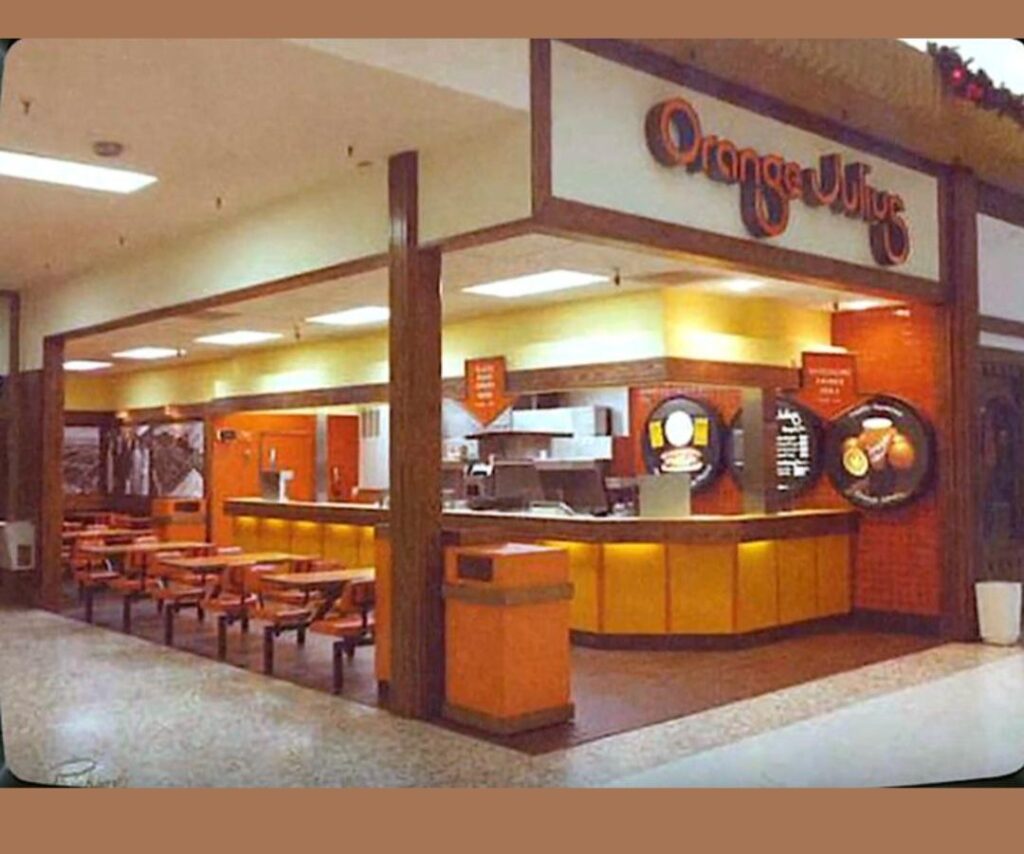
Before smoothies became something people paid $14 for because they contained something harvested by monks in the Himalayas, there was Orange Julius.
It was cold. It was frothy. It was orange.
Orange Julius was a mall food court institution. You didn’t necessarily go there because you were thirsty. You went because you were walking past, saw the familiar orange-and-white branding and suddenly realized that your shopping experience was missing a beverage that looked like it had been whipped into submission.
The drink had a distinctive texture that was somehow halfway between a smoothie, a milkshake and a science experiment conducted by a high school chemistry teacher who had recently discovered powdered drink mix.
And it was perfect for the mall.
Orange Julius also represented a simpler era of beverage marketing. Nobody was asking whether the ingredients were ethically sourced or whether the cup was compostable. We were just trying to finish our drink before it melted, spilled or got knocked out of our hands by a younger sibling.
Fan Stop Nation’s Orange Julius Brain Freeze Index: 94.2% — the probability that you would finish the entire drink in approximately four minutes and then immediately regret your life choices.
“We don’t sell beverages. We sell frozen citrus-based motivation for people who have been walking past the same five stores for two hours.”
Mall beverage operations director
Sbarro: The New York Pizza Experience, Approximately 1,200 Miles From New York
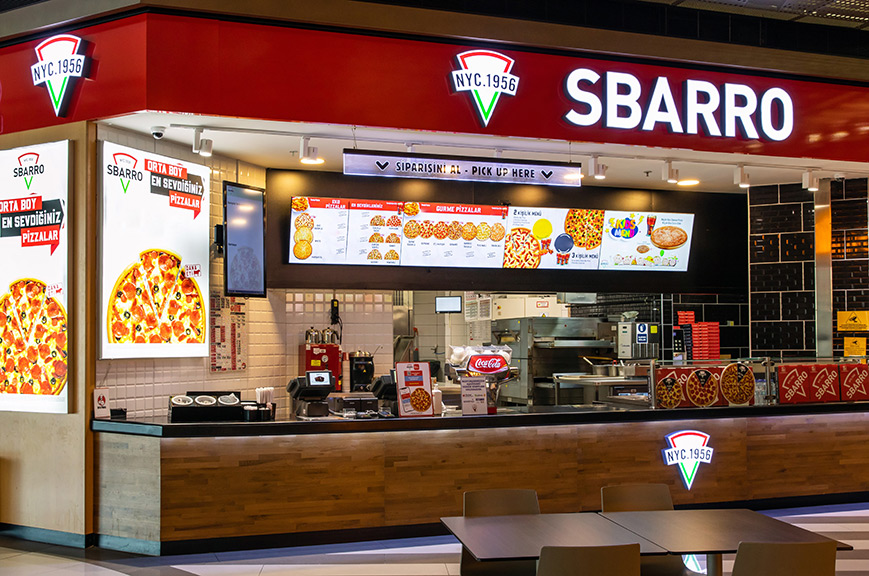
There was a time when Sbarro was practically synonymous with the American mall food court. You could walk into almost any major shopping center, follow the smell of pizza and eventually discover a display case containing enormous triangular slices that appeared to have been cut from a pizza designed for a professional football team.
Sbarro sold the promise of New York-style pizza to people who may never have been to New York.
A giant slice. A paper plate. A fork if you were feeling particularly civilized. A fountain drink large enough to hydrate a small construction crew.
The pizza was hot, cheesy and structurally questionable. You had to fold it, angle it and occasionally perform a minor engineering adjustment to keep the toppings from sliding onto your shirt.
Sbarro was the perfect food court stop because it didn’t require a complicated decision. You saw pizza. You wanted pizza. You pointed at pizza. The employee placed pizza on a plate. Capitalism had once again delivered.
Fan Stop Nation’s Oversized Slice-to-Plate Ratio: 1.7 — because one slice of Sbarro could occupy the same amount of real estate as a modest studio apartment.
“I asked for a slice of pizza. They handed me a structural engineering project with pepperoni.”
Regional mall dining consultant

Auntie Anne’s: The Pretzel That Ruined Every Other Pretzel
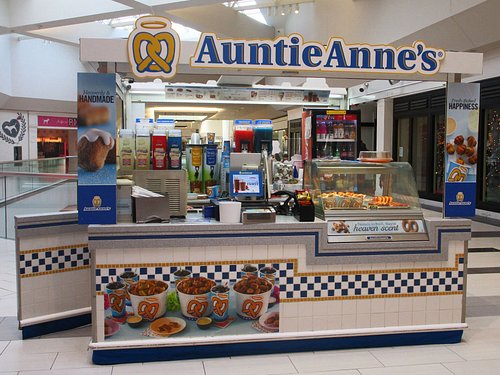
Auntie Anne’s understood something fundamental about American shopping behavior: people will walk past almost any store if they smell warm dough, butter and cinnamon sugar.
The pretzel stand was a strategic masterpiece. It didn’t need a massive dining area, an elaborate menu or a complicated sales pitch. It needed a counter, an oven and the ability to pump the smell of freshly baked pretzels into the surrounding ecosystem.
Suddenly, people who had absolutely no intention of eating were standing in line.
Auntie Anne’s also introduced an important mall food court phenomenon: the portable snack. You didn’t need to sit down. You could walk, shop, browse, people-watch and eat a pretzel simultaneously.
It was the original multitasking.
Fan Stop Nation’s Pretzel-to-Purchase Conversion Rate: 91.6% — the percentage of shoppers who entered the mall intending to buy clothes but left with cinnamon sugar on their shirt.
“Our research shows that the average customer can detect warm pretzel aroma from three storefronts away, even when distracted by a clearance rack.”
Mall snack science researcher
Hot Dog on a Stick: Where Lunch Came With a Uniform and a Side of Confusion
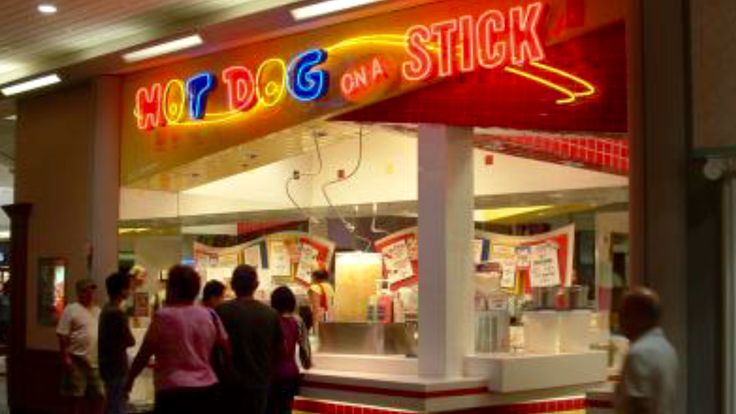
Hot Dog on a Stick was one of the most visually distinctive food court experiences in American retail history.
The uniforms were bright. The hats were unmistakable. The lemonade machines were working overtime. And somewhere behind the counter, a person in a colorful outfit was preparing a corn dog with the seriousness of a surgeon performing a transplant.
The concept was simple: hot dogs on sticks, lemonade and other fried treats.
Hot Dog on a Stick had the kind of branding that made you stop walking even if you weren’t hungry. It looked like a restaurant that had been designed by someone who had just discovered the color yellow and decided there wasn’t nearly enough of it in the world.
And the lemonade? That was the real attraction.
Fresh-squeezed lemonade, prepared with a theatrical commitment to citrus that made the entire operation feel like a traveling carnival had opened a permanent location inside the mall.
You could walk up, order a corn dog, grab a lemonade and continue shopping while wondering whether the employee’s uniform had been designed to be seen from space.
Fan Stop Nation’s Corn Dog-to-Color Coordination Index: 100% — because no food court establishment ever committed harder to a color scheme.
“We wanted customers to remember the food. The uniforms were simply a highly visible side effect.”
Mall franchise brand strategist
Cinnabon: The Reason You Suddenly Weren’t Hungry Anymore
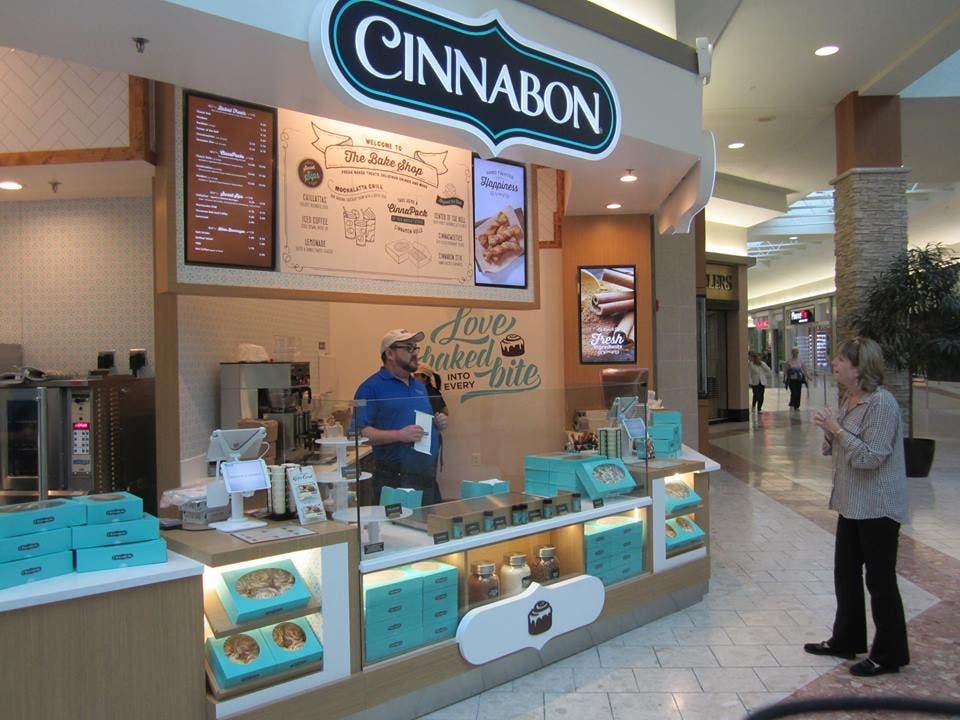
Cinnabon didn’t need a billboard. It had a smell.
That smell could travel through a shopping mall, locate a person who had eaten lunch 20 minutes earlier and convince them that they had somehow developed a completely new appetite.
You could be walking toward the mall entrance with a shopping list, a budget and a perfectly reasonable plan for the afternoon. Then the aroma hit.
Butter. Cinnamon. Brown sugar. Cream cheese frosting. Suddenly, your budget was irrelevant.
Cinnabon was the dessert equivalent of a hostile corporate takeover. It didn’t ask permission. It simply occupied your senses and waited for you to surrender.
The classic cinnamon roll was enormous, gooey and unapologetically indulgent. It was the kind of pastry that required a fork, a napkin and a willingness to accept that your shirt might never recover.
Cinnabon also introduced the mall to a critical truth: dessert doesn’t have to come after a meal. Sometimes dessert can be the reason you have a meal.
Fan Stop Nation’s Cinnamon Roll Hypnosis Index: 7.4 — the number of seconds between smelling a cinnamon roll and deciding that just one won’t hurt.
“I came to the mall to buy a winter coat. I left with a cinnamon roll, a coffee and the sudden realization that I have no financial discipline.”
Suburban pastry economics analyst
The Chinese Food Counter: The Three-Compartment Tray of American Dreams
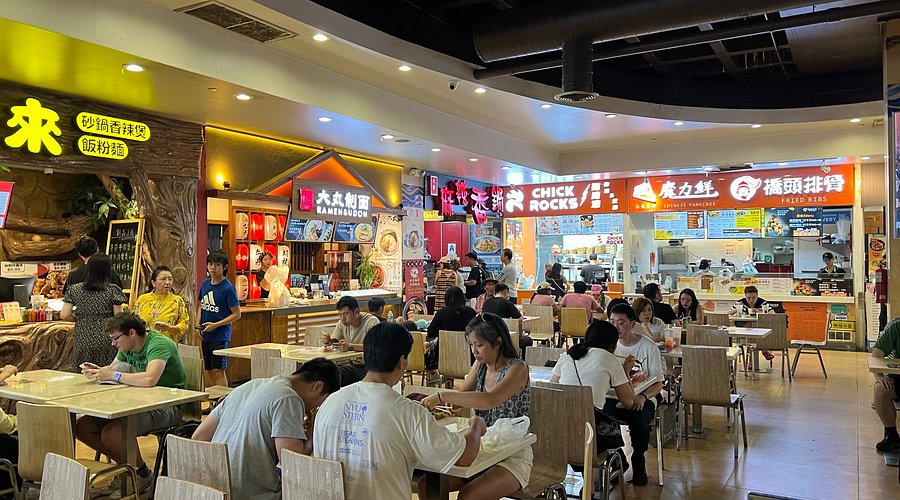
There was always a Chinese food counter somewhere in the food court. And it always seemed to offer the same magical arrangement: fried rice, noodles, chicken, vegetables and sauces that could be identified only through a combination of color, texture and personal courage.
Maybe you wanted orange chicken. Maybe you wanted beef and broccoli. Maybe you wanted the mysterious sweet-and-sour chicken that looked like it had been dipped into something originally developed for automotive paint.
Then the employee would ask whether you wanted a two-item or three-item combo … and just like that, you were making life decisions.
The food court Chinese restaurant was a masterpiece of portion control … or … more accurately, portion abandonment. Those little plastic trays held enough food to sustain a family through a minor natural disaster.
You got rice. You got noodles. You got chicken. And a fortune cookie that would tell you something vague about opportunity and personal growth.
It was a complete experience.
And the best part? You could see the food before you ordered it. No menu descriptions. No culinary vocabulary quiz. Just point, nod and hope the person behind the counter understood that you wanted the chicken with the shiny orange sauce.
Fan Stop Nation’s Combo Plate Overcommitment Index: 96.7% — the percentage of customers who selected three entrees despite knowing they would only finish one and a half.
“The customer asked for a little rice, a little chicken and a little noodles. We gave him enough food to survive the winter.”
Food court portion management specialist
Chick-fil-A: The Mall Restaurant That Closed on Sunday and Opened a Debate
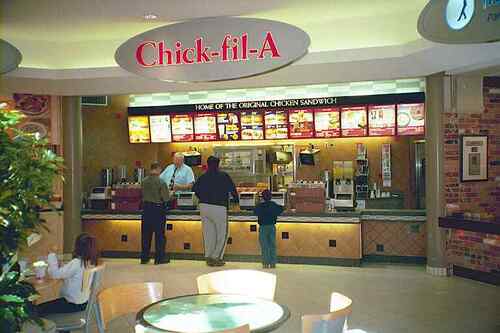
For many mall shoppers, Chick-fil-A was the reliable answer to the question: “What should we eat?”
The chicken sandwich was simple. The waffle fries were excellent. The service was famously polite. And the whole experience had a level of consistency that made it feel like a small miracle in a building where the escalator was probably broken.
Mall Chick-fil-A locations also had a special place in the shopping experience. You could be halfway through a marathon of department stores, shoe stores and teenage wandering, and suddenly there was a chicken sandwich waiting to restore your will to live.
The food court version was often a smaller operation than the standalone restaurants, but that didn’t make it any less important. It was a dependable option when the group couldn’t agree on anything else.
Of course, there was one major complication: Sunday.
You could have the perfect mall day planned. You could have a craving. You could have a gift card. You could even have the exact amount of money in your pocket.
But if it was Sunday, you were out of luck.
The restaurant was closed, and you were left to negotiate with the remaining food court options like a diplomat attempting to broker peace between pizza and a pretzel stand.
Fan Stop Nation’s Sunday Chicken Disappointment Index: 100% — because nothing tests a person’s faith in the shopping experience like discovering the chicken sandwich counter is closed.
“We have a perfectly good plan for lunch. Unfortunately, the plan was developed on a Sunday, and now we’re discussing pizza like it’s a diplomatic compromise.”
Mall family meal coordinator
The Great Steak & Potato Company: The Cheesesteak That Required a Nap
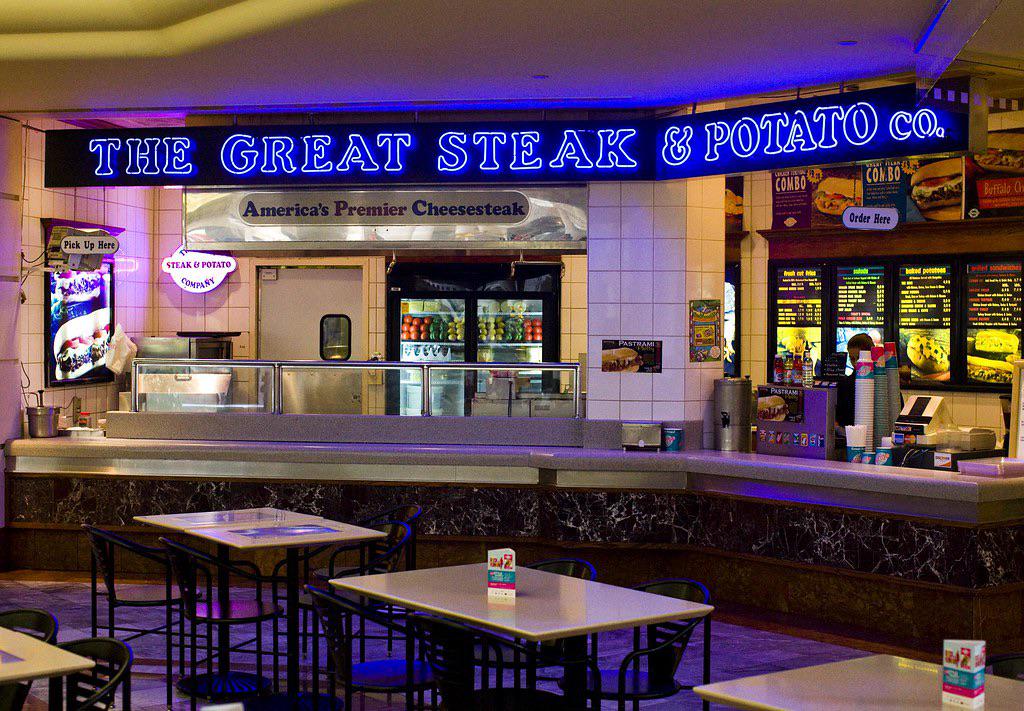
The Great Steak & Potato Company was one of those mall food court restaurants that seemed to operate under the philosophy that a sandwich should be hot, messy and large enough to require a brief recovery period.
The menu centered on cheesesteaks, fries and baked potatoes. It was straightforward American comfort food, delivered at a time when most mall shoppers were still recovering from the experience of walking past 14 clothing stores without finding anything that fit.
The cheesesteak was the star.
Thinly sliced beef, melted cheese, onions and peppers, all packed into a roll that was going to require at least three napkins and a little personal accountability.
The baked potato was the alternative for people pretending to make a healthier decision. You could get a potato, add enough toppings to make it a small casserole and tell yourself you had made an excellent nutritional choice.
The Great Steak experience was especially appealing because it offered something different from the usual pizza, burger and chicken rotation. It was a meal that felt substantial.
You weren’t leaving hungry. You were leaving with the posture of a person who had just completed a competitive eating event.
Fan Stop Nation’s Cheesesteak-to-Seatbelt Ratio: 3.6 — the number of minutes required before a full stomach begins negotiating with your jeans.
“We don’t make small sandwiches. We make sandwiches that require a moment of reflection before the first bite.”
Mall sandwich operations supervisor
The Arcade: Technically Not Food, Still Responsible for Several Missed Meals
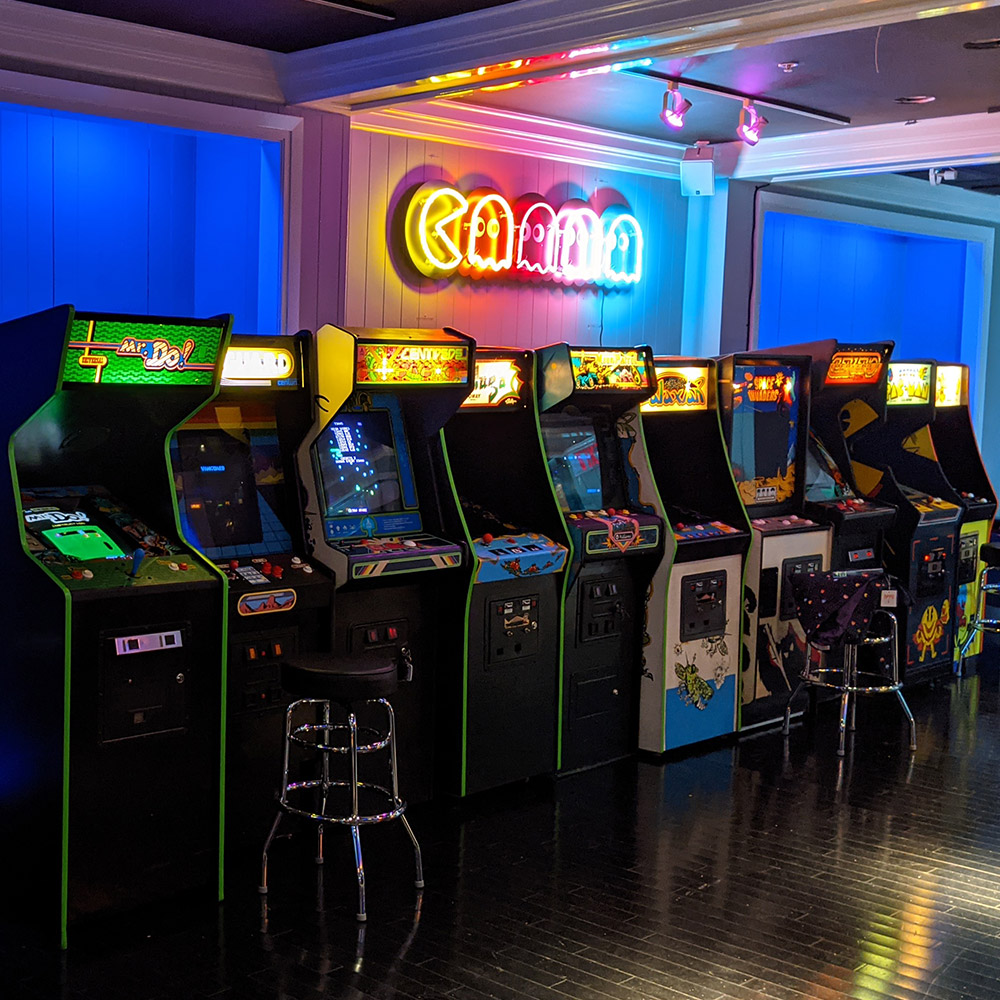
The arcade wasn’t a restaurant, but it was absolutely part of the mall food court ecosystem.
It was where you went after eating. It was where you went before eating. It was where you went when your parents said they were going to look at one more store and you knew that meant another 45 minutes of wandering around a department store.
The arcade was a magical place filled with blinking lights, electronic sound effects and machines designed to convince children that a quarter was a reasonable price to pay for 90 seconds of entertainment.
There was Pac-Man. There was Galaga. There was Street Fighter II. There was Mortal Kombat. There were racing games, basketball games, pinball machines and the occasional machine that nobody understood but everyone wanted to play.
And then there was the token economy.
You would exchange real money for arcade tokens, immediately lose track of how much you had spent and convince yourself that you were one game away from winning the jackpot.
The arcade was also where friendships were tested. Someone would challenge you to a fighting game, beat you repeatedly and then offer unsolicited advice about your technique.
This was not a friendship. This was psychological warfare.
Why it belongs: The arcade gave the mall food court a second purpose. It was the entertainment district, the teenage hangout and the place where you could burn through your allowance without purchasing a single item that could be taken home.
Fan Stop Nation’s Quarter-to-Token Conversion Index: 100% — every quarter converted into approximately 45 seconds of childhood happiness and a lifetime of regret.
“I told my parents I needed another five dollars for lunch. I spent four dollars and seventy-five cents trying to beat a kid named Mike at Street Fighter.”
Mall arcade financial planning adviser
The Mall Food Court Was More Than a Place to Eat
The food court was one of the few places in the mall where everyone eventually ended up.
It didn’t matter whether you were shopping for clothes, looking for a new cassette, buying sneakers, meeting friends or simply trying to avoid going home. At some point, hunger would take over, and the food court offered something that modern shopping experiences have largely lost: a shared social space.
It was also one of the first places where many teenagers experienced a little independence.
You had your own money. You could decide what to eat. You could meet friends without parents hovering over every conversation. You could sit at a table for an hour, even if you’d only purchased a $1.49 drink.
For Xennials, it was a bridge between childhood and adolescence, except the lessons involved managing money, navigating social situations and understanding that a cinnamon roll could absolutely qualify as lunch.
The mall was where we went from shopping with our parents to meeting friends, dating, hanging out and developing the kind of fashion opinions that would eventually make us cringe when looking at old photographs.
The food court was always there … and that mattered.
The Fan Stop Nation Mall Food Court Hall of Fame: Final Verdict
The American mall food court deserves its place in the cultural history of GenX and Xennials.
It was loud, crowded, occasionally sticky and almost certainly violating several modern food-safety expectations. But it was also a gathering place, a teenage headquarters and a culinary experience that offered something for everyone.
Orange Julius gave us the frothy citrus beverage. Sbarro gave us pizza slices the size of a hubcap. Auntie Anne’s gave us pretzels worth abandoning a shopping list for. Cinnabon weaponized cinnamon. Hot Dog on a Stick made lunch a theatrical production. And the Chinese food counter made sure nobody left hungry.
We didn’t care about calorie counts. We didn’t care about nutritional labels. We didn’t care whether the restaurant had a mobile app.
We cared about getting back to the arcade before our friends left, finding a table near the fountain and making sure we had enough money left for one more snack.
And somewhere out there, a former mall rat is still walking past an Orange Julius, smelling cinnamon rolls from three stores away and wondering whether Sbarro is still open.
Because you can take the kid out of the mall, but you can’t take the mall food court out of the kid.
Now if you’ll excuse us, we have to meet our friends by the fountain at 3:30. Don’t be late. The arcade tokens aren’t going to spend themselves.