


This is exactly the kind of Fan Stop Nation subject where the minor leagues get to say, “You know what? The major leagues have lawyers. We have a guy named Dave in promotions.“
There is a reason minor-league sports are some of the best entertainment in America.
It’s not always the quality of play. It’s not necessarily the parking. And it definitely isn’t the air conditioning. It’s because minor-league teams have historically operated with the promotional philosophy of a fraternity house that accidentally acquired a scoreboard.
Major-league teams have focus groups, corporate sponsors, brand managers, legal departments and approximately 19 people whose entire job is making sure the mascot doesn’t accidentally offend a Fortune 500 partner.
Minor-league teams have Dave.
Dave works in promotions. Dave has an idea. And sometimes Dave’s idea is:
“What if we gave everyone a piece of bubble wrap and tried to set a world record?” or “What if we padlocked the stadium gates so nobody could attend the game?” or “What if we gave away the general manager’s gallbladder?”
And somehow, these aren’t hypothetical questions … they’re things that actually happened.
Minor-league baseball has become legendary for outrageous promotions, but the broader minor-league sports world has spent decades discovering that when you’re trying to sell tickets, sometimes the line between marketing genius and evidence-for-the-prosecution is approximately three feet wide.
So grab a hot dog, a $2 beer and whatever waiver they make you sign at the entrance. We’re going in.
The Charleston RiverDogs’ “Nobody Night”: The Promotion Where the Goal Was Literally Zero Fans
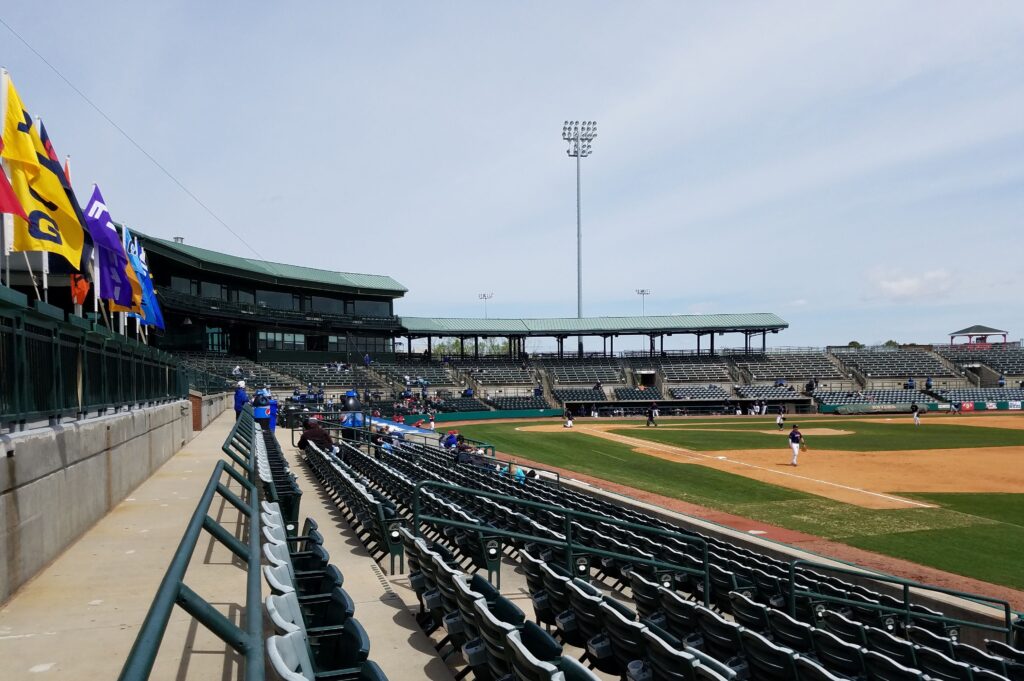
Let’s begin with perhaps the most beautifully stupid concept ever conceived by a sports marketing department … the Charleston RiverDogs wanted to set a record for the lowest attendance at a professional baseball game. So, they did what any reasonable organization would do:
They locked the fans out.
In 2002, the Yankees’ Class A affiliate held “Nobody Night,” padlocking the entrances for the first five innings. Fans who arrived were directed to a nearby tent where they could drink and eat at discounted prices while waiting for the gates to open. Some reportedly climbed ladders to watch the game over the fence.
The official attendance was announced as zero … unfortunately … the National Baseball Hall of Fame counts attendance through ticket sales.
So the RiverDogs didn’t actually get the record!
Imagine explaining that at the marketing meeting:
“Great idea, everybody. We successfully prevented people from entering the stadium.”
“Did we set the record?”
“No.”
“Did we sell tickets?”
“Yes.”
“So technically there were people in attendance.”
“Not really.”
“Excellent. Meeting adjourned.”
The best part is that Charleston was eventually forced to admit that people standing outside the stadium drinking discounted beer technically wasn’t the same thing as having nobody show up. Minor-league marketing lesson: Always read the attendance rules before inventing a way to have zero attendance.
Fan Stop Nation’s Empty Stadium Index: 0 fans inside, 100 percent chance somebody in the front office was screaming, “This is exactly what we wanted!”
“We have finally achieved the ultimate home-field advantage: nobody is here to see us lose.”
Fictional RiverDogs marketing director
Altoona Curve’s “Awful Night”: Please Enjoy Your Complimentary Gallbladder

This one sounds like a rejected Saturday Night Live sketch. The Altoona Curve held its first “Awful Night” in 2003, an evening specifically designed to make the ballpark experience as terrible as possible … and they committed to the bit.
- The scoreboard displayed “failure average” instead of batting average.
- William Shatner and David Hasselhoff played over the loudspeakers.
- Fans could bob for onions.
- There were helium balloon contests.
And then came the giveaway: The first 1,000 fans received a photograph of general manager Todd Parnell’s recently removed gallbladder … and one lucky fan actually won the gallbladder itself in a postgame raffle.
Somewhere, a minor-league marketing intern typed: “Gallbladder raffle — DONE” and nobody stopped him!
This is the sort of promotion that makes you wonder whether the meeting started with a legitimate brainstorming exercise and then somebody said, “Okay, but what if we get progressively worse?”
The Curve apparently went on to hold six more Awful Nights. Which means this wasn’t an accident. It was a franchise strategy.
Fan Stop Nation’s Organ Donation Promotion Index: 1 gallbladder, 0 functioning HR departments and approximately 47 people asking, “Wait… is this legal?”
“I came for baseball. I left with a medically unnecessary amount of information about Todd’s digestive system.”
Fictional Curve season-ticket holder

West Virginia Power’s Indoor Plumbing Night: The Health Department Has Entered the Chat
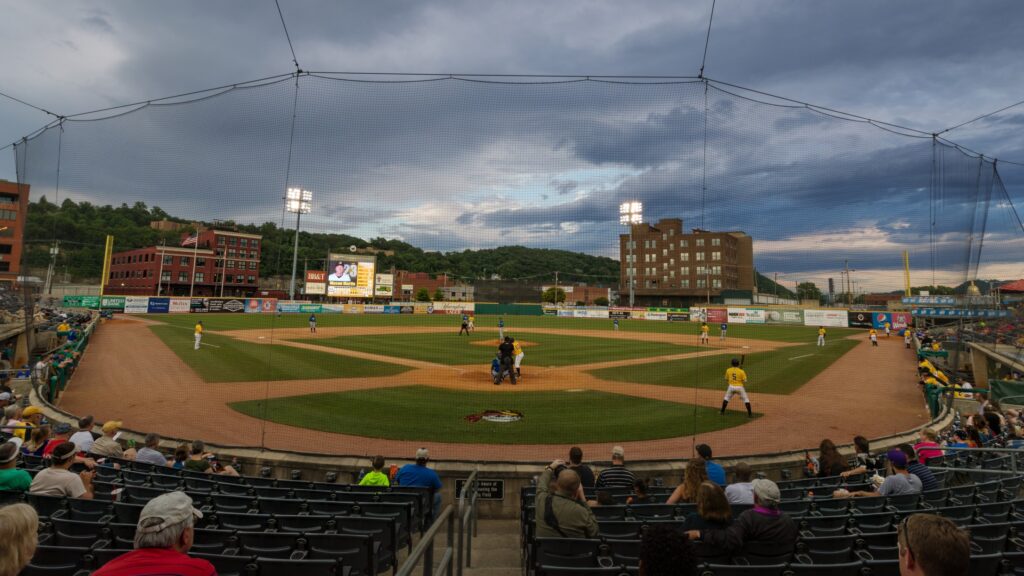
At some point, somebody at the West Virginia Power looked at the traditional baseball promotional calendar and thought:
“You know what America needs? A deeper appreciation for toilets.”
Thus was born the proposed Salute to Indoor Plumbing Night.
The original idea was to close the bathrooms at Appalachian Power Park and make fans use portable toilets so they could better appreciate the miracle of indoor plumbing.
This was not a joke.
The state Health Department stepped in and killed the concept because, shockingly, intentionally creating a restroom disaster inside a professional sports venue isn’t exactly considered best practice.
But the Power didn’t surrender. They dressed employees as plumbers. They played the Home Improvement theme. And, instead of shutting down the bathrooms, they pivoted to a much safer contest involving brownies mashed into the shape of … well … Poo.
They called it a poo toss. Because apparently once you’ve written “indoor plumbing” on the promotional calendar, there is no turning back.
This is one of the great lessons of minor-league marketing: When the government stops your promotion, don’t abandon the concept. Just make it slightly less illegal.
Fan Stop Nation’s Plumbing Code Violation Index: 11 out of 10 inspectors recommend simply leaving the bathroom doors unlocked.
“The Health Department said no to the portable toilets, so we pivoted to edible turds. That’s what we call strategic flexibility.”
Fictional promotions coordinator
Quad Cities River Bandits: The “Circle of Life” Homestand
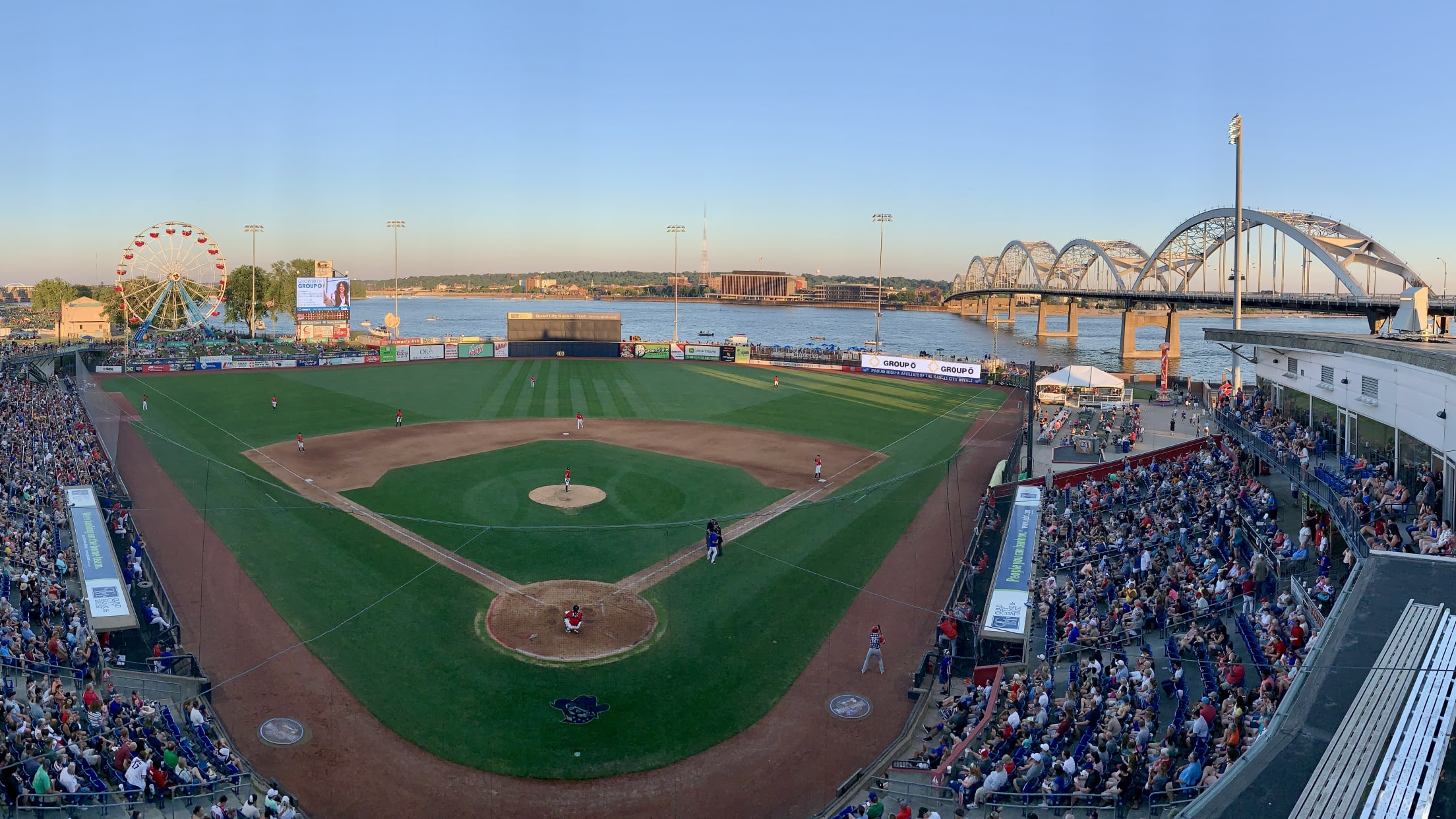
The River Bandits decided that four consecutive nights should represent the four major stages of human existence:
- Birth
- School
- Marriage
- Death
You know. Baseball.
The 2010 promotion included gifts for expectant mothers, a college scholarship, an all-expenses-paid wedding package and, finally, an all-expenses-paid funeral package.
That’s not a promotional schedule … that’s The Lion King directed by Mike Veeck (best known as the architect of Disco Demolition Night)
And the organization actually had the entire human experience mapped out across four baseball games.
Thursday: Congratulations! You’re alive!
Friday: Go to school.
Saturday:Get married.
Sunday: We’re sorry for your loss.
There is something almost beautiful about the efficiency.
The actual team owner, Dave Heller, described the concept as having fans covered “cradle to grave.” That’s commitment.
Fan Stop Nation’s Cradle-to-Grave Ticket Package Index: Four games, one scholarship, one wedding and one funeral — because apparently the River Bandits were trying to become the Amazon Prime of human existence.
“We wanted fans to know that the River Bandits would be there for every major life event.”
Fictional River Bandits marketing executive
Fort Myers Miracle: Seinfeld’s George Costanza Gets His Own Promotion
Minor-league baseball’s relationship with pop culture has always been dangerously strong, but the Fort Myers Miracle took it somewhere special.
They held Costanza Night, inspired by the Seinfeld episode “The Opposite,” where George decides that every instinct he has is wrong and begins doing the opposite.
- So the Miracle did the opposite.
- They wore their away uniforms.
- Fans were paid to park.
- The scoreboard began at the ninth inning and worked backward toward the first.
- Players asked fans for their autographs.
Everything was backward. It was basically a baseball game designed by George Costanza after three espressos.
This is one of the reasons minor-league promotions work so well. You don’t need a $40 million scoreboard. You need a person in the front office who understands that somebody in Fort Myers has been quoting George Costanza for 30 years … and somewhere, George is still furious that nobody thought of the chicken salad on rye promotion.
Fan Stop Nation’s Opposite Day Efficiency Index: 100 percent fewer normal decisions than required by Major League Baseball.
“We asked ourselves what the worst possible way to operate a baseball game would be. Then we hired George Costanza.”
Fictional Fort Myers front-office employee
Dunedin Blue Jays: Office Space Night and the Printer That Never Saw Tomorrow
Every Xennial knows the scene: Peter. Michael. Samir. A printer … and a baseball bat.
The Dunedin Blue Jays knew it, too.
During Office Space Night, the team incorporated the movie into the entire evening. There were trivia contests, a “flair” contest requiring a minimum of 15 pieces and discounts for fans who used the word “stapler” at the box office.
And then came the pièce de résistance: Fans were allowed to smash a printer.
Finally, a sports promotion that understood the American worker.
You don’t need a bobblehead. You don’t need a foam finger. You need an old HP printer and a legally sanctioned opportunity to beat it into the afterlife.
Somewhere in the parking lot, someone’s Toyota Tercel was blaring Michael Bolton.
Fan Stop Nation’s TPS Report Suppression Index: 14 printers destroyed for every one person who actually remembered to submit their expense report.
“I’m not saying the printer deserved it. I’m saying the printer knew what it did.”
Fictional middle manager who has been waiting 19 years for revenge
Nashua Pride: Who Wants to Be a Turkish Millionaire?
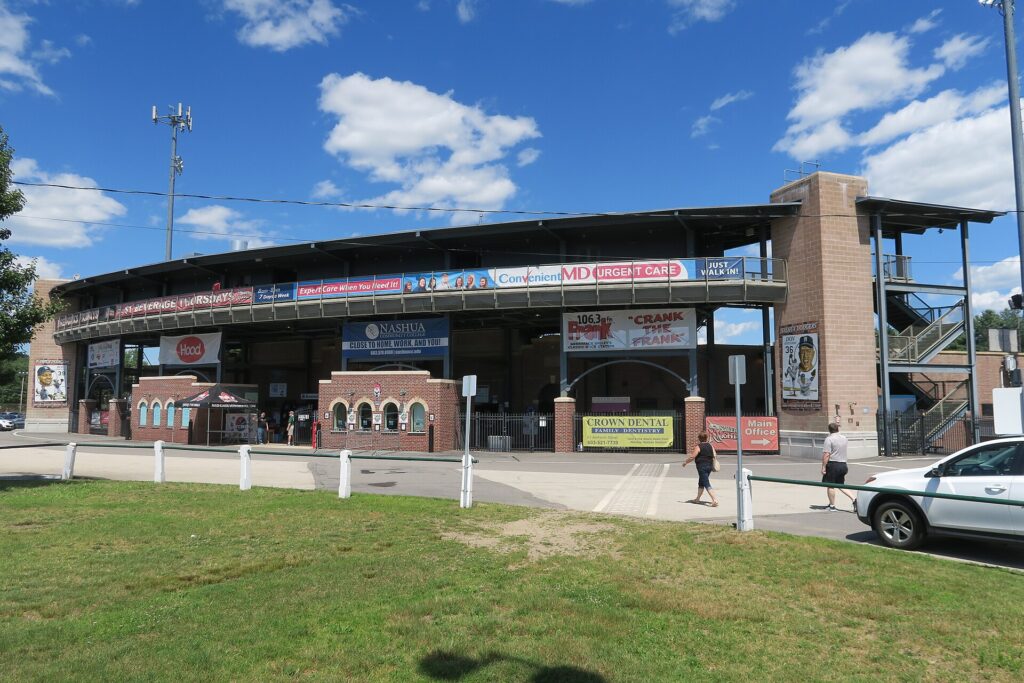
This one is almost too beautiful. The Nashua Pride held a 2002 promotion called “Who Wants to Be a Turkish Millionaire?”
At first glance, it appeared the team was offering a million dollars. Then came the catch … it was one million Turkish lira … which was worth roughly one U.S. dollar.
Congratulations, you are now a millionaire. Please enjoy your dollar.
This may be the most aggressively minor-league promotion imaginable because it technically delivers exactly what it promises.
You win. You become a millionaire. You just don’t become a useful millionaire.
And technically, that’s not a loophole … that’s a marketing PhD.
Fan Stop Nation’s Currency Conversion Index: 1,000,000 units of promotional enthusiasm = approximately $1 in actual purchasing power.
“We never said you would be a rich millionaire. We said you would be a millionaire. Read the fine print, champ.”
Fictional Nashua Pride promotions director
Charleston RiverDogs: Silent Night
The RiverDogs weren’t done after trying to manufacture an attendance record. They also experimented with Silent Night, instructing fans to remain quiet for the first five innings … at a baseball game … where people traditionally scream things like:
- “Hey Beer Man”
- “Let’s Go, Whoever!”
- “You suck, Blue!”
And occasionally:
“I paid $8 for this hot dog!”
The RiverDogs wanted none of it. Fans were encouraged to remain silent, and some reportedly duct-taped their mouths shut.
Imagine being the opposing team and realizing the crowd is silent because the marketing department told them not to make noise.
That’s not home-field advantage. That’s psychological warfare.
The RiverDogs were basically running experimental theater with a baseball game happening somewhere in the background.
Fan Stop Nation’s Stadium Silence Index: 4.2 decibels for five innings, followed by approximately 97 decibels of people yelling because they had been legally prohibited from doing so for two hours.
“We spent thousands of dollars installing a sound system so everyone could experience the revolutionary concept of nobody using it.”
Fictional RiverDogs audio technician
The Minor Leagues Also Gave Us Bubble Wrap World Records
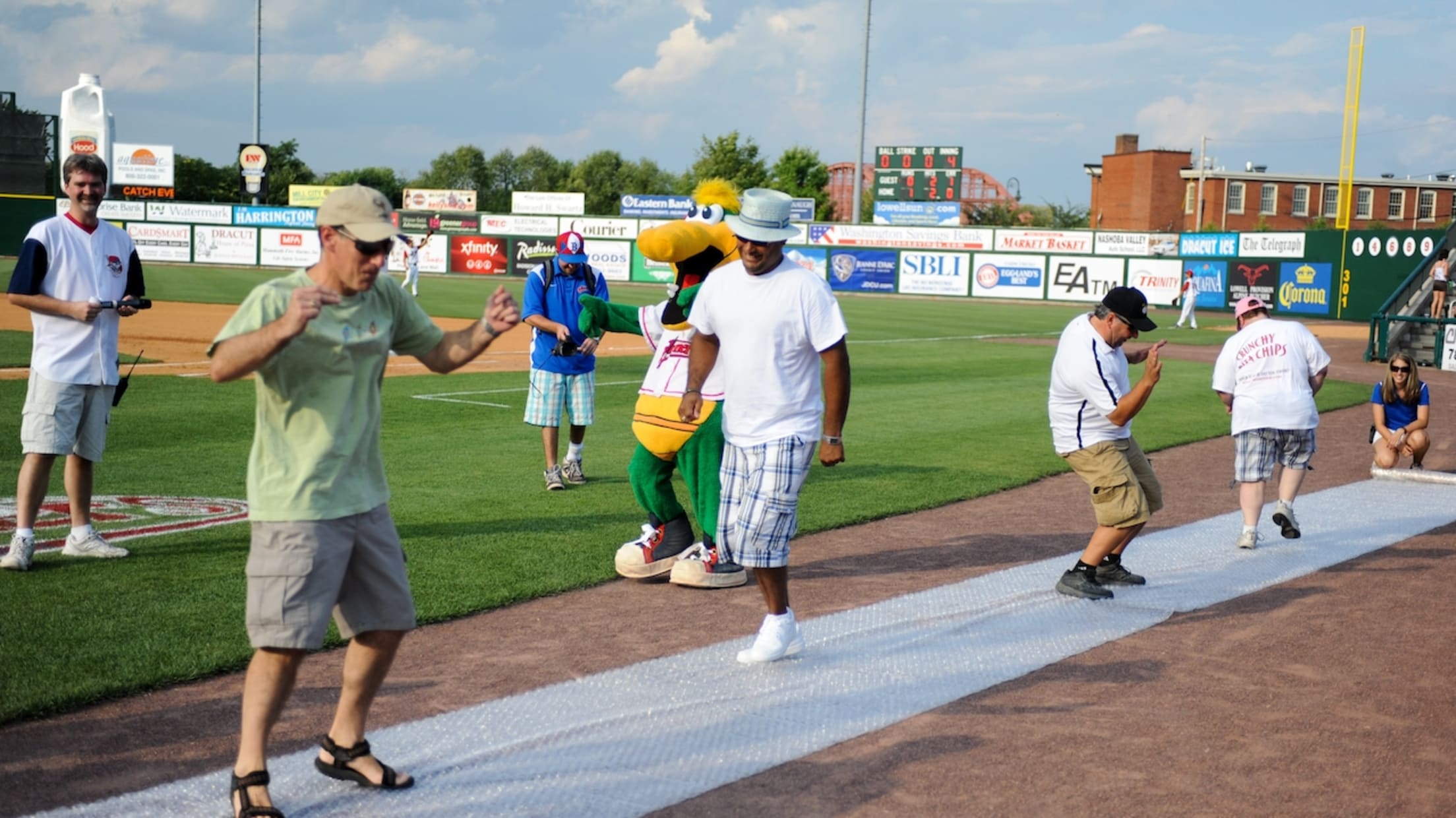
Not every ridiculous promotion involved questionable judgment. Sometimes the stupidity was simply magnificent.
The Lowell Spinners held Bubble Wrap Night in 2010, distributing one-square-foot pieces of bubble wrap to fans, coaches and players.
Almost 3,700 people participated. The goal? Set a Guinness World Record for simultaneous bubble-wrap popping.
They did it! This is perhaps the purest example of minor-league promotional philosophy.
Major League Baseball: “Tonight is Hispanic Heritage Night.”
Minor League Baseball: “We have bubble wrap, and we’re about to make history!”
Respect.
The beautiful part? It worked! Sometimes the dumb idea is the good idea.
Fan Stop Nation’s Bubble Wrap Destruction Index: Approximately 3,692 people achieving the emotional satisfaction of popping something they were specifically told not to pop.
“We spent months planning an evening that could have been accomplished by giving everyone bubble wrap at a birthday party.”
— Fictional Spinners promotions executive
Why Minor-League Teams Do This
Here’s the part that makes all of this make sense: minor-league sports aren’t simply competing against other sports, they’re competing against:
- Netflix
- Disney+
- TikTok
- youth soccer
- shopping
- restaurants
- video games
- backyard barbecues
- air conditioning
- and the very strong American tradition of “Eh, we’ll just stay home.”
Minor-league teams have therefore turned the game into an event. Sure, the baseball, basketball and hockey matters, but the promotion gives somebody a reason to buy a ticket tonight. That’s why this tradition has endured.
MLB itself describes promotions as the lifeblood of Minor League Baseball, and the league continues to highlight increasingly bizarre theme nights, alternate identities and giveaways.
And the philosophy hasn’t really changed:
- Get people through the gates.
- Give them something to talk about.
- Make them laugh.
- Sell them a beer.
- Then convince them to come back next Friday.
It’s marketing. It’s entertainment. It’s community building … and occasionally, it’s a gallbladder raffle.
The Real Genius of Minor-League Promotions
There’s something deeply American about minor-league sports.
- They don’t pretend every game is the Super Bowl.
- They don’t pretend every player is a future Hall of Famer.
- They know you’re probably there because it’s Saturday, the weather is decent and somebody said, “Hey, let’s go to the ballpark.”
So they give you something else:
- A ridiculous mascot.
- A weird giveaway.
- A backward scoreboard.
- A printer to destroy.
- A silent inning.
- A million Turkish lira.
- Hit the bull – Win a steak!
And for a couple of hours, that’s enough. That’s why these promotions matter. They remind us that sports don’t always have to be serious.
Sometimes the best reason to go to a game has nothing to do with the final score. Sometimes you just want to see 3,000 people simultaneously pop bubble wrap.
Or watch a guy win his own gallbladder in a raffle. Or stand outside a locked baseball stadium because some lunatic in the front office decided that nobody attending the game would be a fantastic idea.
That’s minor-league sports. The big leagues sell the game. The minors sell the story.
And somewhere in America tonight, a promotions director named Dave is pitching something that will either become a brilliant marketing idea … or require a meeting with the health department.
Let’s hope it’s the latter. Because that’s when minor-league sports are at their absolute best.