


Television has characters that are stars. They get the big entrances, the dramatic speeches, the romantic subplots and the camera angles that suggest their agents negotiated a percentage of the lighting budget … and then there’s the sidekick … the best friend, the loyal assistant, the walking disaster, the voice of reason nobody listens to, or the person who should absolutely be supervising the main character but somehow isn’t.
For GenX and Xennials, television history is packed with catchphrases, questionable life advice, emotional damage, comic relief and the occasional reminder that being the smartest person in the room is useless when the room belongs to a questionable moron.
This isn’t a ranked list of every great supporting character. It’s a hall of fame celebration of the loyal lieutenants, scene-stealers and indispensable second bananas who helped make television history … even if some of them were clearly more qualified to run the operation than the person in charge.
Radar O’Reilly: M*A*S*H
Fan Stop Nation’s Radar Detection Index: 99.8%
Before smartphones, instant messaging and the ability to track a pizza delivery driver in real time, there was Walter “Radar” O’Reilly. The company clerk at the 4077th Mobile Army Surgical Hospital could seemingly anticipate Colonel Potter’s needs before Potter knew he had them. Coffee? Already pouring. Paperwork? Already filed. Incoming helicopter? Radar knew before the pilot finished thinking about landing.
Radar wasn’t a battlefield superhero. He was a young guy trying to survive the chaos of war with a teddy bear, an almost supernatural sixth sense and a level of administrative competence that would make most modern office managers weep.
He was also the perfect counterbalance to Hawkeye and the rest of the camp’s wisecracking medical staff. In a world where the doctors coped with horror through humor, Radar reminded everyone there was still a human being underneath the jokes.
Why he belongs: Radar made competence entertaining and innocence feel heroic. Every office has a Radar. Unfortunately, most of them are underpaid and have already submitted their resignation.
“I knew you were going to ask me for that report, sir. I also knew you’d lose it, ask for another copy, and blame the typewriter.”
4077th administrative efficiency specialist
Carlton Banks: The Fresh Prince of Bel-Air
Fan Stop Nation’s Sweater Vest Survival Index: 97.6%
Carlton Banks was proof that you could grow up in a mansion, receive an excellent education, wear sweaters that looked like they had been selected by a country club committee, and still have absolutely no idea what was happening around you.
As Will Smith’s buttoned-up cousin, Carlton was the perfect foil to Will’s street-smart charm. Will would bend the rules, mock authority and turn an ordinary afternoon into a family incident report. Carlton would respond by explaining the rules, defending authority and then accidentally becoming the punchline.
And then there was the dancing. Carlton’s love of Tom Jones’s “It’s Not Unusual” gave television one of its most enduring comedy routines. The dance was ridiculous, joyful and completely unbothered by what anyone thought.
Carlton could be smug, sheltered and spectacularly tone-deaf. But he was also loyal, funny and capable of growth. His friendship with Will worked because neither cousin had a monopoly on being right.
Why he belongs: Carlton transformed the straight man into a comedy institution. He also taught an entire generation that no amount of money can save you from being roasted by your own family.
“I have a 4.0 GPA, a wardrobe approved by three generations of country-club members, and absolutely no idea why everyone keeps laughing when I dance.”
Bel-Air youth cultural liaison

Randy Hickey: My Name Is Earl
Fan Stop Nation’s Sibling Supervision Deficit: 98.9%
Randy Hickey was the human equivalent of a puppy that had discovered a loaded nail gun. He was sweet, loyal, enthusiastic and almost entirely unequipped to navigate the world without supervision.
As Earl’s younger brother and partner in his increasingly chaotic attempts to make amends, Randy brought a special kind of innocence to My Name Is Earl. Earl was trying to improve his life through karma. Randy was trying to understand what karma was and whether it came with snacks.
Randy’s genius was that he never seemed embarrassed by his limitations. While most sitcom characters spent their time pretending to be smarter, cooler or more sophisticated than they were, Randy simply showed up as Randy. The results were frequently disastrous, but the commitment was admirable.
He could be frustrating, ridiculous and occasionally one thought away from accidentally eating a decorative candle. Yet his loyalty to Earl was genuine.
Why he belongs: Randy made stupidity lovable without making it mean-spirited. He also demonstrated why every road trip needs one person who is not allowed to hold the map.
“Earl says we’re fixing our mistakes. I accidentally made three new ones while he was explaining the first one, so I think we’re ahead of schedule.”
Camden County karma project assistant
Coach Beard: Ted Lasso
Fan Stop Nation’s Beard-to-Explanation Ratio: 3.2 cryptic nods per comprehensible answer.
Ted Lasso is the relentlessly optimistic American who somehow winds up coaching English football despite knowing about as much about the sport as a golden retriever knows about filing taxes. Coach Beard is the guy standing next to him, quietly absorbing the chaos and occasionally looking like he knows exactly how the universe works but has signed an agreement never to explain it.
Beard is the ultimate second-in-command: tactically sharp, emotionally mysterious and capable of communicating entire paragraphs through a single look. He doesn’t need Ted’s speeches. He doesn’t need the spotlight. He just needs a whiteboard, a few obscure references and enough time to decide whether the latest situation requires a tactical adjustment or a late-night philosophical crisis.
Beard’s brilliance is that he’s both the most grounded person in the room and the person most likely to disappear into the London night and return with a story that sounds like it should be investigated by three government agencies.
Why he belongs: Coach Beard proves that the best sidekick doesn’t need to explain himself. Sometimes the less you know about a man who wears that many hats, the better.
“Ted asked me if the team was ready. I said yes. He asked what that meant. I told him the answer was inside a book he hasn’t read, in a language he doesn’t speak, on a train we may or may not have boarded.”
Richmond tactical philosophy consultant
Al Borland: Home Improvement
Fan Stop Nation’s Flannel-to-Fix Ratio: 99.4%
Tim Taylor had a television show, a workshop, an enormous collection of power tools and the judgment of a raccoon who had just discovered electricity. Al Borland had flannel, patience and the grim understanding that somebody was going to have to clean up whatever Tim had just built.
As Tim’s co-host on Tool Time, Al was the practical expert who understood the equipment, respected safety and knew that “more horsepower” was not a universally accepted construction philosophy.
Tim would announce an ambitious project. Al would explain why it was dangerous. Tim would ignore him. A loud noise would follow. Al would look into the camera with the exhausted expression of a man who had already filled out the insurance paperwork.
He also had an enduring commitment to flannel that deserves recognition from the National Association of Lumberjack Fashion.
Why he belongs: Al was the adult in a workshop full of power tools and one adult-sized child. Every project team needs an Al. Every project team also needs to listen to him.
“Tim says the machine is operating within acceptable parameters. The machine is currently making a noise normally associated with a submarine losing a fight.”
Residential tool safety coordinator
Waylon Smithers: The Simpsons
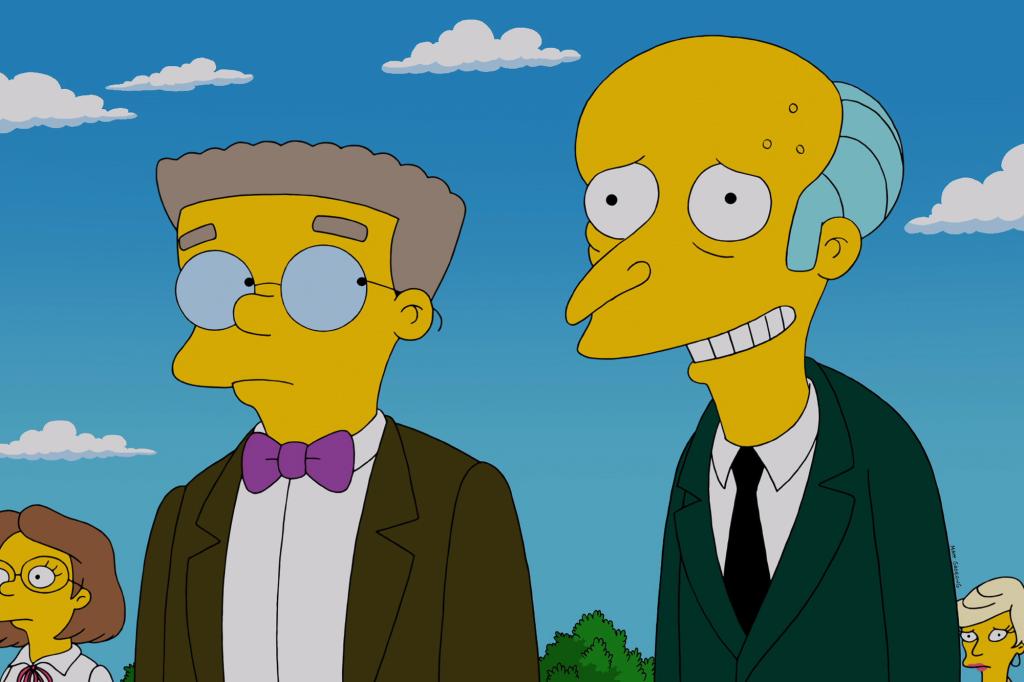
Fan Stop Nation’s Boss-Enabling Efficiency Index: 99.7%
Montgomery Burns is an industrialist whose moral compass appears to have been purchased from a discount store and immediately discarded. Waylon Smithers is the loyal executive assistant who keeps the entire operation functioning while spending a suspicious amount of time trying to make his boss happy.
Smithers is organized, capable and deeply knowledgeable about the workings of the Springfield Nuclear Power Plant. His relationship with Burns is one of the show’s richest running jokes. Smithers is often the only person who understands what Burns wants, which is unfortunate because Burns frequently wants something terrible.
And Smithers keeps coming back.
Why he belongs: Smithers is the ultimate example of a competent sidekick whose talents are wasted on a boss who would replace him with a vending machine if it learned to say “Excellent.”
“Mr. Burns, the board has concerns about the proposal. I’ve translated those concerns into a commemorative plaque and scheduled them for dismissal.”
Springfield executive relations director
Jesse Pinkman: Breaking Bad
Fan Stop Nation’s Chemistry-to-Common-Sense Ratio: 2.3%
Jesse Pinkman starts Breaking Bad as a small-time drug dealer who seems permanently one bad decision away from an even worse decision. Then he meets Walter White, a chemistry teacher who turns criminal enterprise into a high-stakes business operation, and discovers that being the less dangerous person in a partnership doesn’t mean you’re safe.
Jesse’s not a traditional sidekick. He’s a partner, an unwilling student, a moral counterweight and, at times, the emotional center of the entire series. His relationship with Walt begins as a deeply unequal alliance and develops into one of television’s most complicated and painful dynamics.
Jesse a vulnerability that continually complicated the audience’s judgment. He was the guy who kept reminding us that all the brilliant plans, expensive cars and intimidating speeches were being carried out by actual human beings who could suffer the consequences.
Why he belongs: Jesse expanded what a sidekick could be. He wasn’t there simply to make the lead look smart. He forced us to question whether the lead deserved our admiration at all.
“Mr. White says this is a business. I would like to submit a formal complaint that the business has terrible management, no dental plan and an alarming number of bodies.”
Albuquerque operations associate
George Costanza: Seinfeld
Fan Stop Nation’s Self-Sabotage Conversion Rate: 100%
George Costanza isn’t Jerry Seinfeld’s sidekick in the traditional sense. He is something more like a close friend whose every attempt to improve his life seems to produce a new level of personal catastrophe.
George lies about his job, his relationships, his family, his health and occasionally things that no reasonable person would bother lying about. He approaches everyday life as a hostage negotiation in which the other party is always trying to cheat him out of something. And yet, his schemes are rarely sophisticated. They’re usually the work of a man who has mistaken desperation for strategy.
Jerry was the observational comedian. George was the evidence.
Why he belongs: George represents the sidekick as a chaos engine. He’s the friend who turns a minor inconvenience into a five-episode legal, romantic and employment crisis.
“I had a perfectly reasonable plan to improve my life, but then I started thinking about it, and now I’m banned from the building.”
New York personal optimization consultant
Robert Barone: Everybody Loves Raymond
Fan Stop Nation’s First-Born Grievance Index: 98.2%
Robert Barone is a police officer, a devoted son and a man who has spent his entire life feeling like the universe gave his younger brother the better parking space.
Ray gets the attention, the wife, the house and the career as a sportswriter. Robert gets the family leftovers, a complicated relationship with his mother and the distinct impression that somebody misplaced the instruction manual for a satisfying life.
Robert’s problems were often self-inflicted, but they were also recognizable. He wanted to be appreciated. He wanted his family to take him seriously. He wanted his mother to stop treating him like a disappointing substitute for Ray.
Honestly, the man deserved a medal just for surviving Thanksgiving.
Why he belongs: Robert was the underappreciated sibling who somehow became the most relatable person in a family full of professional irritants.
“Ray gets a standing ovation for remembering his own birthday. I save a life at work and Ma asks why I didn’t call more often.”
Barone family grievance analyst
Al Calavicci: Quantum Leap
Fan Stop Nation’s Hologram Utility Index: 100%
Sam Beckett could leap into the bodies of people across time, but he couldn’t even see his own reflection in the person standing beside him. That’s where Admiral Al Calavicci came in.
Al was Sam’s holographic guide, appearing from the future to provide information, advice and occasional reminders that time travel apparently had a very complicated user interface. Armed with a handlink computer and the confidence of a man who had never met a situation he couldn’t talk through, Al helped Sam navigate one impossible predicament after another.
The relationship worked because Al wasn’t simply an exposition machine. He was Sam’s friend. Their bond made the show’s time-travel adventures feel personal, even when the plot involved a stranger in a different decade trying to survive a situation Sam barely understood.
Why he belongs: Al proved that a sidekick doesn’t need a physical body to be indispensable. He also established that the best person to consult during a temporal crisis is apparently a hologram with a cigar habit.
“Sam, the good news is that you’re in 1962. The bad news is that you’re about to discover why the project budget includes an emergency clothing allowance.”
Project Quantum Leap temporal logistics officer
Niles Crane: Frasier
Fan Stop Nation’s Snobbery-to-Sibling Ratio: 97.9%
Frasier Crane was already a pompous psychiatrist with expensive taste, a radio microphone and an almost religious devotion to the finer things in life. Then his younger brother Niles showed up and demonstrated that it was possible to take all those qualities and make them even more ridiculous.
Niles was a psychiatrist, a wine enthusiast and a man whose personal standards were so specific that a mildly imperfect chair could become an existential crisis.
His rivalry with Frasier was also the show’s secret weapon. The brothers shared a love of culture, status and intellectual superiority, but their competition frequently revealed how insecure they both were.
And then there was Niles’s long-running romantic pursuit of Daphne, which turned years of longing into one of sitcom history’s most satisfying slow burns.
Why he belongs: Niles elevated the sidekick from supporting player to comedic equal. In some episodes, he was the funniest person on television without ever raising his voice.
“I don’t wish to be difficult, but this coffee has the temperature, texture and emotional availability of a damp sock.”
Seattle beverage quality consultant
Chandler Bing: Friends
Fan Stop Nation’s Sarcasm-to-Emotional-Avoidance Index: 100%
Ross may have supplied the paleontology lectures, Joey the acting career and Phoebe the musical crimes against humanity, but Chandler Bing was the friend group’s defensive coordinator. Whenever a conversation drifted toward genuine emotion, he launched a joke like a smoke grenade and disappeared behind it.
Chandler’s sarcasm wasn’t just a personality trait. It was a full-time coping mechanism with excellent comedic timing. He could turn a sincere moment into a punchline before anyone had time to make eye contact, which made his eventual emotional growth all the more satisfying.
Matthew Perry made Chandler the kind of friend every group needs: funny, self-deprecating, loyal and just insecure enough to turn a simple social interaction into an internal congressional investigation.
He was also the glue between Joey’s lovable stupidity and Ross’s spectacular romantic dysfunction. Chandler could mock both of them while somehow remaining their most dependable friend. His relationship with Joey, in particular, delivered some of the show’s warmest moments beneath all the wisecracks and questionable roommate decisions.
Why he belongs: Chandler made sarcasm an emotional support system. For a generation raised on sitcom reruns and the fear of sincere conversation, he wasn’t just a sidekick. He was a lifestyle.
“I’m not uncomfortable with emotional intimacy. I’m simply waiting for the right moment to make a joke so devastating that nobody asks me how I feel again.”
Manhattan interpersonal communication specialist
Winston Bishop: New Girl
Fan Stop Nation’s Prank-to-Planning Ratio: 4.6%
Winston Bishop begins New Girl as a former professional basketball player trying to figure out what comes next. He eventually becomes a police officer, a devoted friend and the self-undisputed champion of pranks that seem to have been developed during a prolonged fever dream.
Winston is often the most unpredictable member of the loft. Nick is a human shrug. Schmidt is a walking performance review. Jess is an enthusiastic social experiment. Winston is the guy who has somehow convinced himself that a prank involving a fish and a fake emergency is an appropriate use of everyone’s afternoon.
Lamorne Morris gave Winston an eccentricity that grew more pronounced as the series progressed. His humor often came from the gap between his apparent seriousness and the sheer nonsense of what he was doing.
Winston’s relationship with the loft’s other residents also showed how friendship can function as a kind of chosen family, even when that family includes people who should never be allowed to plan a birthday party.
Why he belongs: Winston is proof that the sidekick doesn’t have to be the voice of reason. Sometimes he can be the reason the group needs a meeting.
“I have designed a prank so psychologically advanced that I forgot what it was supposed to accomplish. But the props are incredible.”
Los Angeles recreational mischief coordinator
Chris Stevens: Northern Exposure
Fan Stop Nation’s Deep Thought-to-DJ Ratio: 8.7 philosophical revelations per record played.
Every small town needs a radio DJ. Cicely, Alaska, got Chris Stevens: a former convict turned philosopher, motorcycle enthusiast, sculptor, spiritual explorer and late-night radio host who could turn a weather report into a discussion about the human condition before the next song finished its opening guitar riff.
Chris wasn’t your typical sidekick. He was more like the town’s unofficial philosopher-in-residence, broadcasting from KBHR and dispensing wisdom to anyone within radio range who happened to be awake, lonely or trying to figure out why life had taken such a bizarre turn.
He was a counterweight to the more conventional ambitions of Dr. Joel Fleischman, whose arrival in Cicely introduced a New York physician to a town where nobody seemed particularly interested in behaving like normal people. Chris embraced the strange rhythms of Alaska. He didn’t need to solve every mystery. Sometimes he just needed to put on a record and talk about it.
Why he belongs: Chris Stevens was the sidekick as cultural commentator, a man who could turn a tiny Alaskan radio station into the most interesting place on television. He also proved that a motorcycle, a microphone and an unhealthy appetite for existential questions can be a perfectly respectable career plan.
“You’re listening to KBHR, where the music is excellent, the transmitter is temperamental, and the meaning of life remains available for discussion after the weather.”
Cicely late-night broadcast consultant
Gordo Stevens: For All Mankind
Fan Stop Nation’s Astronaut Wingman Index: 96.8%
In an alternate history where the space race never really cools down, For All Mankind gives us astronauts whose lives are shaped by ambition, danger, rivalry and the occasional reminder that space is an unforgiving place to have a bad day.
Gordo Stevens begins as a talented but deeply flawed astronaut whose confidence sometimes gets ahead of his judgment. As the series progresses, he becomes a more complicated figure: a friend, a colleague, a husband and a man forced to confront the gap between the heroic image of an astronaut and the very human person inside the spacesuit.
Gordo’s relationship with fellow astronaut Ed Baldwin is especially important. Ed is the driven, competitive commander type; Gordo is the charismatic, impulsive, womanising wingman whose strengths and weaknesses often collide with the mission’s demands. Their friendship is tested by career pressures, personal struggles and the fact that NASA does not exactly offer a quiet place to work through your feelings.
The character’s journey is one of the show’s most affecting examples of personal growth. Gordo isn’t simply the guy following Ed into orbit. He becomes someone who must find his own courage when the stakes are higher than professional reputation.
Why he belongs: Gordo is the sidekick archetype with the stakes turned all the way up. In space, being the second banana doesn’t mean you get to skip the dangerous part.
“The good news is that the spacecraft is holding together. The bad news is that I’ve had several hours alone with my thoughts, and those things are considerably less reliable than the spacecraft.”
NASA crew readiness evaluator
Marshall Eriksen: How I Met Your Mother
Fan Stop Nation’s Wingman-to-Wedding Ratio: 96.4%
Marshall Eriksen is often the emotional center of How I Met Your Mother, but he also serves as a sidekick to Ted and Barney in their various attempts to navigate adult life without accidentally ruining it.
Marshall is a lawyer, a devoted husband and a genuinely decent person who somehow found himself surrounded by friends whose romantic strategies often resembled a badly managed casino.
His relationship with Barney is particularly entertaining. Barney sees dating as a competitive sport with elaborate rules and costumes. Marshall is the guy who occasionally reminds him that women are people, relationships require effort and a suit does not automatically make you a functioning adult.
Jason Segel’s warmth gave Marshall an important role in the show’s ensemble. He could be silly, competitive and occasionally immature, but he was also capable of empathy and emotional honesty in ways the other characters sometimes struggled to achieve.
Why he belongs: Marshall proves that the best sidekick doesn’t simply follow the group’s lead. Sometimes he is the one who keeps the group from becoming a cautionary tale.
“Barney says the evening requires a strategy. I brought a reservation, a sincere compliment and a plan to get home before the subway stops running.”
New York relationship logistics specialist
Tattoo: Fantasy Island
Fan Stop Nation’s Plane Announcement Efficiency Index: 100% — because no matter how many times that aircraft arrived, Tattoo treated it like aviation had just been invented.
Before social media influencers were getting paid to stand next to infinity pools, Fantasy Island had Tattoo, a tiny island sidekick with a bell tower, a big personality and the most recognizable announcement in prime-time television.
Every week, Mr. Roarke welcomed a new group of guests to an exotic island where their deepest fantasies would supposedly come true. And every week, Tattoo would race to the bell tower, ring the bell and shout the immortal greeting: “The plane! The plane!”
It was television’s original notification alert. No smartphone. No push notification. No app. Just a man enthusiastically announcing the arrival of an aircraft like the entire island had never seen one before.
Played by Hervé Villechaize, Tattoo was Mr. Roarke’s assistant, confidant and enthusiastic partner in welcoming guests whose vacation plans usually involved a questionable life decision, an unresolved emotional problem or a fantasy that was about to become a cautionary tale. He was the exclamation point on an island full of people who had paid good money to discover that getting everything you want can be a terrible idea.
Why he belongs: Tattoo turned a recurring entrance into a pop-culture catchphrase. He was the island’s welcoming committee, hype man and unofficial director of guest excitement. In a world where every television character seems to need a complicated backstory, Tattoo proved that sometimes all you need is one great line and a bell tower.
“The plane! The plane! And this week, we’ve got three millionaires, a man seeking revenge on his high school principal, and someone who wants to relive prom night. Mr. Roarke says the insurance paperwork is already prepared.”
Fantasy Island guest experience coordinator
Luther Van Dam: Coach
Fan Stop Nation’s Clipboard-to-Competence Ratio: 4.7% — but his loyalty rating remains undefeated.
Every great football coach needs a dependable assistant. Someone who understands the game, keeps the players focused, and can be trusted to make a reasonable decision when the head coach isn’t around.
Luther Van Dam was technically two out of three.
As Hayden Fox’s longtime assistant coach at Minnesota State, Luther was loyal, enthusiastic and occasionally capable of producing a thought that hadn’t gotten lost somewhere between the locker room and the snack table. He was the lovable counterweight to Hayden’s competitive intensity, a man who could turn a routine coaching assignment into an adventure in confusion without ever losing his enthusiasm for the job.
Hayden might have been the head coach, but Luther was the emotional glue of the coaching staff. He was the assistant who showed up, did his best and remained loyal even when the boss was yelling, the players were misbehaving and the game plan had apparently been written on the back of a napkin.
And in college football, where egos are enormous and winning can become a full-time personality disorder, Luther’s good nature was a welcome change of pace.
Why he belongs: Luther Van Dam is the patron saint of the well-meaning assistant who might not be ready to run the program but absolutely deserves a spot on the staff. He reminds us that not every sidekick needs to be the smartest person in the room. Sometimes the job is to be the guy who keeps showing up, keeps trying and somehow makes the whole operation more entertaining.
“Coach says I need to think two plays ahead. I tried that once and forgot what we were doing on the current play. So now I focus on one play at a time, and sometimes I even get that one right.”
Minnesota State assistant coaching development specialist
Why the Best Sidekicks Often Become the Best Characters
Television history is full of lead characters who get the big moments, but the sidekicks are often the ones who make those moments matter.
Radar makes the chaos of M*A*S*H feel human. Carlton gives Will Smith someone to challenge and tease. Barney Fife turns small-town law enforcement into a comedy of errors. Niles Crane elevates sibling rivalry into an art form. Jesse Pinkman forces us to confront the consequences of Walter White’s ambition.
These characters are important because they create contrast. They expose the lead’s flaws, provide a different perspective and give the audience someone to root for when the main character becomes too smug, too selfish or too busy delivering a speech.
They also give television its most memorable relationships. The chemistry between a hero and a sidekick can sustain a series long after the original premise has become familiar. A great sidekick can make a mediocre lead watchable. A truly great sidekick can make the entire show.
And sometimes the sidekick is simply funnier.
The Fan Stop Nation Sidekick Hall of Fame: The Final Verdict
The greatest sidekicks aren’t just the people standing behind the star. They’re the characters who make the star’s world believable, ridiculous, emotionally resonant or all three at once.
They are the loyal friends, the reluctant partners, the professional enablers and the walking disasters who give television its texture. They can be smarter than the lead, more compassionate than the lead or significantly less qualified to operate heavy machinery than anyone else in the cast.
But they all understand one essential truth: the show is better when they are there.
So here’s to the Barneys, Luthers, Katos, and Jefferson D’arcys of television history. Here’s to the people who keep the operation running while the stars collect the applause. And to the sidekicks who, if we’re being honest, probably deserved their own shows.
Because sometimes the second banana is the whole fruit salad.