


Golf is the only major sport where you can spend $600 on equipment, dress like you’re attending a casual board meeting, hit a stationary ball directly into a pond, and still blame the wind.
For centuries, golf has evolved from a game played across the rugged, windswept landscapes of Scotland into a global sporting empire featuring billion-dollar tournaments, Tiger Woods video games, YouTube trick-shot artists, stadium-sized galleries, and professional golfers who somehow make hitting a little white ball look both incredibly easy and psychologically devastating.
The game has produced immortal champions, spectacularly strange personalities, sacred courses, absurd architecture, and enough legendary meltdowns to power an entire ESPN documentary channel.
Golf is old. Golf is weird. Golf is occasionally so slow that watching paint dry starts looking like Formula One. And yet, when the game is good, there is almost nothing like it.
From Old Tom Morris to Tiger Woods, from St. Andrews to Sawgrass, from Arnold Palmer’s army to John Daly’s cigarettes-and-chaos energy, golf has spent hundreds of years proving that the most civilized-looking sport on Earth is secretly one of its most unhinged.
Before Golf Became a Country Club PowerPoint Presentation
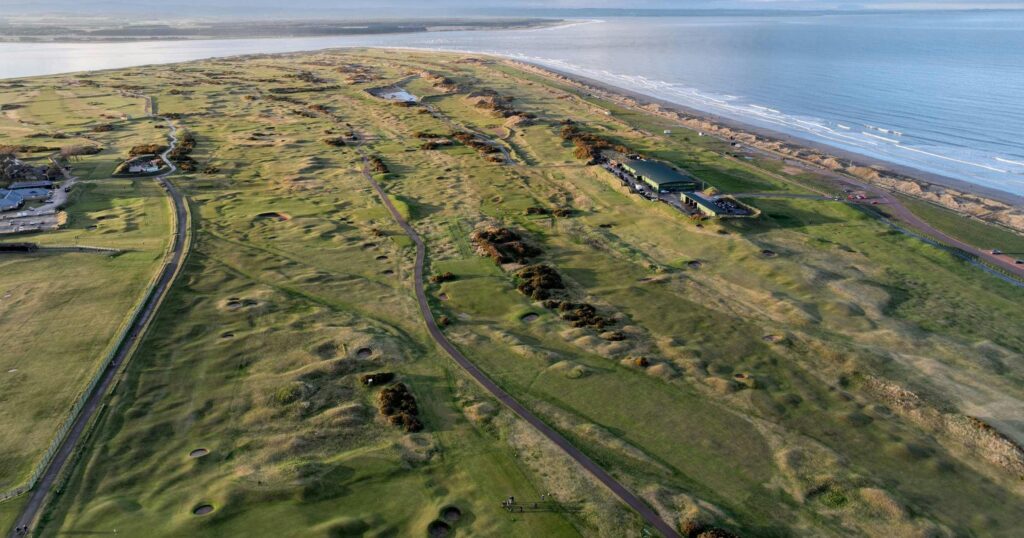
The modern game traces its roots to Scotland, where golfers were hitting balls across natural landscapes long before anyone decided the sport needed dress codes, expensive polos, and a beverage cart capable of financing a small mortgage.
The Old Course at St. Andrews became the spiritual home of golf, and the linksland surrounding it helped establish many of the principles that still define the game today.
For casual fans, a “links” course isn’t simply a fancy word for a golf course. Traditional links golf was shaped by coastal land: wind, sand, uneven terrain, deep bunkers and conditions that could turn a perfectly struck shot into an archaeological excavation.
The land itself was the obstacle.
Golf architects hadn’t yet arrived with bulldozers and PowerPoint presentations explaining why the 14th hole needed a waterfall and a cave.
Fan Stop Nation’s Golf Difficulty Index: Early Scottish golfers faced approximately 47% more sheep, 83% more wind and an estimated 900% fewer people yelling, “GET IN THE HOLE!” after somebody tees off on a par five.
“The original hazard wasn’t water. It was Angus walking across the fairway with absolutely no respect for pace of play.”
Imaginary Scottish Groundskeeper, 1742
Old Tom Morris and the First Golf Superstars

Before Tiger Woods became golf’s global phenomenon, there was Old Tom Morris.
Morris was a player, course architect, clubmaker and greenskeeper … essentially the Swiss Army knife of 19th-century golf. He won multiple Open Championships and helped shape St. Andrews into the place modern golfers recognize today.
His influence extended far beyond trophies.
Morris helped establish course architecture as something approaching an art form. Golf courses weren’t simply fields where holes were randomly placed until somebody ran out of land. The best courses could challenge strategy, reward creativity and force players to think.
That idea would eventually lead to Augusta National. Pinehurst. Pebble Beach. And some absolutely deranged modern courses where architects apparently looked at a mountain and said, “What if the green was on top of that?“
Fan Stop Nation’s Old Tom Impact Meter: Morris influenced so many aspects of golf that historians estimate he would have been forced to manage approximately seven LinkedIn profiles today.
“Old Tom Morris invented multitasking before anybody invented meetings about multitasking.”
Totally Fake Golf Historian

St. Andrews: The Cathedral of a Sport That Worships Grass

Every sport has a sacred place. Baseball has Fenway Park. Football has Lambeau Field. College basketball has Cameron Indoor. Golf has St. Andrews.
The Old Course isn’t necessarily the most difficult course in modern golf. It doesn’t need to be. Its importance is historical.
The rolling fairways, giant shared greens, pot bunkers and constantly changing wind represent golf in its most elemental form. There are no artificial mountains. No giant television towers. No resort architect trying to impress a real-estate developer with a lava field.
Just golf … and weather. Lots and lots of weather.
St. Andrews can humble a player without ever appearing to raise its voice.
Fan Stop Nation’s Wind-and-Regret Index: A golfer can hit the exact same shot on the Old Course twice and receive three completely different results, one of which may require a passport.
“At St. Andrews, you don’t play against the course. You negotiate with it.”
Fictional Scottish Caddie
Bobby Jones and the Moment Golf Became Mythology
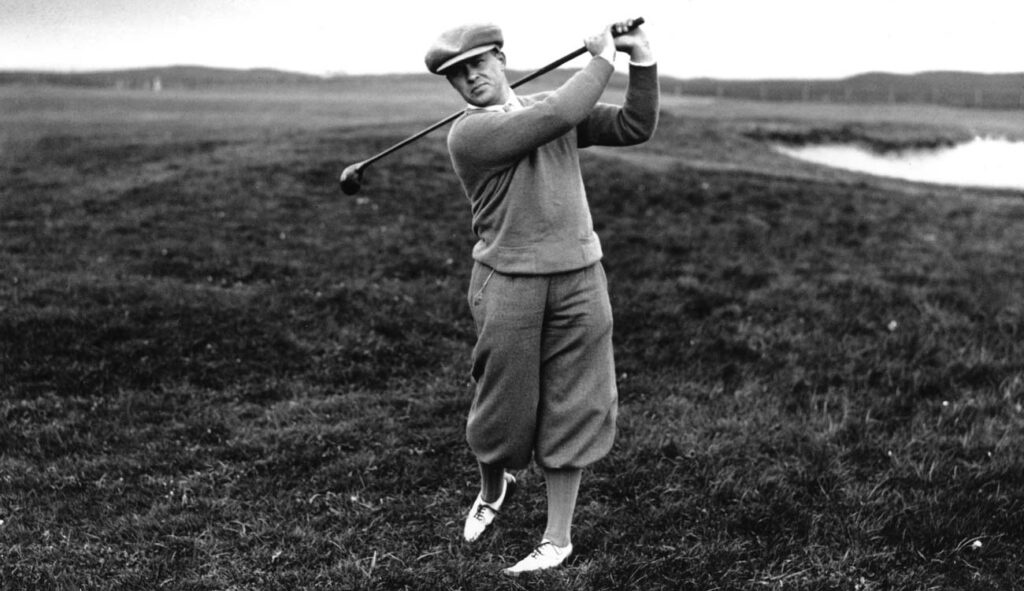
Bobby Jones remains one of golf’s most fascinating figures because he achieved immortality without becoming a full-time professional golfer … imagine Patrick Mahomes deciding to play quarterback as a hobby. That’s essentially the level of ridiculousness we’re dealing with.
Jones won 13 major championships under the definitions of his era and completed the original Grand Slam in 1930 by winning the U.S. Open, British Open, U.S. Amateur and British Amateur in the same year.
Then he retired from competitive golf; because apparently winning everything wasn’t enough. The man needed hobbies.
Jones also helped create Augusta National, which would become one of the most famous sporting venues in America.
Fan Stop Nation’s Bobby Jones Efficiency Rating: Jones accomplished approximately 400 years of golf history before modern athletes would have finished negotiating their first endorsement contract.
“Bobby Jones retired at the top because apparently he had places to be and immortality to achieve.”
Imaginary Augusta Member … (do they allow imaginary members?)
Augusta National: Golf’s Most Beautifully Intimidating Neighborhood

Augusta National is what happens when beauty and psychological warfare agree to become roommates.
The course is stunning. The azaleas are perfect. The grass looks like somebody vacuumed it. And then, you get to Amen Corner, where the entire personality of the Masters can change in about seven minutes.
Augusta was designed with strategy in mind, but television has transformed it into something approaching an American spring ritual. Every April, millions of people suddenly become experts on Rae’s Creek and start talking about green jackets like they’re discussing constitutional law.
The course has also evolved repeatedly over the decades as professional golfers became stronger and longer.
That’s one of golf’s great architectural dilemmas: How do you preserve history when athletes keep hitting the ball into the next county?
Fan Stop Nation’s Amen Corner Anxiety Scale: The average golfer experiences 14 emotional stages between the 11th tee and the 13th green, including optimism, confusion, denial and blaming the Pimento Cheese Sandwiches!
“Augusta is the prettiest place you’ll ever have your heart broken.”
Fictional Masters Veteran
Arnold Palmer Made Golf Feel Like a Tailgate Party
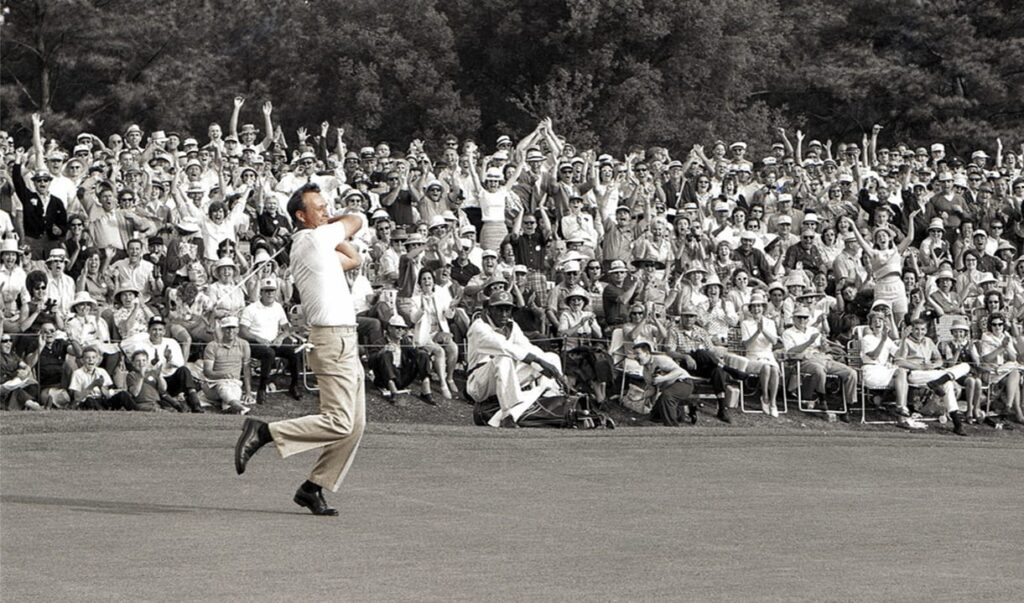
Enter, Arnold Palmer. Golf had champions before Palmer. What it didn’t always have was a superstar who felt like your charismatic uncle had wandered onto national television and decided to become a global icon.
Palmer helped transform golf into a mass spectator sport.
His aggressive style, approachable personality and army of devoted fans created something that became known simply as Arnie’s Army.
That’s sports branding at its finest. No complicated marketing campaign. No focus group. Just a guy people loved watching.
Palmer made golf feel accessible during an era when the sport could still seem locked behind country club gates.
Fan Stop Nation’s Arnie’s Army Recruitment Number: Palmer inspired so many fans that military historians briefly considered whether his supporters should receive commemorative medals.
“Arnold Palmer could hit a ball into the woods and somehow make the trees feel honored.”
Old-Timey Golf Broadcaster
Jack Nicklaus and the Art of Being Terrifyingly Good
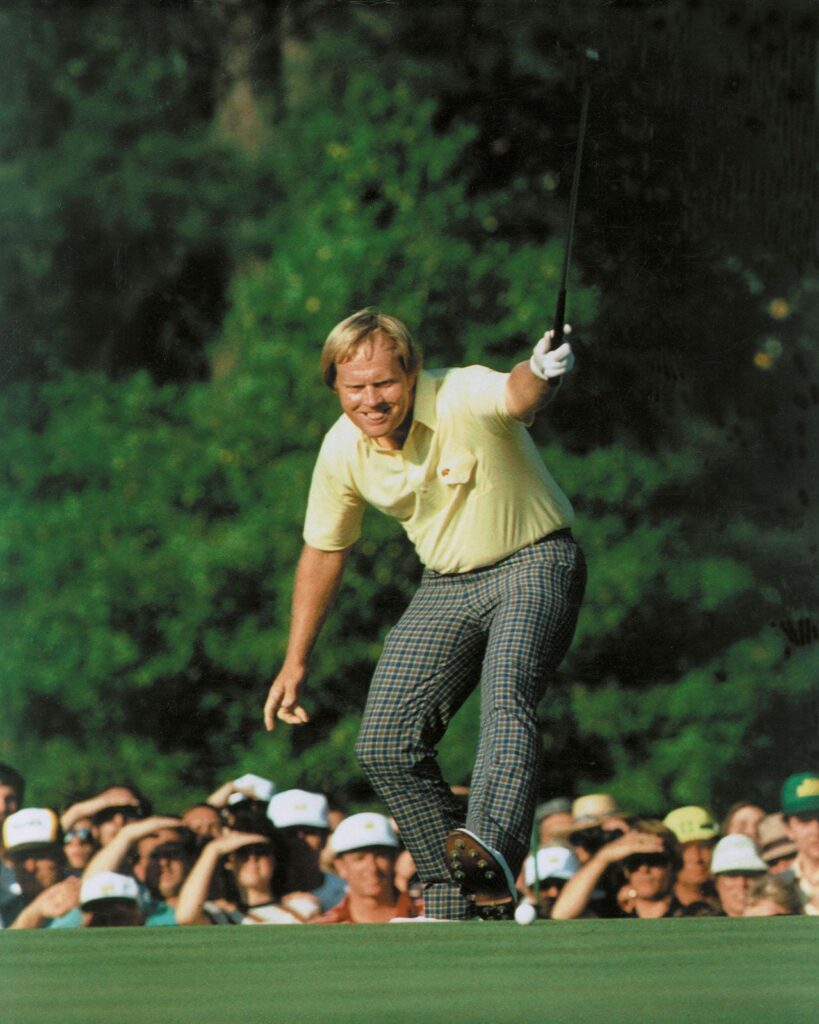
Jack Nicklaus didn’t need theatrics. He had winning … a lot of winning.
Nicklaus became the gold standard of major championship excellence, collecting 18 professional majors and establishing a record that still hangs over every golfer who dreams of becoming the greatest.
What made Nicklaus particularly remarkable was his strategic approach. He wasn’t simply stronger than everyone else. He understood golf courses.
Where to attack. Where to play safely. When to take a risk. When to let another golfer make the stupid decision.
Honestly, that’s useful advice for life.
Fan Stop Nation’s Golden Bear Survival Formula: Nicklaus avoided approximately 78% of golf’s traditional disasters by simply refusing to do things the average weekend golfer considers “going for it.”
“Jack Nicklaus looked at danger the way your dad looks at an extended warranty: absolutely unnecessary.”
Fake PGA Tour Statistician
The Colorful Characters Who Made Golf More Fun

Golf has always had champions. It has also been blessed with weirdos … thank goodness.
Without colorful personalities, professional golf occasionally risks becoming four days of extremely wealthy men whispering about spin rates.
That’s where players like Lee Trevino, Seve Ballesteros, John Daly and Chi Chi Rodríguez enter the picture.
- Trevino could talk.
- Seve could create magic from places where most golfers would require a search-and-rescue team.
- Chi Chi brought flair.
- And Daly? John Daly looked at golf’s traditional expectations and essentially responded, “No thanks.”
Daly was powerful, unpredictable, entertaining and capable of turning a tournament into something resembling professional wrestling with a sand wedge.
Fan Stop Nation’s Chaos-to-Khaki Ratio: For every perfectly pressed pair of golf pants, John Daly generated approximately 11,000 units of beautiful sporting chaos.
“Golf gave us etiquette. John Daly gave etiquette a cigarette and told it to loosen up.”
Unidentified PGA Tour Pro
Pebble Beach and the Rise of Golf’s Most Ridiculous Real Estate
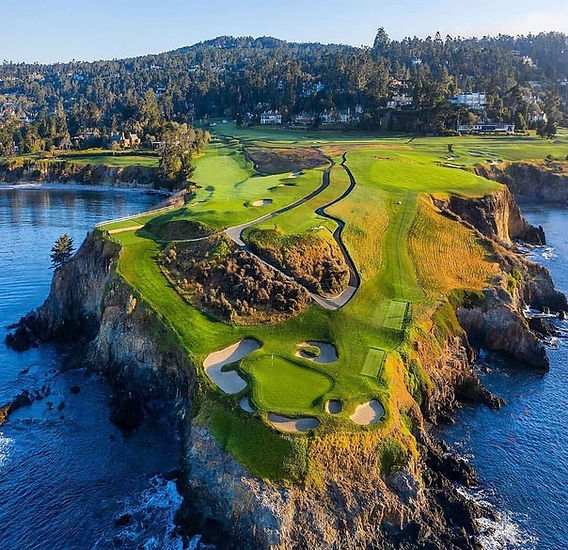
Some golf courses are historic. Some are beautiful. Pebble Beach is both, which seems slightly unfair.
The California coastline provides a backdrop so spectacular that every bad shot feels like it should come with an apology to nature.
Pebble Beach also represents the evolution of golf into destination entertainment.
People travel to courses, take pictures, buy merchandise, spend alarming amounts of money to hit golf balls near oceans they could have admired for free.
And yet, we understand completely.
Fan Stop Nation’s Scenic Distraction Index: Pebble Beach causes approximately 62% of amateur golfers to forget they are playing golf and start behaving like unpaid travel influencers.
“I paid $700 to hit a ball into the Pacific, but technically I also saw a lighthouse.”
Boy’s Weekend Golfers Everywhere
Pete Dye and the Architects Who Clearly Had Personal Grudges
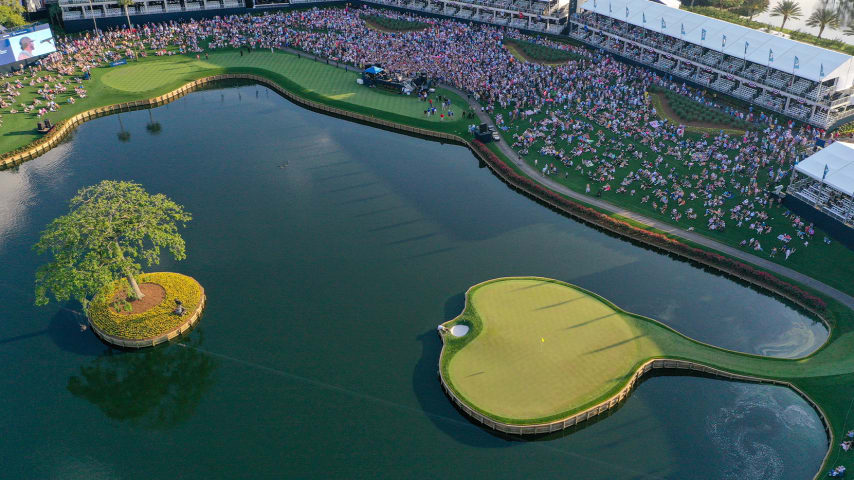
Golf architecture eventually entered its mad scientist era.
Pete Dye became one of the most influential architects in modern golf design, creating courses that were strategic, visually intimidating and occasionally appeared designed by someone who had been personally betrayed by a golfer.
TPC Sawgrass became the most famous example. The 17th hole. The island green. One of the most recognizable holes in sports.
It’s also approximately 137 yards of psychological torture.
The green isn’t technically difficult for professional golfers … until it is.
Then suddenly the ball is wet, the crowd gasps and a grown adult is staring at the water wondering how his job became this.
Fan Stop Nation’s Bunker and Water Index: The average amateur golfer facing Sawgrass’s island green has a 99.4% chance of considering whether skipping the hole is socially acceptable.
“Pete Dye looked at a perfectly nice piece of land and asked, ‘How can I make this personal?'”
Imaginary Golf Architect
The Absurd Courses: When Golf Architects Stopped Saying No
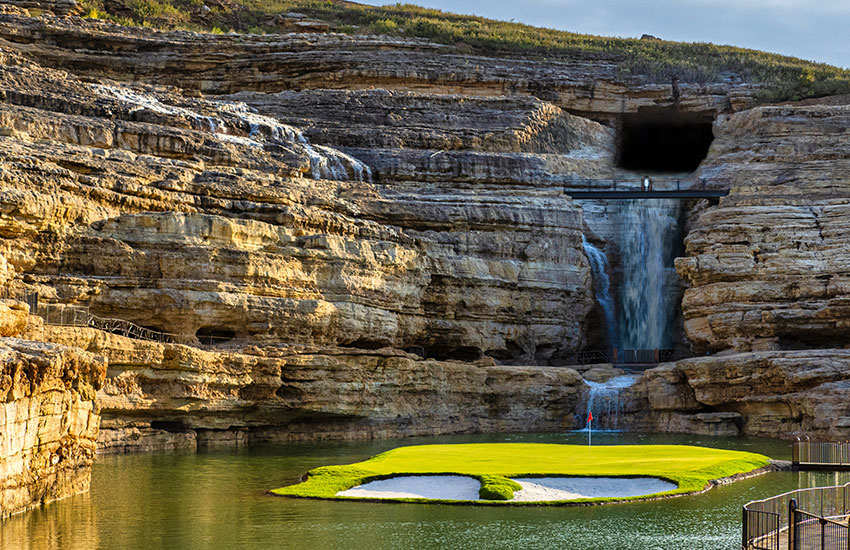
Modern golf has produced some truly bizarre designs.
- Courses built into mountains.
- Desert layouts where the fairway looks like it was borrowed from Mars.
- Holes surrounded by cliffs.
- Artificial islands.
- Giant elevation changes.
There are courses where a perfectly reasonable person can stand on the tee and wonder whether the architect had recently lost a bet.
Take extreme mountain golf, dramatic desert courses, and the growing obsession with spectacular “bucket-list” holes.
Golf architecture has increasingly become part sport, part tourism and part Instagram hostage situation.
The best absurd designs still challenge strategy. The worst ones simply challenge your health insurance.
Fan Stop Nation’s Golf Architect Sanity Test: If your course requires a helicopter, six retaining walls and a warning label, there is a 74% chance somebody should have called Old Tom Morris.
“We wanted golfers to feel close to nature. Unfortunately, nature was located 800 feet below the tee box.”
Fictional Resort Developer
The Modern Game: Longer, Louder and Somehow Still Impossible

Today’s golf looks dramatically different from the game of Old Tom Morris.
- Players are stronger.
- Equipment is more advanced.
- Analytics matter.
- Launch monitors can measure things your grandfather would have assumed were military secrets.
Professional golfers now know swing speed, spin rate, attack angle, ball speed and enough data to make NASA occasionally look underprepared.
And yet … we still hit it in the water; shank it into the trees; or blade it and break a window 150 feet behind the green from 90 yards out!
That’s golf.
Technology can improve everything except the part where a human being has to stand over a golf ball with everybody watching.
Modern stars have also expanded the game’s personality. Rory McIlroy brought global star power and elite consistency. Phil Mickelson became golf’s left-handed gambling-adjacent chaos merchant. Bryson DeChambeau turned the driving range into a physics laboratory. Scottie Scheffler became the latest dominant force with the unnerving habit of making elite competition look routine.
And new media has brought golf to audiences who may never watch four consecutive rounds of a traditional tournament.
Golf is changing again, but naturally, somebody is still going to three-putt from six feet.
Fan Stop Nation’s Modern Technology Index: Golfers now have enough swing data to explain exactly why their ball went into the woods, which is somehow less helpful than simply not hitting it there.
“We’ve got 14 cameras, three computers and satellite tracking, and Dave still sliced it into the parking lot.”
Fictional Launch Monitor Technician
The Game That Keeps Finding New Ways to Humble Us: Why Golf’s Evolution Matters
From Scottish sheep pastures to perfectly manicured resorts, golf has survived for centuries because it contains a wonderful contradiction. It’s simple enough for anyone to understand. Hit the ball. Get it in the hole. Try not to embarrass yourself.
But mastering it? Good luck.
Golf’s history isn’t simply a list of old champions and famous courses. It’s the story of a sport constantly trying to balance tradition with change.
- The game needs St. Andrews. It also needs Tiger Woods.
- It needs Augusta’s traditions. It also needs new voices and new audiences.
- It needs Arnold Palmer’s accessibility and John Daly’s glorious refusal to behave.
- It needs strategic architects like Old Tom Morris.
- And occasionally, apparently, it needs somebody to build a green in the middle of a lake and let the world deal with the consequences.
Golf survives because it evolves. But it remains golf because the essential challenge never changes.
Nobody conquers golf. They simply figured out how to lose less often than everyone else. That’s why the game endures.
Every generation gets its own heroes. Every generation builds stranger courses. Every generation discovers new technology. And every Saturday morning, millions of amateur golfers wake up convinced that today is the day everything finally clicks.
Then they hit their first tee shot into the woods.
Golf hasn’t changed that much after all.
Ball. Club. Hole.
Good luck.